Before we dive into the detailed analysis, here's a summary of Kraken's most important data at a glance.

Quick Overview of Kraken
| Score | |
| Established in | 2011 |
| Headquarters | United States |
| Regulator | FinCEN (U.S.), FCA |
| Cryptocurrencies | +752 |
| Maker/Taker | 0,25 % / 0,40 % |
| MiCA regulation | Yes, since 2011 |
| Minimum deposit | 10 € |
About Kraken: Its Origins and Who It's Intended For
Kraken is one of the longest-standing cryptocurrency exchanges on the market. It was founded in 2011, when Bitcoin was just beginning to gain traction, and has built its reputation on three pillars: security, transparency, and professional trading tools.
The platform serves more than 15 million customers in over 190 countries and allows users to trade more than 500 cryptocurrencies. Its ecosystem includes direct purchase, spot market, margin trading, futures, staking, payments, institutional services, and a customizable professional platform.
Pros
A veteran exchange, in operation since 2011 and with no known breaches in its custodial wallets
MiCA License Fully Operational in All 30 EEA Countries
More than 500 cryptocurrencies and 1,400 spot trading pairs
Cons
High initial fees: 0.40% for makers and 0.80% for takers starting in July 2026
Instant purchase with a commission of 1% plus the spread
Kraken Pro has a steep learning curve for inexperienced users
Kraken is designed for a broad audience, but its true value becomes apparent when users move beyond basic trading and begin using more advanced tools. The main app allows users to easily buy and sell cryptocurrencies, while Kraken Pro offers order books, customizable charts, margin trading, derivatives, and professional order types.
Its offering is designed around users who prioritize security, track record, and regulation over paying the lowest initial commission. It isn't the cheapest exchange to start trading on, but it is one of the most comprehensive among the platforms authorized in Europe.
Who is Kraken for? For users looking for a long-established, regulated exchange with tools capable of supporting them from their first purchase through to advanced trading.
Unlike platforms focused exclusively on the European market, Kraken maintains an international presence and supports multiple fiat currencies. This makes it easy to trade in euros, dollars, pounds, Swiss francs, Canadian dollars, and other supported currencies.
What level of security does Kraken offer?
Security is one of the areas where Kraken has built a particularly strong reputation. The platform has been operating since 2011 and claims that its custodial wallets have never suffered a breach that resulted in the loss of customer funds.
Its model combines cold storage, multi-signature controls, round-the-clock monitoring systems, penetration testing, bug bounty programs, and periodic reserve audits.
Public ratings paint a more mixed picture:
Positive reviews tend to highlight Kraken Pro's security, variety of tools, and performance. Criticisms mainly focus on account reviews, temporary account suspensions, delays in withdrawals, and difficulties resolving certain issues with customer support.
Trustpilot's rating contrasts with the ratings for its apps: Kraken has a rating of around 4.7/5 on the App Store and approximately 4.6/5 on Google Play, with tens of thousands of reviews.
European regulation under the MiCA framework
Kraken received its MiCA authorization from the Central Bank of Ireland in June 2025. The license became fully operational in August of that same year, when customers in the 30 countries of the European Economic Area began to be served directly by its regulated entity.
The authorization allows services to be provided within a common framework in:
- The 27 countries of the European Union.
- Norway.
- Iceland.
- Liechtenstein.
In Spain, users conduct business through Kraken’s European entity, which is authorized by the Central Bank of Ireland. This entails compliance with obligations related to:
- Custody and segregation of assets.
- Cost transparency.
- Risk Information.
- Prevention of Money Laundering.
- Governance and Internal Management.
- Customer Protection.
- Management of Conflicts of Interest.
- Business continuity.
Kraken also holds MiFID licenses through an entity supervised by the Cyprus Securities and Exchange Commission. This structure allows the company to offer certain derivative products to eligible European clients under regulations other than MiCA.
Did you know? Kraken was one of the first major international exchanges to activate its MiCA license across all 30 EEA countries, rather than limiting it solely to the country that granted the authorization.
Regulation does not mean that all products are available to every user. Access to margin trading, futures, staking, tokenized stocks, or yield services depends on the user’s country of residence, declared experience, and the regulatory conditions of each market.
Custody and protection of funds
Kraken keeps the majority of its crypto assets in cold storage, isolated from the internet and geographically distributed. Only a limited portion remains in operational wallets to process daily transactions.
Among its key protective measures are:
- Large-scale cold storage.
- Separation of client assets from corporate funds.
- Multi-signature systems for sensitive transactions.
- Role-based internal access controls.
- Continuous monitoring for suspicious activity.
- Secure physical infrastructure.
- Periodic security audits and tests.
- Vulnerability Reward Program.
- Additional confirmation procedures for returns.
- Specialized security and compliance teams available 24 hours a day.
Kraken also offers institutional custody services through regulated entities in certain markets. These services are intended for companies, funds, and professional investors and should not be confused with standard retail account custody.
Reserve Test and transparency
Kraken was one of the first exchanges to adopt a Proof of Reserves based on cryptographic techniques. It published one of its first audits in 2014 and continues to conduct periodic audits of the assets included.
The system allows each user to verify that their balance was included in the analyzed snapshot. To do this, it uses a Merkle tree structure that protects the privacy of account holders.
The Reserves Test may include:
- Spot balances.
- Assets used as margin.
- Cryptocurrencies for staking.
- Collateral deposited in certain futures accounts.
- Other assets expressly included in each review.
Kraken publishes periodic reviews—usually every six months—and allows users to check them directly from their account. (Kraken Reserves Test)
A reserve test is not the same as a full audit of the company. It confirms that certain assets were in custody as of a specific date, but it does not necessarily reflect all liabilities, corporate obligations, or operational risks.
Did you know? Kraken began publishing cryptographic proofs of reserves in 2014, several years before this type of verification became standard practice among exchanges.
Account Security
Kraken offers various tools to secure access, transactions, and withdrawals:
- Two-factor authentication.
- Compatible passkeys.
- Master Key.
- Global Settings Lock.
- Anti-phishing code.
- Confirmation of new addresses.
- Management of Authorized Devices.
- Alerts regarding changes and access.
- Temporary lockouts following certain changes.
- Option to use a physical security key.
The Global Settings Lock It is one of its most unique features. When activated, it blocks sensitive changes to the account during the specified period. Even if an attacker obtains the password, they cannot immediately modify the security settings or withdrawal addresses.
Pros
More than a decade without any known breaches in its custodial wallets
Periodic, verifiable proof of reservations for each user
Most assets are stored in cold wallets
Advanced tools such as Master Key and Global Settings Lock
Cons
Reserve Proof is no substitute for a full financial audit
There is no bank guarantee fund for cryptocurrencies
Compliance reviews may temporarily block certain features
The user does not control the private keys for the funds in custody
Where is Kraken available?
Kraken claims to serve more than 15 million customers in over 190 countries. Its global reach exceeds that of most European exchanges, although the products available vary by jurisdiction.
In the United States, it operates under various state registrations and licenses. In Europe, it operates through its MiCA-authorized entity and holds additional permits for certain financial services. It also maintains regulated entities in markets such as the United Kingdom, Australia, Canada, and Bermuda.
Availability in Spain and Europe
Kraken is available in Spain and in the 30 countries of the European Economic Area through its entity regulated by the Central Bank of Ireland.
The countries covered are:
- Germany
- Austria
- Belgium
- Bulgaria
- Croatia
- Cyprus
- Czech Republic
- Denmark
- Slovakia
- Slovenia
- Spain
- Estonia
- Finland
- France
- Greece
- Hungary
- Ireland
- Iceland
- Italy
- Latvia
- Liechtenstein
- Lithuania
- Luxembourg
- Malta
- Norway
- Netherlands
- Poland
- Portugal
- Romania
- Sweden
Certain assets and services are restricted within the EEA. For example, Kraken has withdrawn Monero from the European market and has limited trading of several stablecoins that do not meet its regulatory criteria under MiCA.
Futures are also subject to eligibility requirements and are not offered in all regions where the spot market is available.
Kraken Fees: How Much Does Trading Really Cost?
Kraken charges different fees depending on the interface and product used. Instant buying is simple, but it is significantly more expensive than trading through Kraken Pro.
In July 2026, Kraken revised its fee structure. Since then, the fee tier has been based on either the spot trading volume over the past 30 days or the assets held on the platform, whichever results in a more favorable rate.
Spot trading on Kraken Pro
The initial structure, effective as of July 2026, is as follows:
| Platform | Maker | Taker |
|---|---|---|
 Bitget
|
0,10% | 0,10% |
 Bybit
Bybit
|
0,10% | 0,10% |
 Finst
Finst
|
0,15% | 0,15% |
 Bitvavo
|
0,15% | 0,25% |
 Kraken
|
0,25% | 0,40% |
 Coinbase Advanced
|
0,40% | 0,60% |
 eToro
eToro
|
1% | 1% |
Comparison based on initial spot rates for users without volume discounts.
Kraken is no longer particularly competitive for users starting at the entry level. Its fees improve as trading volume or account balance increases, but for small trades, it is more expensive than Bitvavo, Finst, Binance, or Bitget.
Buy Now
Kraken's main app lets you buy, sell, or convert cryptocurrencies without using the order book.
Instant transactions apply to:
- 1% Trading Commission.
- Spread included in the price.
- There may be an additional fee depending on the payment method.
- 1.5% commission on certain custom orders.
The spread depends on volatility, liquidity, trade size, the underlying asset, and account activity. A closing quote is displayed before confirmation.
Kraken+ allows you to waive the trading fee on certain instant purchases, up to a monthly volume of 10,000 $, but the spread and payment method fees still apply.
Did you know? An instant purchase of €1,000 on Kraken incurs a €10 fee, not including the spread or any payment method fees.
Futures Commissions
At the entry level, the standard fees for futures and perpetual contracts are 0.02% for Makers and 0.05% for Takers.
Fees decrease as trading volume increases. Some promotions for new accounts may offer rebates for maker orders.
In addition to the fee, users should consider:
- Funding rates for perpetual contracts.
- Liquidation risk.
- Costs associated with leverage.
- Slippage during periods of volatility.
- Possible liquidation fees.
Deposits and withdrawals
Kraken supports different funding methods depending on the country and currency:
- SEPA Transfer.
- SEPA Instant.
- International bank transfer.
- Debit or credit card.
- Apple Pay and Google Pay.
- PayPal on supported marketplaces.
- Cryptocurrency deposits.
SEPA deposits are usually free. Purchases made with cards and digital wallets may incur additional fees.
Fees for euro withdrawals vary depending on the bank and the method used. Fees for cryptocurrency withdrawals also vary depending on the asset and the blockchain.
| Concept | Cost on Kraken |
|---|---|
| Spot trading on Kraken Pro | From 0.25% maker / 0.40% taker |
| Buy Now | 1% plus spread and possible payment method fees |
| Deposit via SEPA transfer | Usually €0 |
| Custody, Maintenance, and Inactivity | 0 € |
| Withdrawal of euros or cryptocurrencies | Fees vary depending on the asset, the network, and the withdrawal method |
Step-by-Step Guide to Opening an Account on Kraken
Registration is entirely digital, but identity verification is required to use the platform normally.
Step 1: Initial registration
The user must enter:
- Email address.
- Username.
- Password.
- Country of residence.
- Acceptance of the Terms.
Kraken sends a code or link to activate the account.
Step 2: Identity Verification
To comply with KYC and AML regulations, Kraken may request:
- First and last name.
- Date of birth.
- Residential address.
- Phone number.
- Identification document.
- Facial photograph or proof of life.
- Tax Information.
The accepted documents vary by country, but generally include a national ID card, passport, or residence permit.
Step 3: Verify Residency
If the address cannot be verified automatically, Kraken may ask for:
- Bank statement.
- Utility bill.
- Tax document.
- Official certificate of residence.
The document must be recent and clearly show the name and address.
Step 4: Configure Security
Before depositing funds, you should enable:
- Two-factor authentication.
- Passkey or physical key.
- Master Key.
- Global Settings Lock.
- Anti-phishing code.
- Access Alerts.
Step 5: Make Your First Deposit
Spanish users can use SEPA transfers or SEPA Instant transfers. The bank account must be in the name of the same person registered with Kraken.
It's also possible to buy directly with a credit card, although the cost is usually higher than depositing euros and trading on Kraken Pro.
Step 6: Make Your First Purchase
Users can choose from:
- In-app instant purchase.
- Market order on Kraken Pro.
- Limit order.
- Recurring purchase.
- Conversion between assets.
To reduce costs, it is usually best to deposit via SEPA and use a limit order on Kraken Pro.
Requirements for Opening an Account
- Be of legal age.
- Reside in an eligible country.
- Have a valid identification document.
- Complete the facial verification when prompted.
- Provide tax and residency information.
- Use a bank account in the same name.
- Provide proof of the source of the funds if Kraken requires it.
Available cryptocurrencies: more than 500 assets
Kraken provides access to more than 500 cryptocurrencies and more than 1,400 spot trading pairs. The lineup includes Bitcoin, Ethereum, XRP, Solana, Cardano, Dogecoin, Polkadot, Chainlink, and numerous emerging projects.
The selection is more limited than KuCoin's, but considerably broader than that of many regulated European exchanges.
Kraken supports trading pairs denominated in euros, dollars, pounds, Swiss francs, and other currencies. Available assets vary by region. Some internationally tradable tokens, such as Monero, are not available to EEA customers.
Spot market
Kraken Pro allows you to trade cryptocurrencies using an order book. Its features include:
- Market orders.
- Limit orders.
- Stop-loss.
- Stop-limit.
- Take-profit.
- Take-profit limit.
- OCO Orders.
- Post-only orders.
- Traction control.
- Prevention of self-trading.
- API for automated strategies.
The user purchases the asset directly and can either keep it on Kraken or withdraw it to an external wallet.
Margin trading
Kraken allows you to open positions with borrowed funds in supported markets. Margin can be used to increase a long position or to short sell.
The costs include:
- Maker or taker fee.
- Opening fee.
- Periodic renewal fee.
- Possible liquidation fee.
Access depends on the country, the asset, and the eligibility level. Leverage amplifies both gains and losses and may result in the automatic liquidation of the position.
Futures and derivatives
Kraken offers futures and perpetual contracts to eligible users. In Europe, certain services are provided through a MiFID-authorized entity.
Contracts allow for:
- Open long or short positions.
- Use leverage.
- Hold collateral across different assets.
- Trade perpetual contracts.
- Manage positions from Kraken Pro.
- Use certain xStocks as collateral, where permitted.
Availability is not universal. Users must meet the eligibility and experience requirements for complex products.
Kraken Staking
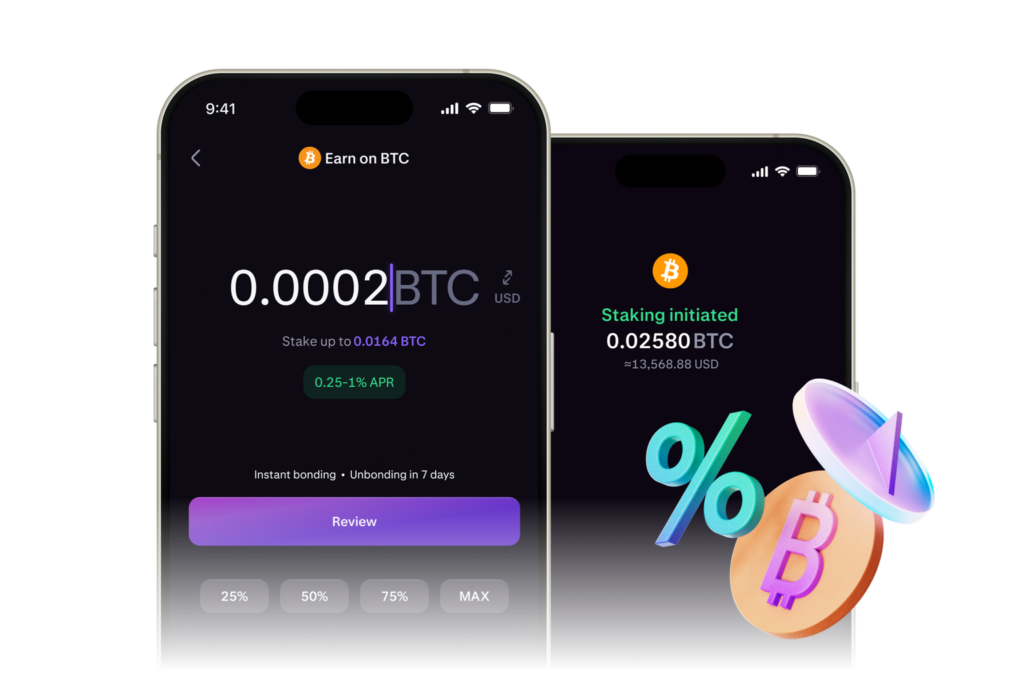
Kraken allows you to earn rewards on more than 20 cryptocurrencies through staking. The offering may include Ethereum, Solana, Cardano, Polkadot, Cosmos, and other Proof-of-Stake assets.
The return can reach approximately 17% APY on certain assets, although it varies depending on the network, demand, and service conditions.
| Product | How It Works | Availability | Performance |
|---|---|---|---|
| Auto Earn | Automatically earn rewards on eligible assets held in the account | Flexible funds available for trading or withdrawal | Varies by asset |
| Bonded Staking | Assets are delegated for a specified period to earn rewards | Subject to periods of enrollment and withdrawal | Generally higher than Auto Earn |
Available assets, returns, and unlocking periods may vary depending on the cryptocurrency, country of residence, and network conditions.
With flexible staking, Kraken allows for a faster withdrawal. With locked staking, the time required to recover your assets depends on the protocol and can take days or weeks.
The rates shown already take into account the fee charged by Kraken. They do not represent a guaranteed return.
Did you know? Kraken offers staking for more than 20 assets, but the unlocking period can vary significantly when choosing the tied staking option.
Kraken+ and recurring purchases
Kraken+ is a subscription service designed for users who regularly use the buying, selling, and conversion features of the main app.
Among its advantages is the elimination of trading commissions on eligible trades up to a certain monthly volume. However:
- It does not eliminate the spread.
- It does not cover payment method fees.
- Does not apply to Kraken Pro.
- Does not apply to futures, APIs, or OTC transactions.
- This is subject to limits and eligible assets.
Kraken also lets you schedule recurring purchases on a daily, weekly, biweekly, or monthly basis.
Krak, Payments, and Kraken Card
Kraken has expanded its ecosystem with Krak, an app designed to make it easy to send and receive money or cryptocurrency.
Their duties may include:
- User-to-user transfers.
- Cash and cryptocurrency transfers.
- International payments.
- Managing Different Balances.
- Physical or virtual Kraken Card.
- Rewards and cashback at eligible stores.
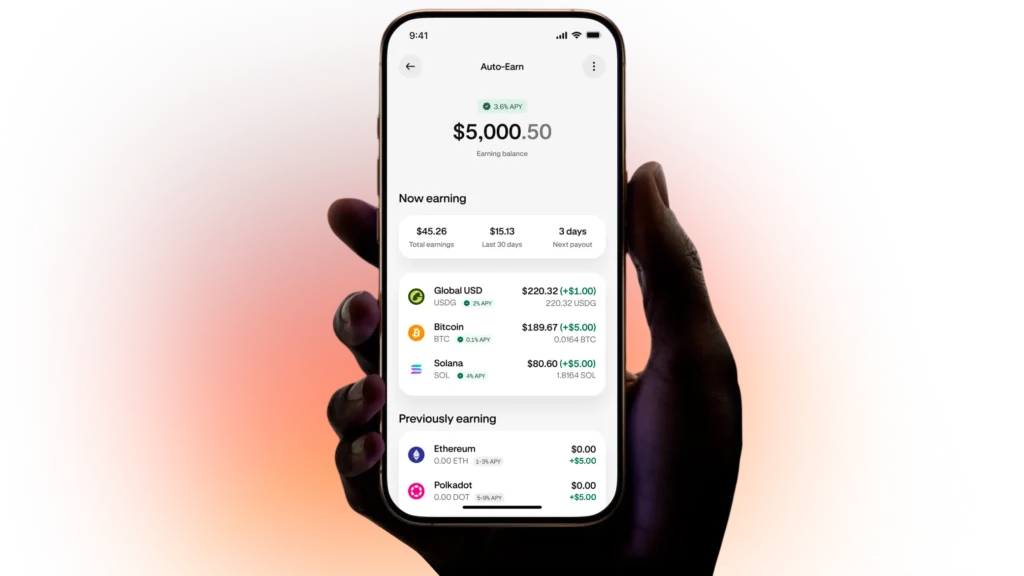
The Kraken Card operates on the Mastercard network and allows you to spend different balances of cash or cryptocurrency. Kraken does not charge a monthly, annual, or per-transaction fee, although a spread is applied when you need to sell an asset to make a payment.
In eligible regions, cashback can reach 2% in euros, pounds, or Bitcoin, depending on the rewards tier. Card availability and benefits vary by country.
xStocks and Tokenized Assets
Kraken offers xStocks in certain markets. These are tokenized representations linked to the prices of U.S. stocks and exchange-traded funds.
They allow:
- Buy fractions starting at small amounts.
- Transfer specific tokens to compatible networks.
- Trade outside traditional trading hours in some markets.
- Use certain xStocks as collateral for futures and margin.
xStocks do not necessarily equate to direct ownership of a traditional stock. Rights, custody, transfers, and regulatory protection depend on the product’s structure and the user’s country.
Kraken vs. Binance
The most relevant comparison for a Spanish user is between Kraken and Binance. Both are MiCA-licensed, accept euros and SEPA transfers, but their offerings differ.
| Characteristic | Kraken | Binance |
|---|---|---|
| Foundation | 2011 (United States) | 2017 |
| Regulation in Europe | MiCA license from the Central Bank of Ireland valid throughout the EEA | No MiCA license as of August 2026; restricted services in the EEA |
| Initial Spot Commission | 0.40% maker / 0.80% taker | 0.10% maker / 0.10% taker |
| Trading Discounts | By spot volume or assets held on the platform | By trading volume and BNB commission payments |
| Deposits in euros | SEPA transfer, usually free of charge | Availability and cost vary by country and provider |
| Cryptocurrencies | More than 600 assets | More than 500 assets, by region |
| Custody and Reserves | Cold Storage and Verified Quarterly Reserve Test | Cold Storage and Inventory Verification System |
| Additional Protection | No specific guarantee fund for cryptoassets | SAFU Emergency Fund, without a government or bank guarantee |
| Staking and Returns | Auto Earn, Flexible Staking, and Bonded Staking | Flexible and locked Simple Earn, plus on-chain staking |
| Automatic Purchases | Recurring Cryptocurrency Purchases | Auto-Invest with individual plans and asset portfolios |
| Platform | Web, Kraken app, Kraken Pro, and desktop app | Web, mobile app, and Lite and Pro modes |
| Ideal for | Users who prioritize compliance, security, and advanced operations | Users looking for low fees and a very wide range of products |
Data current as of August 2026. The availability of assets, deposits, staking, and other products may vary depending on your country of residence.
Apps and Platform: How Do You Use Kraken on a Daily Basis?
Kraken divides its expertise into several areas:
- Kraken: A simple app for buying, selling, and managing your portfolio.
- Kraken Pro: Advanced platform for spot, margin, and derivatives trading.
- Kraken Desktop: Configurable software for active traders.
- Krak: payments, transfers, and card transactions in supported markets.
- API: link between algorithmic strategies and institutions.
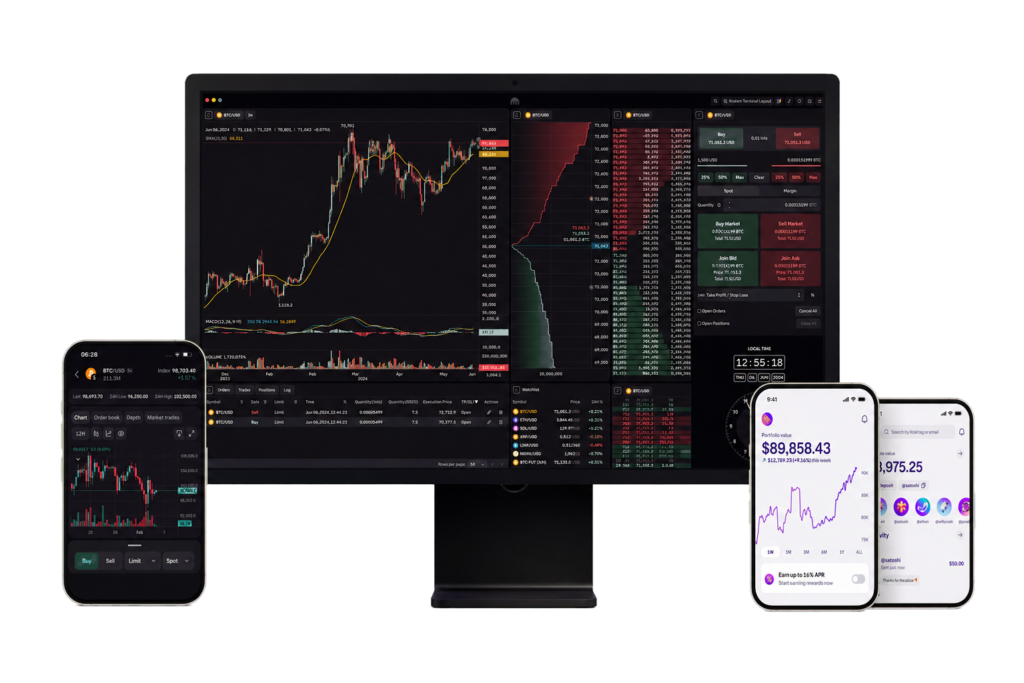
The main app is designed for users looking for a simple experience. Kraken Pro offers advanced charts, order books, and various order types. Kraken Desktop allows you to customize dashboards, markets, charts, and analysis tools.
Final Verdict: Is Kraken Worth It in 2026?
Kraken remains one of the most robust exchanges on the market in terms of track record, security, and regulation. It has been in operation since 2011, publishes reserve audits, maintains a custody infrastructure with a particularly strong track record, and holds a fully active MiCA license in Europe.
Its ecosystem is one of the most comprehensive. Kraken lets you start with a simple purchase and move on to Kraken Pro, margin trading, futures, staking, payments, and institutional services—all without leaving the platform.
With all of this in mind, Kraken remains a highly recommended option for anyone who prioritizes security, track record, regulation, and professional tools. To buy small amounts at the lowest possible cost, Bitvavo, Finst, or some global exchanges may be more competitive.
This review is based on our actual experience using Kraken. We tested the platform by making deposits, purchases, sales, and withdrawals of cryptocurrencies, and we also evaluated its fees, security, and ease of use. The rating you see here reflects our hands-on experience, not just a first impression.
Kraken not for you? Explore alternatives

Regulated exchange licensed in New York, focused on institutional-grade security, certified custody, and transparent operations for demanding investors.

Derivatives and copy trading-focused exchange with a fast app. Includes futures, multiple pairs, and advanced features for agile trading.

Leading global platform by trading volume. It offers spot and futures trading, staking, and a broad ecosystem with reduced fees through BNB.

European exchange with a clean interface and competitive fees. Ideal for trading crypto with SEPA transfers and stable liquidity in the European market.

Social trading and derivatives-focused platform with a simple interface. It includes copy trading, futures, and fast purchase options using a card.

Popular exchange for derivatives and spot trading, with high liquidity, a fast interface, and advanced tools geared toward active and professional traders.

Spanish exchange focused on ease of use, local support in Spanish, and integrated options for buying, saving, and custodial asset management.

Comprehensive platform offering spot, futures, and earn products. Strong global liquidity, pro tools, and a built-in Web3 wallet for active traders.
(FAQ) Frequently Asked Questions About Kraken
Kraken is designed for serious traders, offering professional features like margin trading, low-latency order execution, 24/7 support, and advanced analytical tools.
I am comfortable with Kraken.
I like Kraken for its security. It also has good fees and a VIP plan that lowers commissions even further.
Kraken works okay at best: good security but slow support and too many complications to solve simple problems.
My experience with Kraken's support wasn't very positive. My account was temporarily suspended, and it took them about 20 days to resolve the issue. During that time, I only received automated responses, so I would have appreciated faster assistance and the ability to speak with a representative when the problem arose.