
Before we dive into the detailed analysis, here’s a ranking of the 10 best exchanges for buying cryptocurrencies with euro-denominated stablecoins (EURC, EURI, and EURR), with the most important information about each platform at a glance.


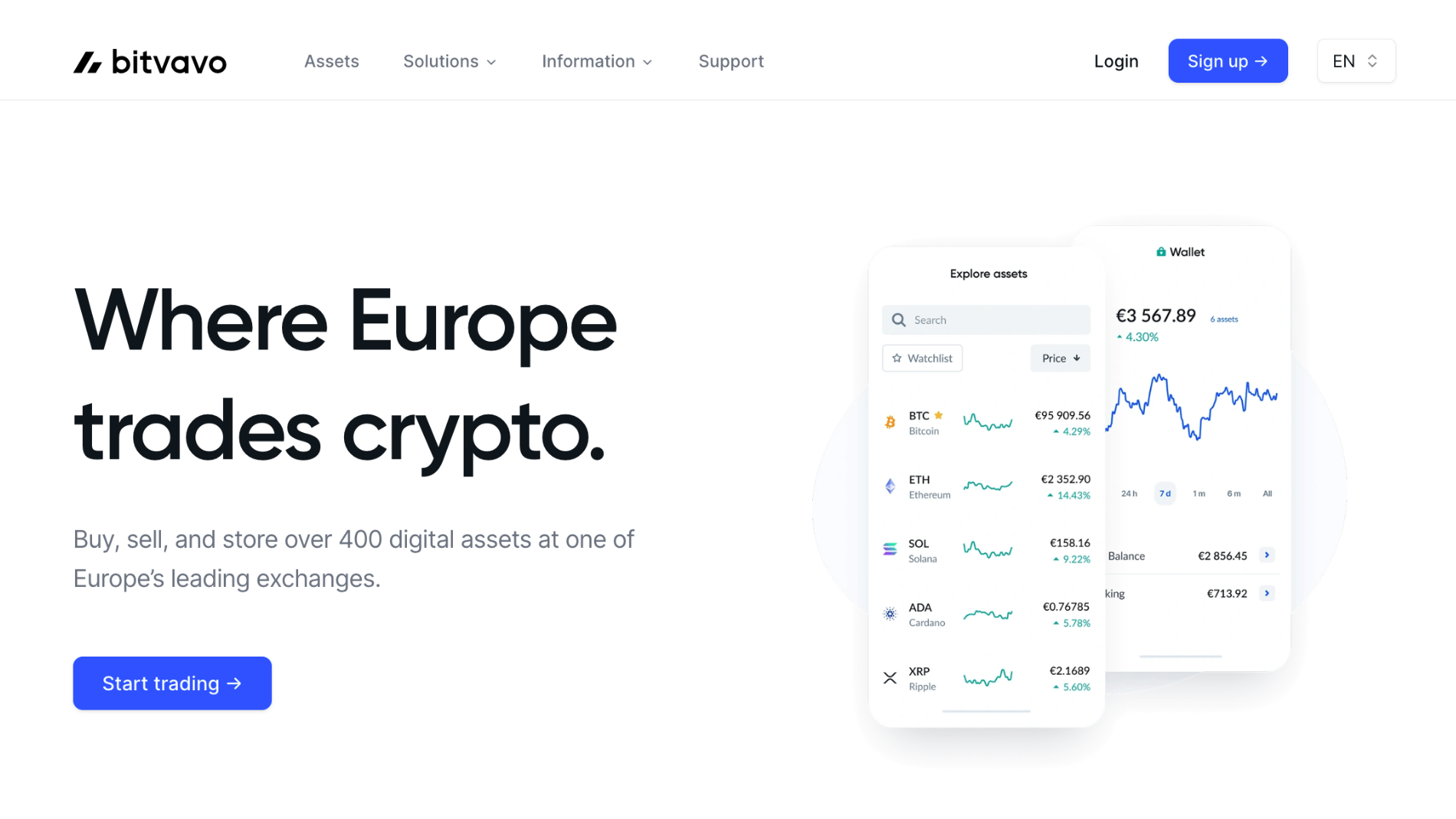
1. Bitvavo: EURC liquidity without leaving the euro trading environment
Based in Amsterdam, Bitvavo has for years been the go-to exchange for those who trade directly in euros, without using the dollar as a bridge currency. That same philosophy extends to its support for EURC: when trading on an exchange that already treats the euro as its native currency, holding part of your balance in this stablecoin feels more natural than on platforms originally designed for the dollar. Its MiCA (CASP) license was granted by the Dutch AFM by 2025, with a license to operate throughout the European Union.
There’s no fine print regarding pricing: pairs with EURC pay the same 0.15% maker and 0.25% taker fees as the rest of the catalog, with no surcharge for being a stablecoin. This is important for traders who switch between positions several times a day: they can use EURC as a safe haven between trades without having to wait for a SEPA transfer to clear every time they want to buy again. See the full review of Bitvavo
Who is Bitvavo for? For those who want to park their liquidity in tokenized euros directly on the exchange, with no fees other than those they already pay for the rest of their portfolio.
Advantages:
- The same fees for EURC as for the rest of the catalog
- It allows you to enter and exit positions without having to wait for a SEPA transfer to process
- MiCA License with a European Passport
Disadvantages:
- No confirmation of support for EURI or EURR as of September 2026
- A smaller selection of cryptocurrencies than other exchanges in the ranking
- Few advanced trading tools
2. Kraken: one of the channels that the EURC issuer itself cites as a reference
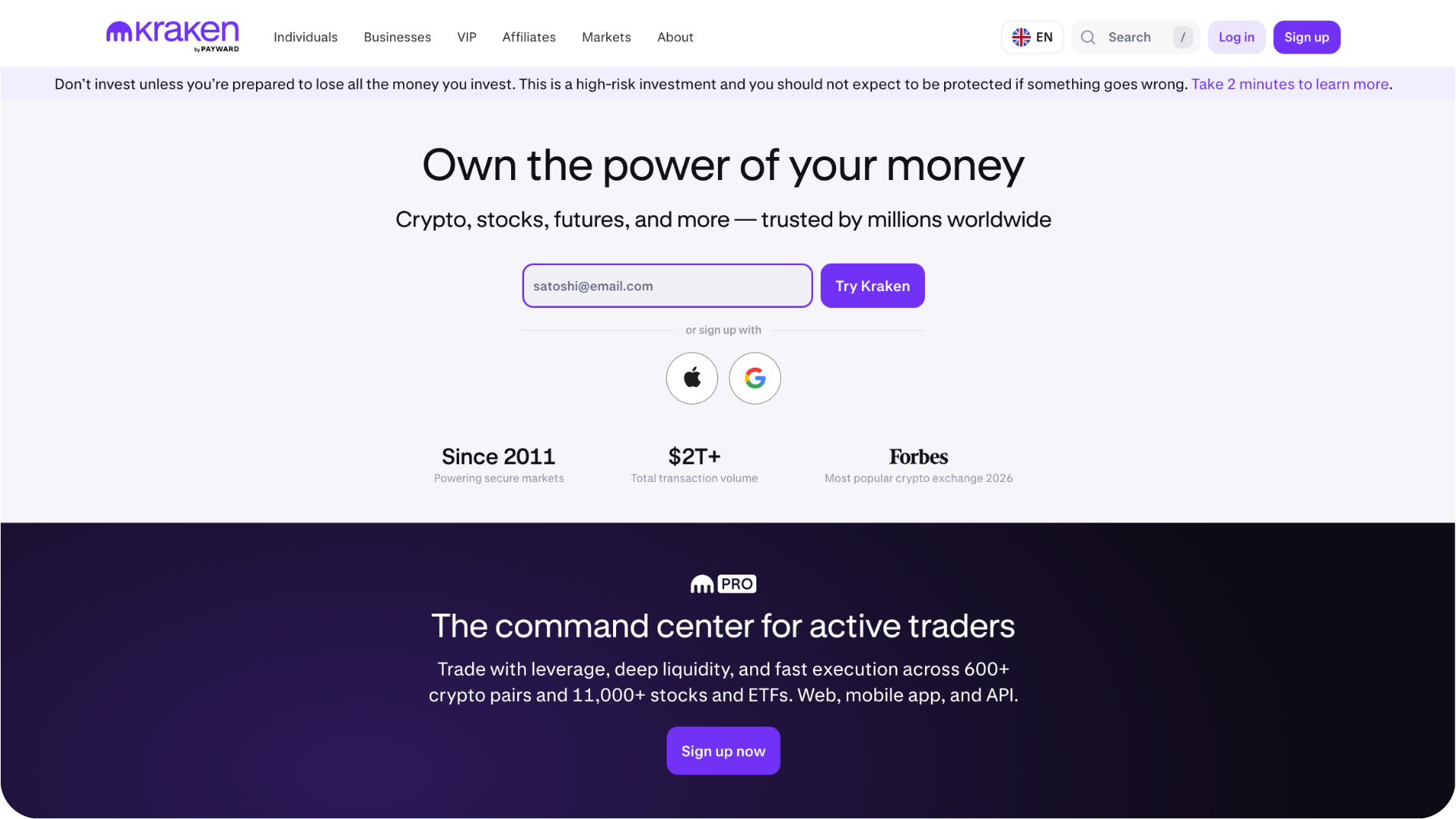
When Circle explains where users can trade EURC, Kraken is often cited as an example, which gives an indication of the market depth it offers for this pair compared to other smaller exchanges. Its European entity, Payward Europe Solutions Limited, operates under a CASP license granted by the Central Bank of Ireland in June 2025.
Outside of Kraken Pro, the standard app charges a spread of around 1%; within Kraken Pro, the cost drops to 0.40% for makers and 0.80% for takers on the first tier—rates that apply regardless of whether the pair includes EURC. One feature that does set Kraken apart from other exchanges in the ranking is that it allows users to withdraw EURC directly to an external address without the restrictions that other platforms impose on their internal stablecoins. View full Kraken review
Who is Kraken for? For anyone who wants to trade EURC on an exchange with enough liquidity to enter and exit smoothly, and withdraw that balance to their own wallet if needed.
Advantages:
- Directly cited by Circle as one of its leading channels
- Withdrawals from EURC to external wallets without any additional restrictions
- Safety Record Since 2011
Disadvantages:
- The standard app is expensive if you don't use Kraken Pro
- Minimum deposit higher than the ranking average (€10)
- No confirmation of support for EURI or EURR
3. Coinbase: the exchange closest to the issuer of EURC itself
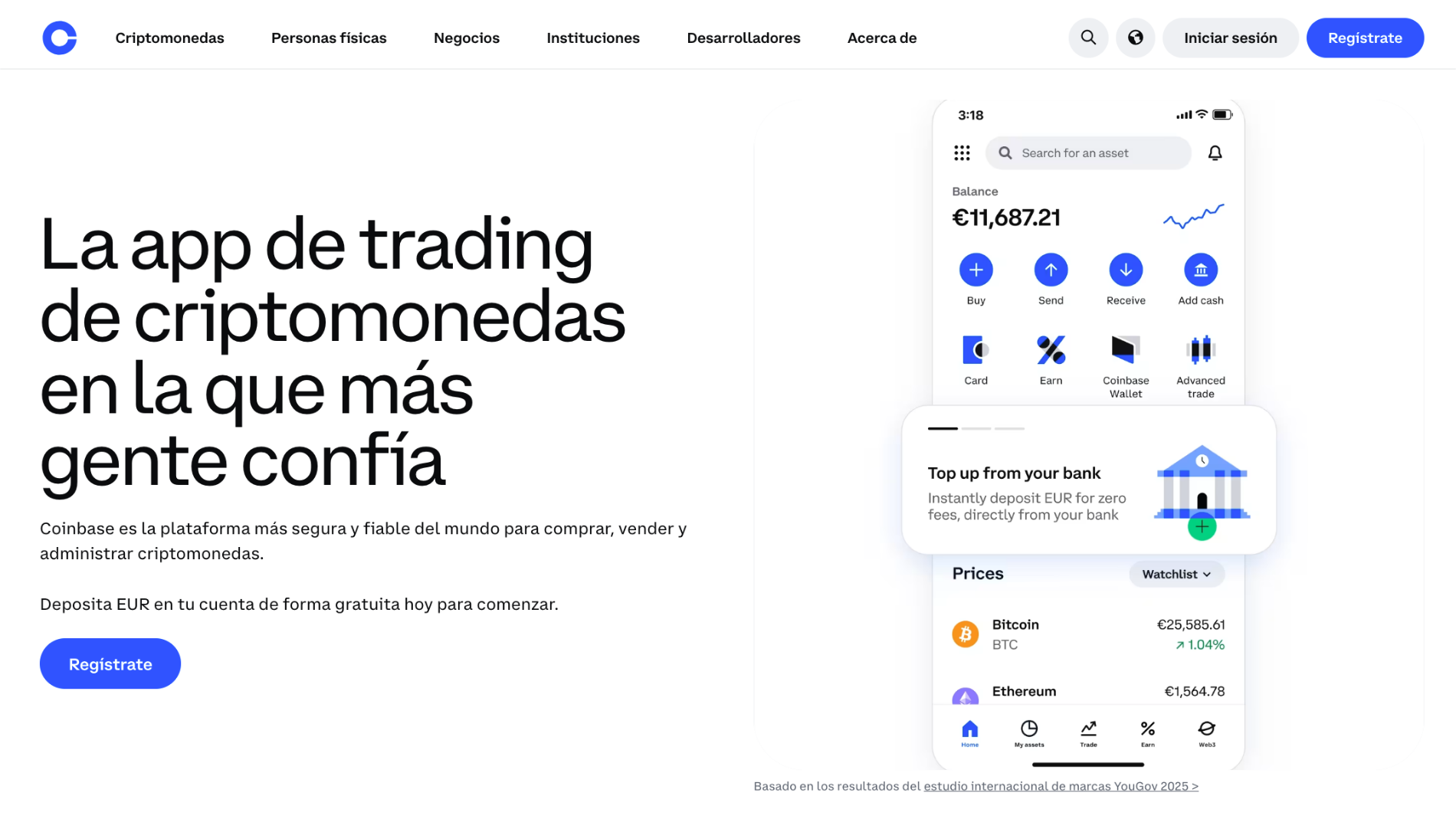
Few exchanges have as direct a relationship with a stablecoin issuer as the one Coinbase has with Circle: it’s not just another listing, but a company that has been a long-standing investor and partner of Circle, and that closeness is evident in how well EURC is integrated into its ecosystem, including Base, the L2 network that Coinbase itself is developing. The entity operating in the EU holds a MiCA license from the Luxembourg CSSF as of June 2025.
On Coinbase Advanced, trading fees range from 0.40% for makers to 0.60% for takers, depending on monthly volume, with no difference for EURC. The real advantage comes into play if you also use applications built on Base: transferring EURC between the exchange and that network is practically instantaneous—something not all competitors can replicate with the same fluidity. View full Coinbase review
Who is Coinbase for? For anyone who already uses or wants to start using the Base network and needs to transfer EURC between the exchange and that Layer 2 network without any complications.
Advantages:
- Direct link to Circle, the issuer of EURC
- Seamless integration with the Base network
- A well-known brand listed on the Nasdaq
Disadvantages:
- The standard app is significantly more expensive than the Advanced version
- No confirmation of support for EURI or EURR
- A change in the interface is needed to ensure reasonable rates
4. Bitstamp: Among the first to distribute EURC under the new MiCA regime
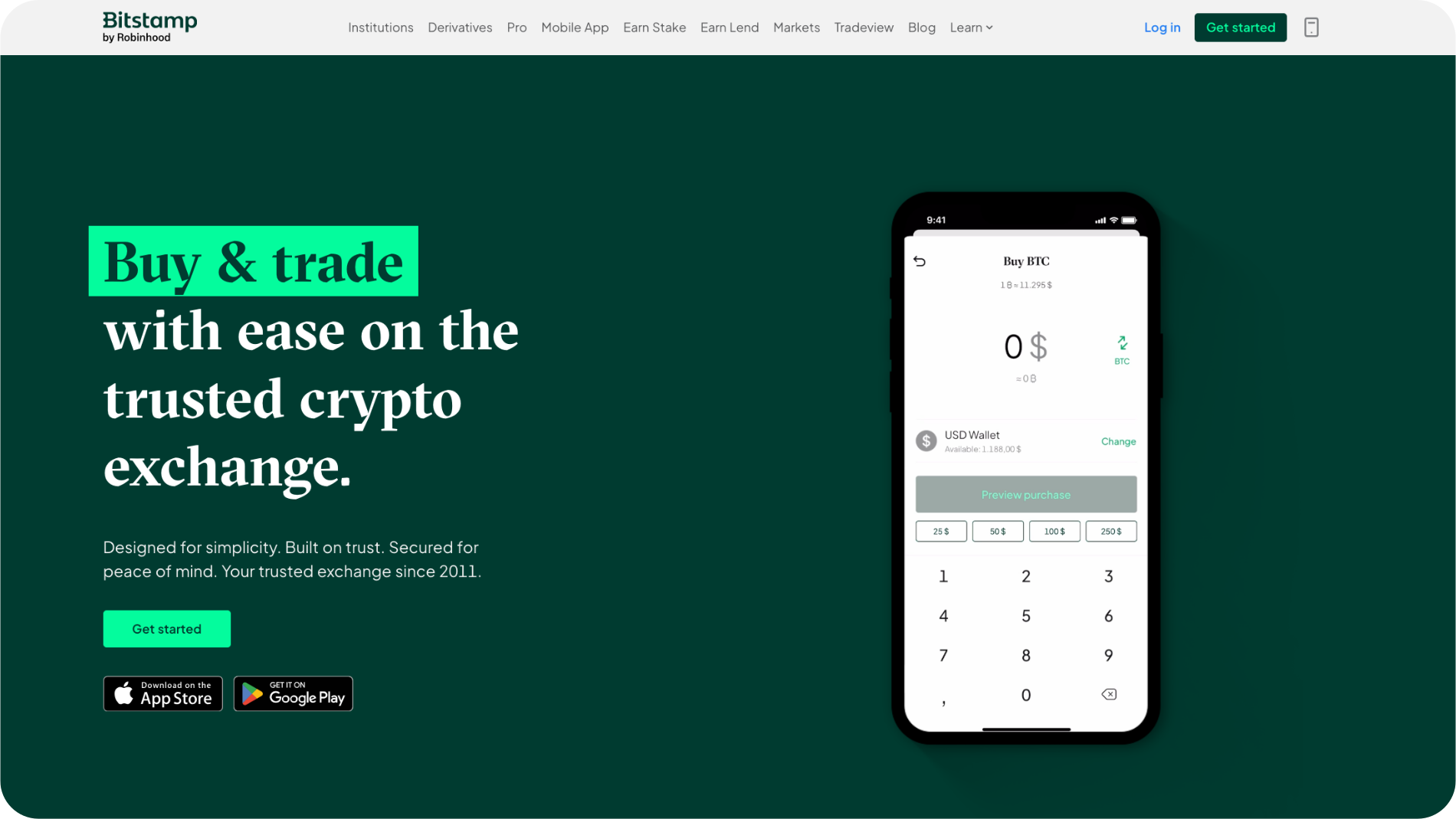
Bitstamp was already among the platforms distributing EURC in the first few months after MiCA’s stablecoin regime took effect, giving it a slightly longer track record than other exchanges in this ranking when it comes to handling this particular stablecoin. Headquartered in Luxembourg and owned by Robinhood since 2025, its MiCA license was granted by the CSSF in May 2025, supplemented by a MiFID license.
Its fee structure waives all fees for trades below 1,000 $ per month; above that threshold, the fees rise to 0.30% for makers and 0.40% for takers, which also applies to pairs involving EURC. For those just starting to trade tokenized euros and who do not exceed that volume threshold, this means trading virtually for free. See the full review of Bitstamp
Who is Bitstamp for? For anyone just starting to trade EURC who is interested in using one of the exchanges with the longest track record of distributing this particular stablecoin.
Advantages:
- One of EURC's longest-standing distributors under MiCA
- Free for monthly volumes under 1,000 $
- Dual Regulation Under MiCA and MiFID
Disadvantages:
- A more limited selection of cryptocurrencies than newer exchanges
- Higher commissions in the mid-volume range
- No confirmation of support for EURI or EURR
5. OKX Europe: Low prices for those trading in EURC as well
OKX built its reputation on aggressive commission rates for active traders, and that policy remains the same when the trading pair includes EURC instead of another cryptocurrency. It obtained its MiCA license from the Maltese MFSA in January 2025, among the first to be granted under the new European regulation.
With a 0.08% maker fee and a 0.1% taker fee on the spot market starting at the first tier, trading EURC on OKX Europe makes sense especially for those who already choose this exchange for its pricing and simply want to keep part of their balance in a stablecoin denominated in euros rather than dollars, with no additional cost for that tokenized currency conversion. View the full review of OKX Europe
Who is OKX Europe for? For traders who already prioritize low commissions and want their exposure to tokenized euros to cost no more than the rest of their trading activity.
Advantages:
- Fees among the lowest in the ranking, also with EURC
- Native wallet and access to Web3 features
- Audited reserves on a quarterly basis
Disadvantages:
- No separate guarantee fund
- No confirmation of support for EURI or EURR
- A brand that is less well-known than other European exchanges
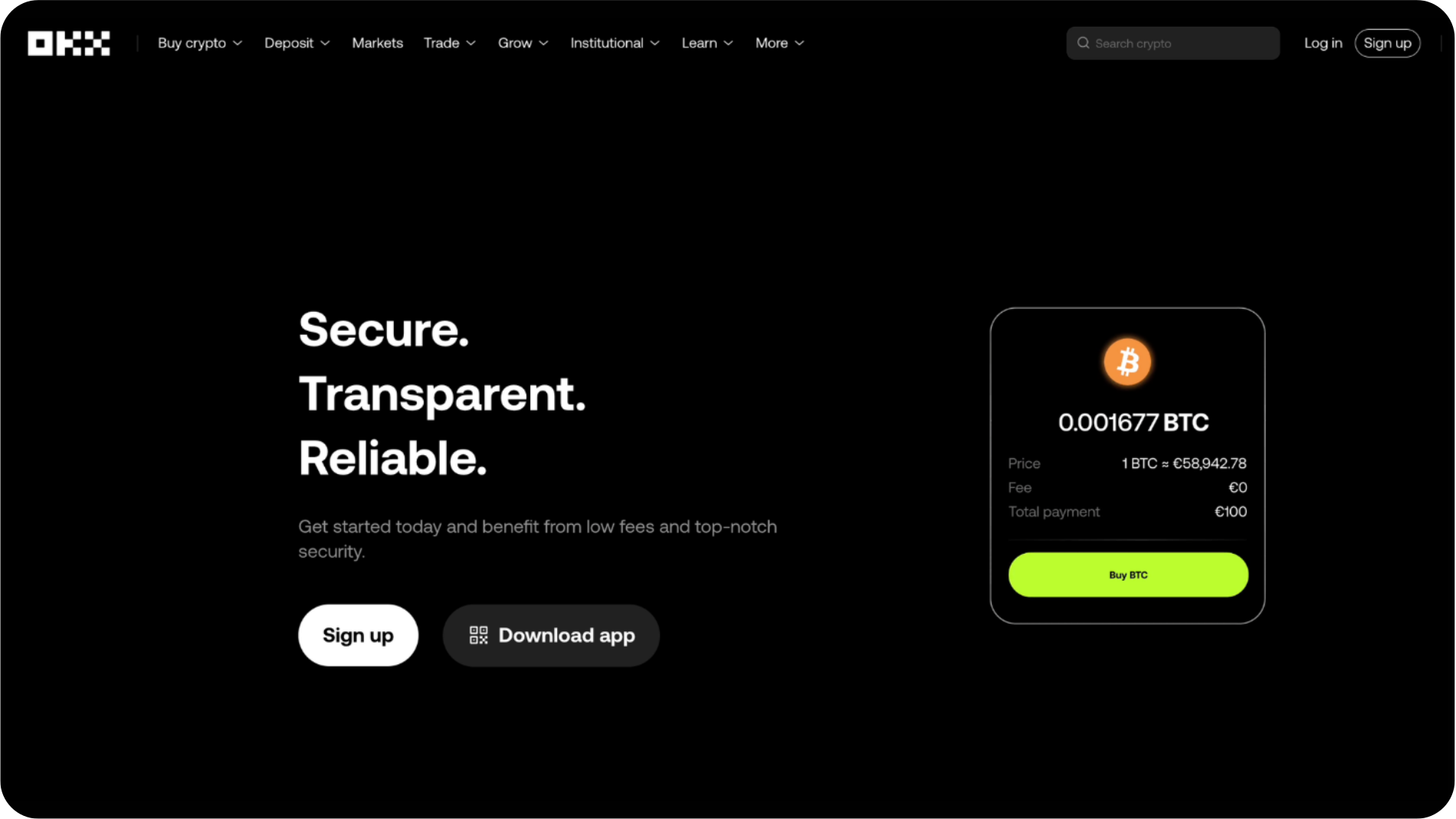
6. Crypto.com: Visa card linked to your balance, also in EURC
Crypto.com’s offering has always revolved around the card: the balance you have on the exchange doesn’t just sit there—you can spend it right away. Extended to EURC, this means you can hold a position in tokenized euros and use it in your day-to-day life just as if it were your checking account—something no other exchange in this ranking replicates with the same ease. Its MiCA license comes from the Maltese MFSA, backed by insurance of up to $750 million on the funds held in custody.
Fees start at 0.075% at the base rate and decrease if you stake CRO tokens, with no distinction for pairs involving EURC. The difference isn't in the transaction fee, but in the ability to spend that balance directly using the Visa card linked to the account. See the full review of Crypto.com
Who is Crypto.com for? For anyone who wants their balance in tokenized euros to be money they can actually use for everyday spending—not just a trading position.
Advantages:
- Balance in EURC that can be used directly with the Visa card
- Low fees at the basic level
- High insurance coverage for funds in custody
Disadvantages:
- Better terms require holding the CRO token
- No confirmation of support for EURI or EURR as of September 2026
- Ecosystem with a learning curve for new users
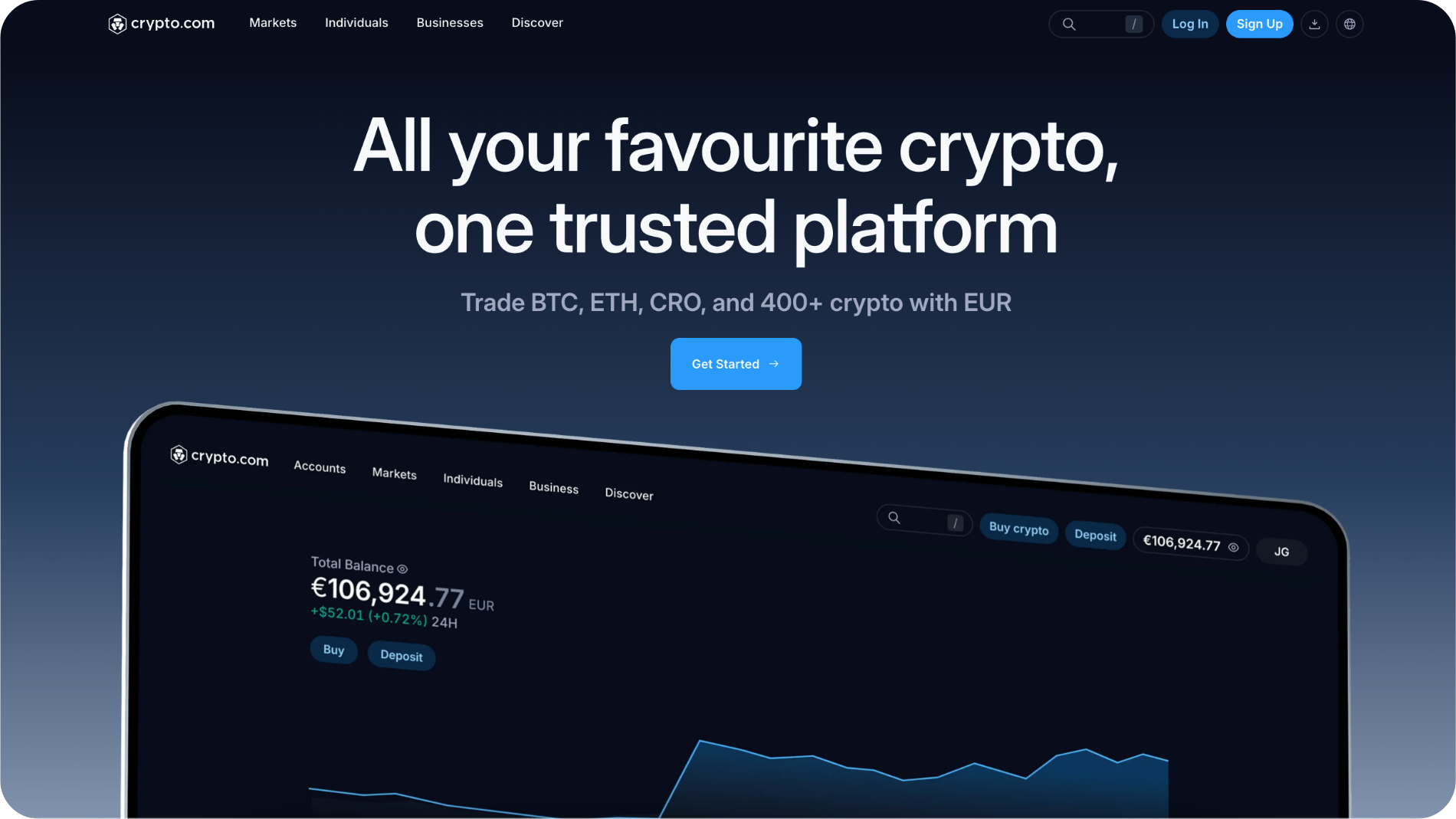
7. Bitpanda: EURC as part of a multi-asset portfolio
Bitpanda isn't just a crypto exchange: the same account holds stocks, ETFs, and precious metals, and EURC fits in as the piece that allows liquidity to be moved between those assets without the need to constantly convert to bank euros. Its MiCA license—one of the first in the industry—was granted by the Germany's BaFin in January 2025.
Fees vary depending on the asset in the standard app, while Bitpanda Fusion (the Pro version) starts at 0.25% at its first tier. The point of having EURC here isn’t to offer the lowest price on the market, but rather the convenience of switching between crypto, stocks, and metals without leaving a single app. See the full review of Bitpanda
Who is Bitpanda for? For those who already manage a diversified portfolio (stocks, ETFs, metals) and want EURC to serve as the liquidity that connects those assets.
Advantages:
- EURC integrated into a multi-asset ecosystem
- A Pioneer in MiCA Licensing in the Industry
- Deposits via bank transfer with no fees
Disadvantages:
- Buying and selling the standard app is expensive
- Support available in English only; no live chat
- No EURI or EURR confirmation in its catalog

8. Bybit EU: EURC as collateral, not just as a trading pair
At Bybit, margin trading and derivatives are at the heart of its offering, and EURC fits into this framework not so much as a pair to buy and sell, but rather as collateral that reduces reliance on the dollar when opening positions. The European firm, headquartered in Vienna, obtained a MiCA license from the Austrian FMA in May 2025.
Commissions decrease with trading volume, in line with other exchanges geared toward advanced traders. What sets Bybit EU apart in this ranking isn't the price, but the ability to maintain the margin for your leveraged positions denominated in euros rather than dollars. View the full review of Bybit EU
Who is Bybit EU for? For those who already trade derivatives and want their collateral to be in tokenized euros rather than dollars.
Advantages:
- EURC can be used as collateral for margin positions
- Strong focus on derivatives subject to European regulation
- Bybit Card integrated into the account
Disadvantages:
- Not recommended for those starting from scratch
- The global platform suffered a massive theft in 2025
- No confirmation from EURI or EURR
9. Gate: EURC as a gateway to a very extensive catalog
Gate has built its identity around listing more cryptocurrencies than almost anyone else, and that philosophy carries over to how it handles EURC: instead of limiting it to a single trading pair against the euro, it offers a large number of direct trading pairs between EURC and other cryptocurrencies in its catalog. Its MiCA license was granted by the Maltese MFSA Gate Technology Ltd in September 2025.
With fees starting at 0.10% at the entry level—which can be reduced using the GT token—the advantage of trading EURC here isn't so much the price as it is avoiding the intermediate step of using USDT or USDC when you want to trade directly for a less common altcoin.
Who is Gate for? For anyone who wants to exchange EURC directly for niche cryptocurrencies, without first converting it to a dollar-pegged stablecoin.
Advantages:
- A large number of direct trading pairs between EURC and other cryptocurrencies
- Additional discounts for holding GT tokens
- MiCA License from the Maltese MFSA
Disadvantages:
- A vast ecosystem, not well-suited for beginners
- Lower brand recognition than other exchanges in the ranking
- No confirmation from EURI or EURR
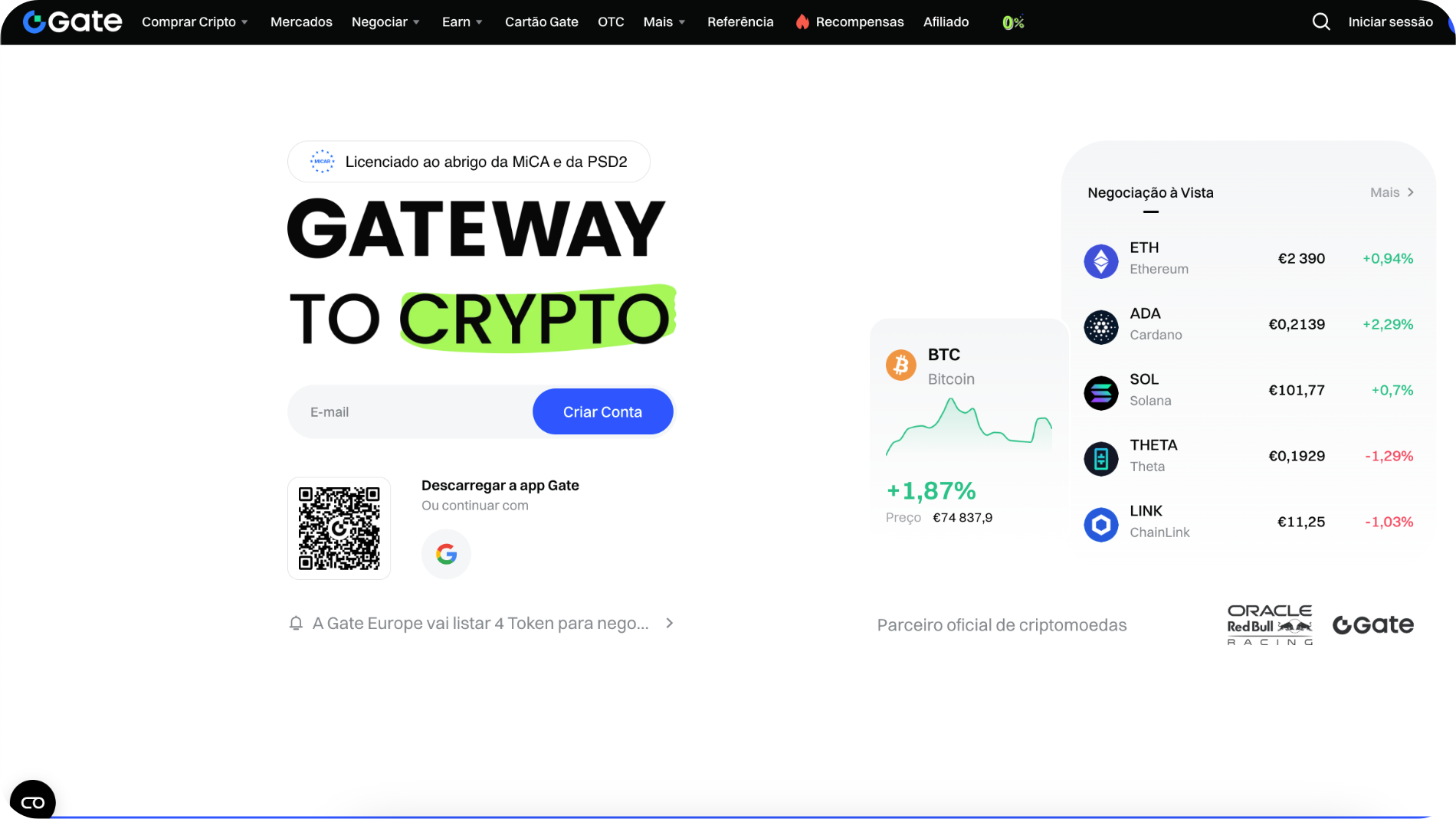
10. KuCoin: EURC in a catalog designed more for the dollar than for the euro
KuCoin was founded with a global focus, and its historical liquidity has been built around USDT, not the euro; therefore, EURC appears here more as an available option than as the platform’s central pillar. Its European entity, KuCoin EU, received a MiCA license from the Austrian FMA by the end of November 2025, although with some occasional operational restrictions imposed by the regulator during 2026.
Commissions start at 0.1% for spot trading, with discounts if you hold KCS tokens. It makes sense to trade EURC here, especially if you already use KuCoin for its selection of altcoins and would rather not open an additional account just to gain access to a euro-denominated stablecoin. See the full review of KuCoin
Who is KuCoin for? For those who already use the platform because of its selection of altcoins and want to add EURC without switching exchanges.
Advantages:
- Access to EURC within a very extensive selection of cryptocurrencies
- Additional discounts with the KCS token
- Operations in more than 200 countries
Disadvantages:
- Specific operational restrictions imposed by the Austrian regulator during 2026
- Less emphasis on the euro than the other exchanges in the ranking
- No confirmation from EURI or EURR
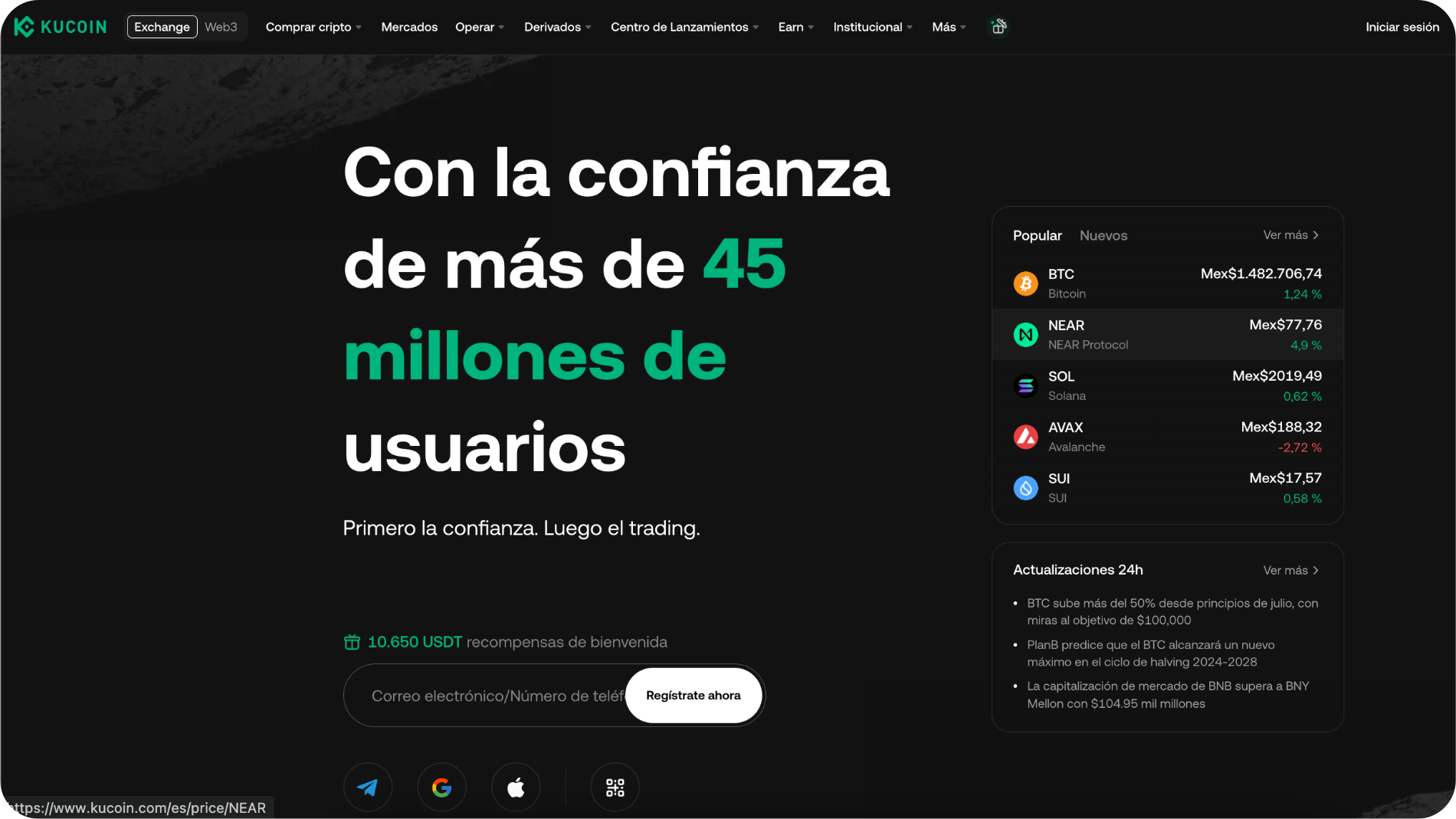
Comparison Table of Exchanges for Euro-Denominated Stablecoins
Now that we've looked at the 10 exchanges, here is a comparison table that summarizes the main deposit method, cost, minimum amount, and MiCA regulation for each one.
| Platform | EURC | EURI | EURR | Regulation |
|---|---|---|---|---|
 Bitvavo
|
Yes | Unconfirmed | Not available | MiCA (AFM, Netherlands) |
 Kraken
|
Yes (Circle's reference channel) | Unconfirmed | Not available | MiCA (Central Bank of Ireland) |
 Coinbase
|
Yes (integration with Base) | Unconfirmed | Not available | MiCA (CSSF, Luxembourg) |
 Bitstamp
|
Yes (early distributor) | Unconfirmed | Not available | MiCA + MiFID (CSSF, Luxembourg) |
 OKX Europe
|
Yes | Unconfirmed | Not available | MiCA (MFSA, Malta) |
 Crypto.com
|
Yes | Unconfirmed | Not available | MiCA (MFSA, Malta) |
 Bitpanda
|
Yes | Unconfirmed | Not available | MiCA (BaFin, Germany) |
 Bybit EU
|
Yes (as collateral) | Unconfirmed | Not available | MiCA (FMA, Austria) |
 Gate
Gate
|
Yes (extensive selection of pairs) | Unconfirmed | Not available | MiCA (MFSA, Malta) |
 KuCoin
|
Yes | Unconfirmed | Not available | MiCA (FMA, Austria) |
EURC is by far the euro-denominated stablecoin with the strongest confirmed presence among regulated exchanges. EURI (Eurite) is growing, although its verified listings so far are concentrated on platforms outside this ranking. EURR, the most recent of the three, continues to be distributed almost exclusively through the Revolut app.
What are EURC, EURI, and EURR, and how do they differ?
All three are authorized under MiCA's electronic money token (EMT) regime, which requires their issuer to hold 100% of reserves in segregated accounts within the EU and to redeem the value at par at any time you request it.
- EURC: issued by Circle Mint Europe SAS, authorized by the French ACPR July 1, 2024. It is by far the most widely used and most prevalent among the exchanges in this ranking, available on various blockchains such as Ethereum, Solana, Avalanche, Base, and Stellar.
- EURI (Eurite): Issued by Banking Circle S.A., a Luxembourg-based bank supervised by the CSSF. Its circulation is lower than that of EURC, and its adoption among exchanges is still in the early stages.
- EURR: Launched by Revolut in August 2026 through Bridge Building S.A. (a subsidiary of Stripe), also under the supervision of the CSSF. It is the most recent of the three, and as of September 2026, it is distributed almost exclusively within the Revolut app itself, with no confirmed presence on the exchanges in this ranking.
How did we selected the exchanges in this ranking
| Criteria | What We Evaluate | |
|---|---|---|
| 1 | Deposit Methods in EUR | What options does each exchange offer for depositing euros, including SEPA transfers, SEPA Instant, and other available payment methods?. |
| 2 | Deposit Cost | Whether depositing euros is free or subject to a fee, distinguishing between bank transfers, SEPA Instant, cards, and other available methods. |
| 3 | Speed of entry | The time it takes for a deposit in euros to appear in the account, with special attention to SEPA Instant and standard SEPA transfers. |
| 4 | Converting EUR to Cryptocurrencies | The cost of using deposited euros to buy cryptocurrencies, taking into account both trading fees and the spread applied. |
| 5 | Euro Withdrawal | Convenience, affordability, and speed when subsequently transferring euros to a bank account via SEPA or other available methods. |
| 6 | MiCA License and European Operations | We verify each exchange's MiCA authorization and its ability to offer services to European users by checking the regulated entity and the corresponding registration. |
We verified each listing directly in Circle and Banking Circle's public documentation in September 2026, not just based on what each exchange announced.
Regulation of Euro-Denominated Stablecoins in Europe
Unlike the rest of MiCA, which took full effect on December 30, 2024, the part of the regulation governing stablecoins (the electronic money token regime, set forth in Title IV) was moved up to June 30, 2024. Brussels wanted to curb the use of unsupervised stablecoins as an informal substitute for the digital euro as soon as possible, which is why the regulatory timeline for EURC, EURI, and EURR was moved up ahead of that for the other exchanges that distribute them.
Being an EMT entails something that no ordinary cryptocurrency has: the issuer is required, under Article 51 of MiCA, to redeem the face value in euros at par upon your request. That obligation falls on the issuer and its regulator (the French ACPR for EURC, the Luxembourg CSSF for EURI and EURR), not on the exchange where you trade it: the exchange is merely the point of access.
Important note: The fact that a euro-denominated stablecoin complies with MiCA does not make it a guaranteed bank deposit. The Deposit Insurance Fund does not cover EURC, EURI, or EURR; what MiCA covers is the issuer’s obligation to redeem the stablecoin, not a government guarantee like the one for your checking account.
The information presented in this ranking is for informational and educational purposes only. It does not constitute financial or tax advice, nor is it a personalized investment recommendation. Using cryptocurrency exchanges involves risks, and each user is responsible for assessing which platform best suits their profile, as well as for complying with applicable regulations and their legal and tax obligations under current Spanish law. Some links in this ranking are affiliate links: if you open an account through them, Exchange Selector may receive a commission at no additional cost to you. This does not influence the criteria or the order of this ranking.
FAQ on Euro-Denominated Stablecoins (EURC, EURI, EURR)