
Before we dive into the detailed analysis, here's a summary of Kraken's most important data at a glance.
Quick overview

Kraken
- Headquarters
- Wyoming, Estados Unidos
- Regulated by
- Wyoming (SPDI) y Banco Central de Irlanda (MiCA)
- Cryptocurrencies
- More than 700
- Maker / taker fees
- 0,40 % / 0,80 %
- Minimum deposit
- 10 €
- Ideal for
- Advanced trading and global access
Investing in cryptocurrencies carries the risk of partial or total loss of capital. The content of this review
is informative and does not constitute financial advice.
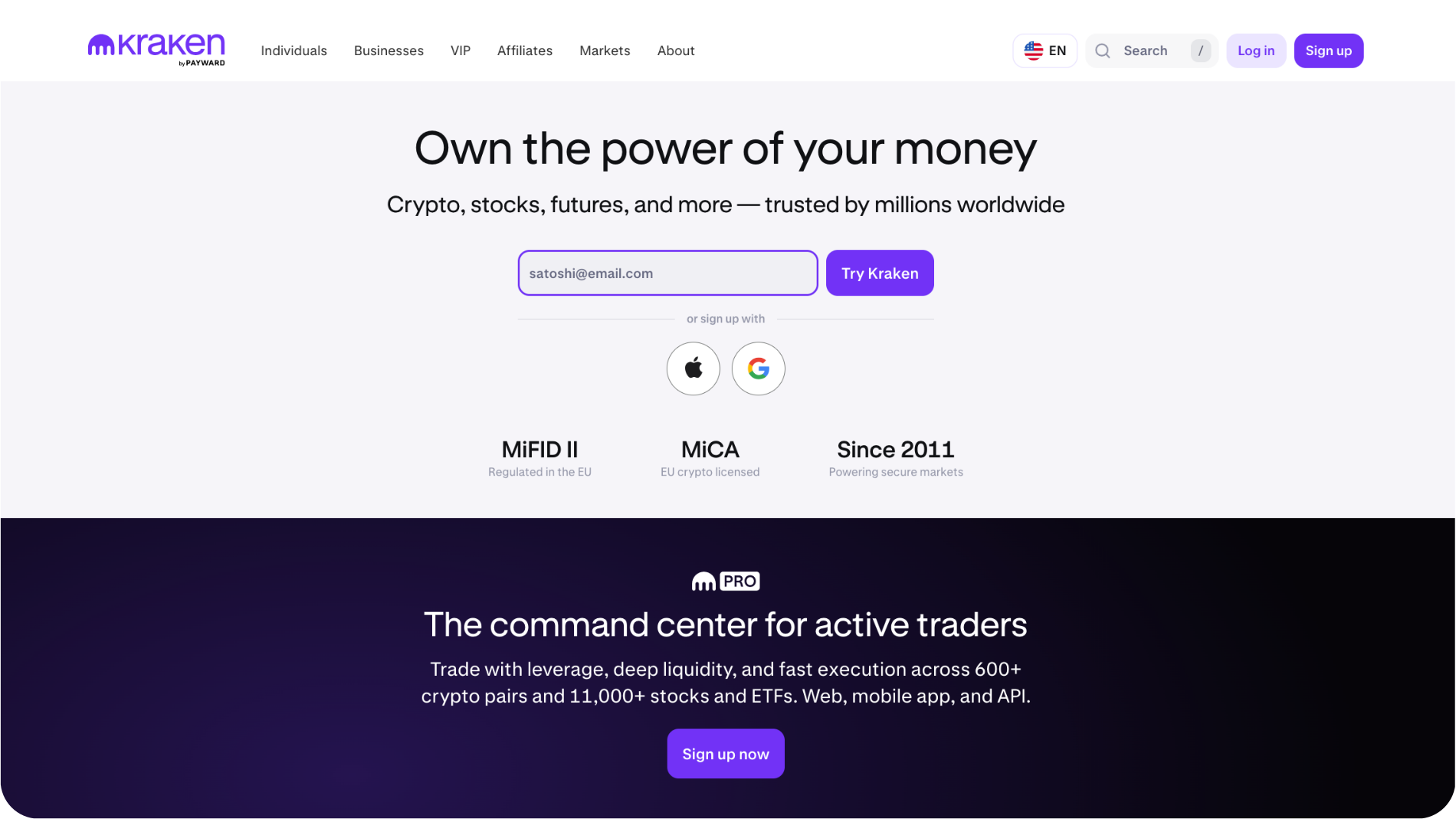
Kraken: cryptocurrencies and stock exchange in a single regulated platform
Kraken is one of the industry’s oldest exchanges, established in 2011 and now has more than 13 million users. Offers over 700 cryptocurrencies and over 11,000 stocks and ETFs from the web, mobile app and API. If you’re looking for more control, Kraken Pro has a logbook with limit orders, margin operations and advanced analysis. Forbes chose it as the best crypto exchange of 2025.
In the EU, Kraken obtained a MiCA license from Central Bank of Ireland for spot trading in June 2025. Its subsidiary regulated by CySEC in Cyprus covers MiFID II products: derivatives, xStocks and, more recently, traditional stocks. Between the two licenses it can serve throughout the EEA. In security offers two-step authentication and access keys, and has 24/7 human support on the web and in the app.
Who is Kraken for? For those who want to trade cryptocurrencies and stocks on a single regulated platform, from a few euros to advanced trading tools.
Advantages:
- European dual license: MiCA for crypto and MiFID II for derivatives and stocks
- More than 700 cryptocurrencies and over 11,000 shares and ETFs in one account
- Kraken Pro with order book, margin, API and 24/7 support
Disadvantages:
- The single purchase costs 1% plus the spread, much more than in Kraken Pro
- The single purchase costs 1% plus the spread, much more than in Kraken Pro
- Crypto withdrawals have a fixed fee that varies by asset
Crypto withdrawals have a fixed fee that varies by asset
Kraken serves customers from almost all over the world, with some regulatory exceptions. If you live in the European Economic Area, you contract with its Irish subsidiaries, authorised by the Central Bank of Ireland (MiCA) and with a passport for all 30 EEA countries. Derivatives and stocks, on the other hand, depend on its CySEC-regulated Cypriot subsidiary.
Your country determines what you can use. In the EEA, there are no USDT or other stablecoins not adapted to MiCA, and Opt-in Rewards only work with Bitcoin. There are no xStocks in the UK or Canada, nor derivatives for retail customers. In the UK, new accounts wait 24 hours before trading.
Kraken does not serve customers from Russia, Iran, Japan, Syria, Cuba or North Korea, among other countries and regions such as Crimea, Donetsk and Luhansk. Some areas also do not accept card deposits. Before registering, check the updated list on the official Kraken website.
Security in Kraken: account safekeeping, certifications and protection
Kraken combines cold storage and hot wallets to guard funds, with infrastructure in 24-hour guarded facilities. It has ISO/IEC 27001:2022 and SOC 2 Type 1 certifications, encrypts sensitive data and maintains its own team that tests its systems, as well as a bug bounty program open to external researchers.
On the account, Kraken supports 2FA compatible with FIDO2 and access keys, and does not allow retrieval by mobile or SMS. Adding withdrawal addresses requires email confirmation, and you can limit API key permissions, activate a global configuration lock, and encrypt emails with PGP.
| Characteristic | Data |
|---|---|
| Certifications | ISO 27001 and SOC 2 Type 1 |
| Exchange type | Cold and hot storage |
| Authentication | 2FA FIDO2 and access keys |
| SMS recovery | Not available |
| New withdrawals | Confirmation by mail |
| API keys | Granular permissions |
| Monitoring | 24/7 real-time |
| Bug bounty | Yes |
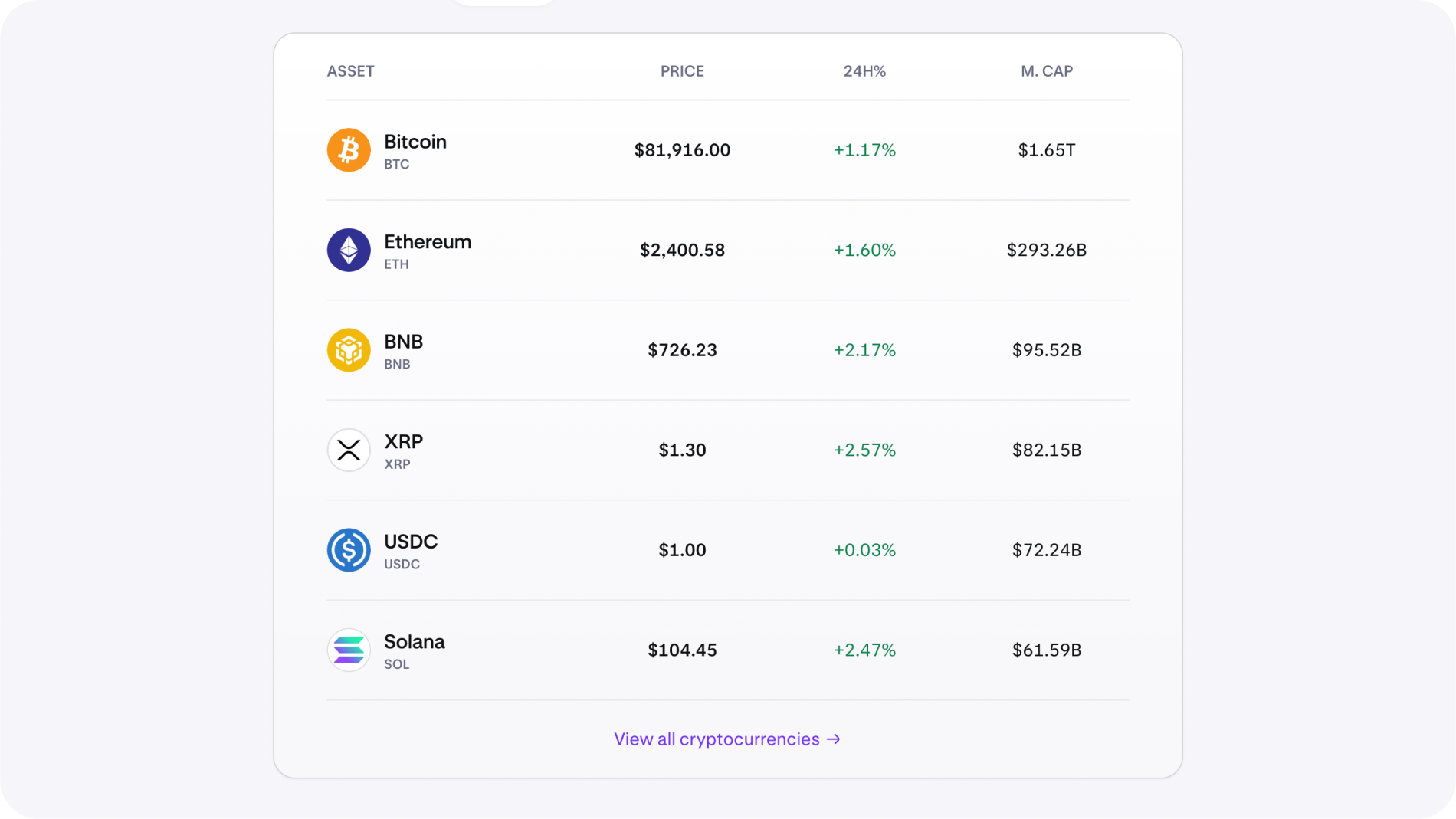
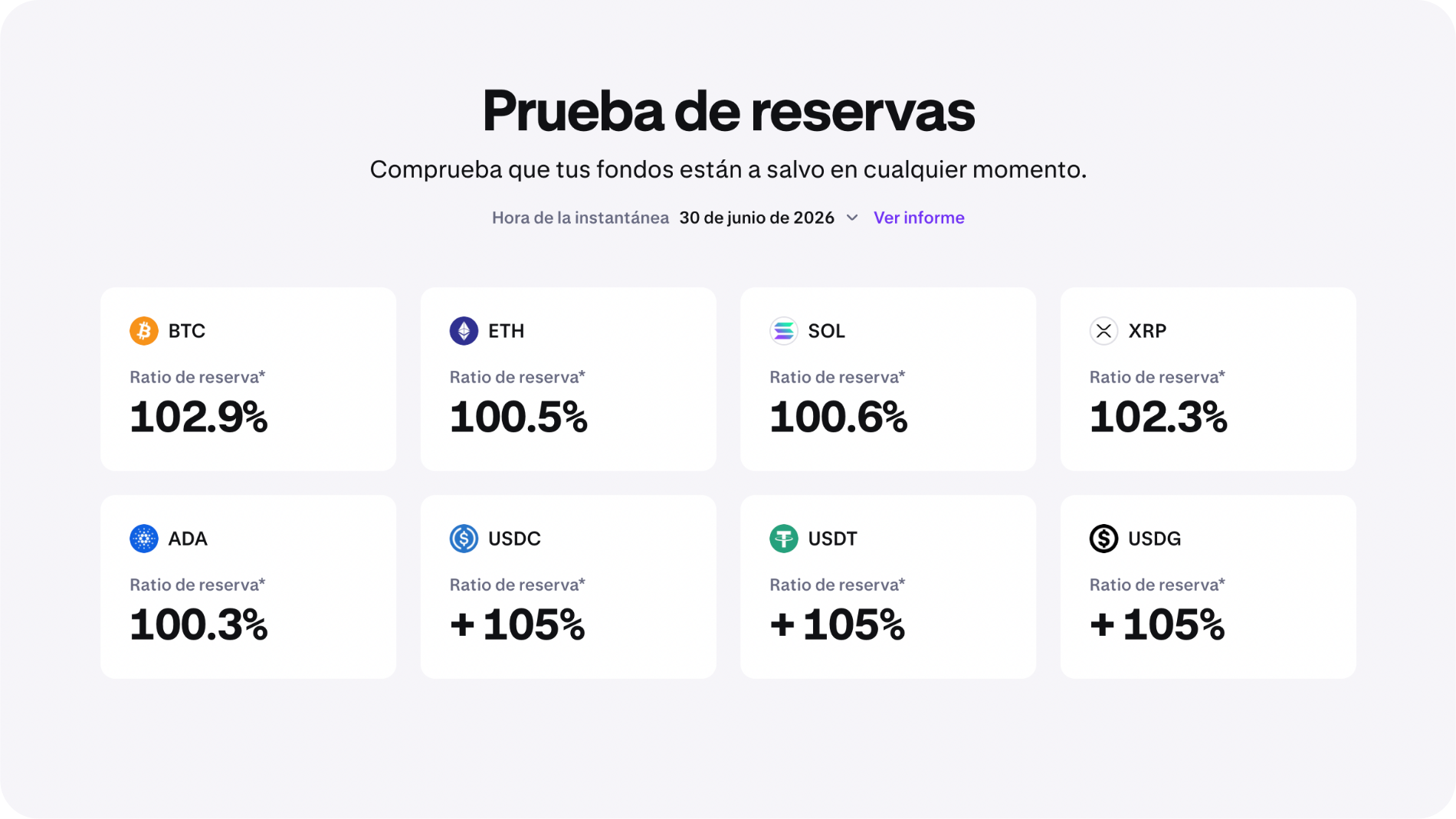
Kraken Proof of Reserve
Kraken conducts regular reserve test audits with an external auditor, covering the assets of the exchange and on-chain staking service. The goal is to provide transparency about whether the platform supports what it claims to protect, rather than asking you to trust it just like that.
As a customer, you can log in to your account and check if Kraken had custody of the covered tokens at the time of audit. Kraken also posts the audit process on their website, so you can check how it’s done.
Kraken deposits and withdrawals: currency, card and cryptocurrencies
Kraken allows you to deposit and withdraw fiat money and cryptocurrencies. Traditional currencies include USD, EUR and CAD. You can add funds by bank transfer, debit or credit card, Apple Pay, Google Pay and PayPal, depending on your country. Euro deposits via SEPA are free.
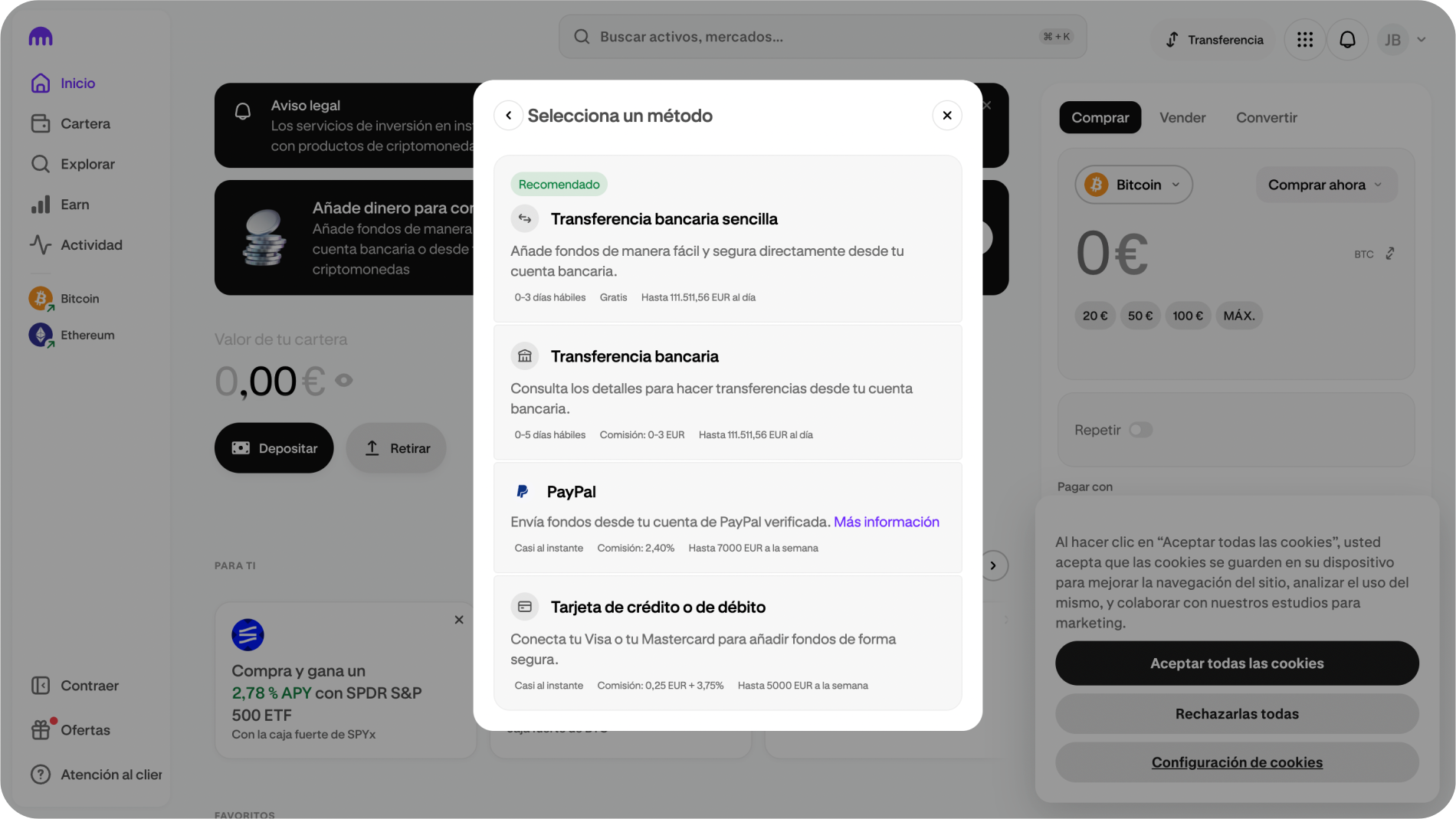
Bank transfers take 1-5 business days, while card methods are usually faster. In cryptocurrencies you can deposit and withdraw on available assets, although withdrawals have a fixed fee that varies by asset. The minimum deposit is €10.
| Characteristic | Data |
|---|---|
| Fiat currency | USD, EUR and CAD |
| Payment Methods | Transfer, card, Apple Pay, Google Pay and PayPal |
| EUR deposit (SEPA) | Free |
| Bank transfer | 1-5 working days |
| Minimum deposit | 10 € |
| Crypto deposits | Yes |
| Crypto Withdrawal | Fixed rate per asset |
Instant buy and sell fees on Kraken
Kraken’s instant buy and sell allows you to buy, sell or convert cryptocurrencies from the web or app. The trading fee is 1% on instant and recurring trades, and 1.5% on custom orders. Kraken+ subscribers don’t pay it up to $10,000 of volume per month.
In addition, payment fees may apply depending on the method: credit or debit card, Apple Pay, Google Pay, transfer or account balance. The "Convert Small Balance" feature charges a flat 3% fee on amounts below the minimum order size. To pay less, use Kraken Pro.
| Concept | Fee |
|---|---|
| Instant transactions | 1 % |
| Recurring Purchases | 1 % |
| Custom orders | 1,5 % |
| Convert small balances | 3 % fixed |
| Payment fee | According to the method |
| With Kraken+ | 0% up to $10,000/month |
Staking in Kraken: earn rewards with Auto Earn
Auto Earn is the staking feature of Kraken: by activating it, part of your supported cryptos go towards flexible on-chain staking or Opt-In Rewards, and you generate performance without periods of blocking. You can trade, withdraw or use the assets as collateral at any time. Rewards accrue daily and are paid weekly.
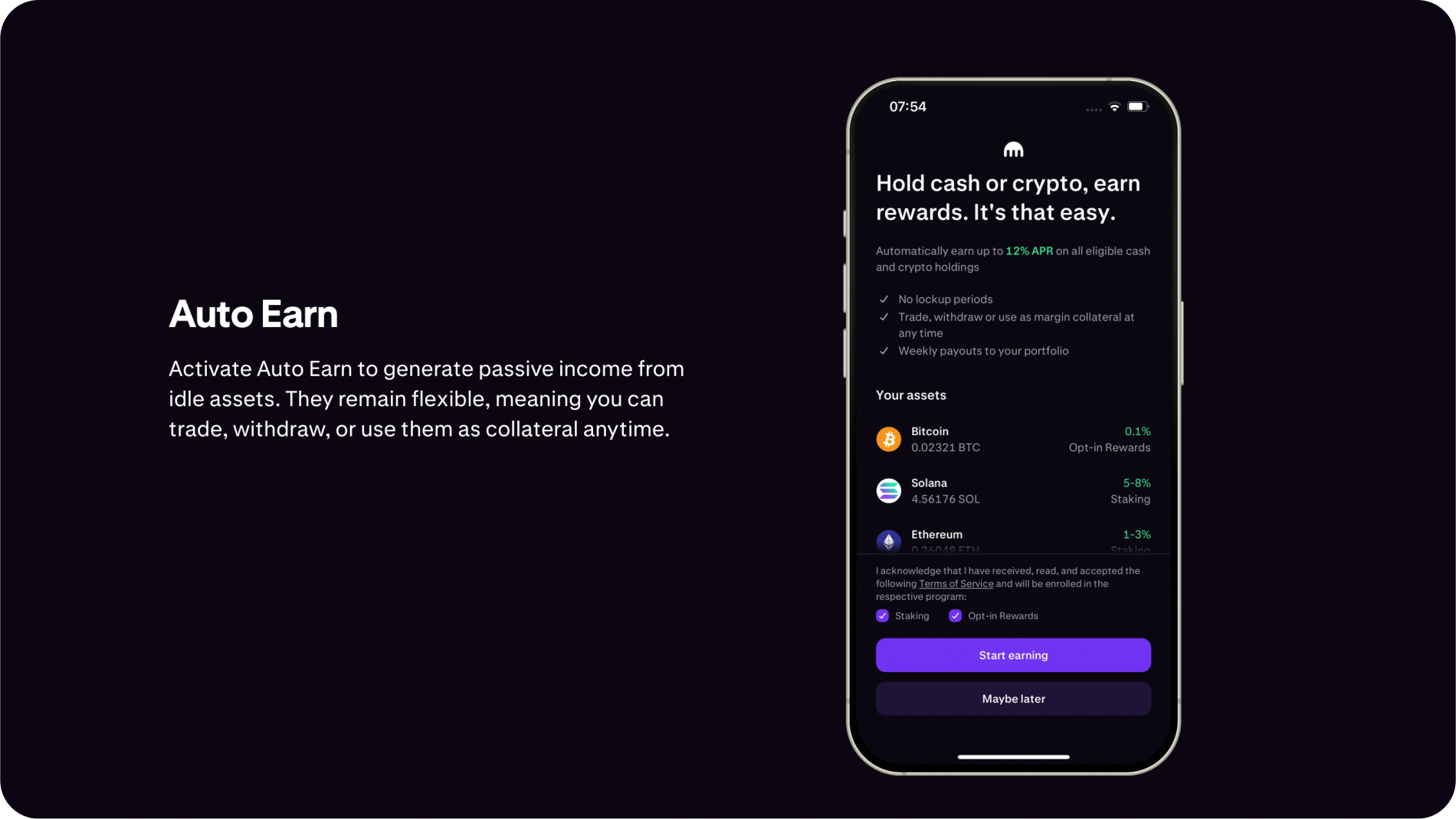
There are about 27 supported cryptocurrencies, with estimated returns ranging from 0.1% APY in Bitcoin to 11.71% in Mina. Ethereum is around 1.35% and Solana 2.39%. The profits are added to your balance and accumulate. Kraken charges a commission on the rewards generated.
| Characteristic | Data |
|---|---|
| Function | Auto Earn |
| Blocking of funds | No block periods |
| Payment reward | Weekly |
| Admitted payments | 27 cryptos |
| Maximum APY | 11,71 % (MINA) |
| APY in ETH / SOL | 1,35 % / 2,39 % |
| Minimum balance per asset | More than 1 USD |
| Fee | Over rewards |
Kraken+: the premium subscription of Kraken with trading without commissions
Kraken+ is the premium subscription of Kraken. Eliminates transaction fees in up to $10,000 per month of volume, and only on the buying, selling and conversion features of the web or app. Does not cover Kraken Pro or the API. Spread and payment processing fees still apply.
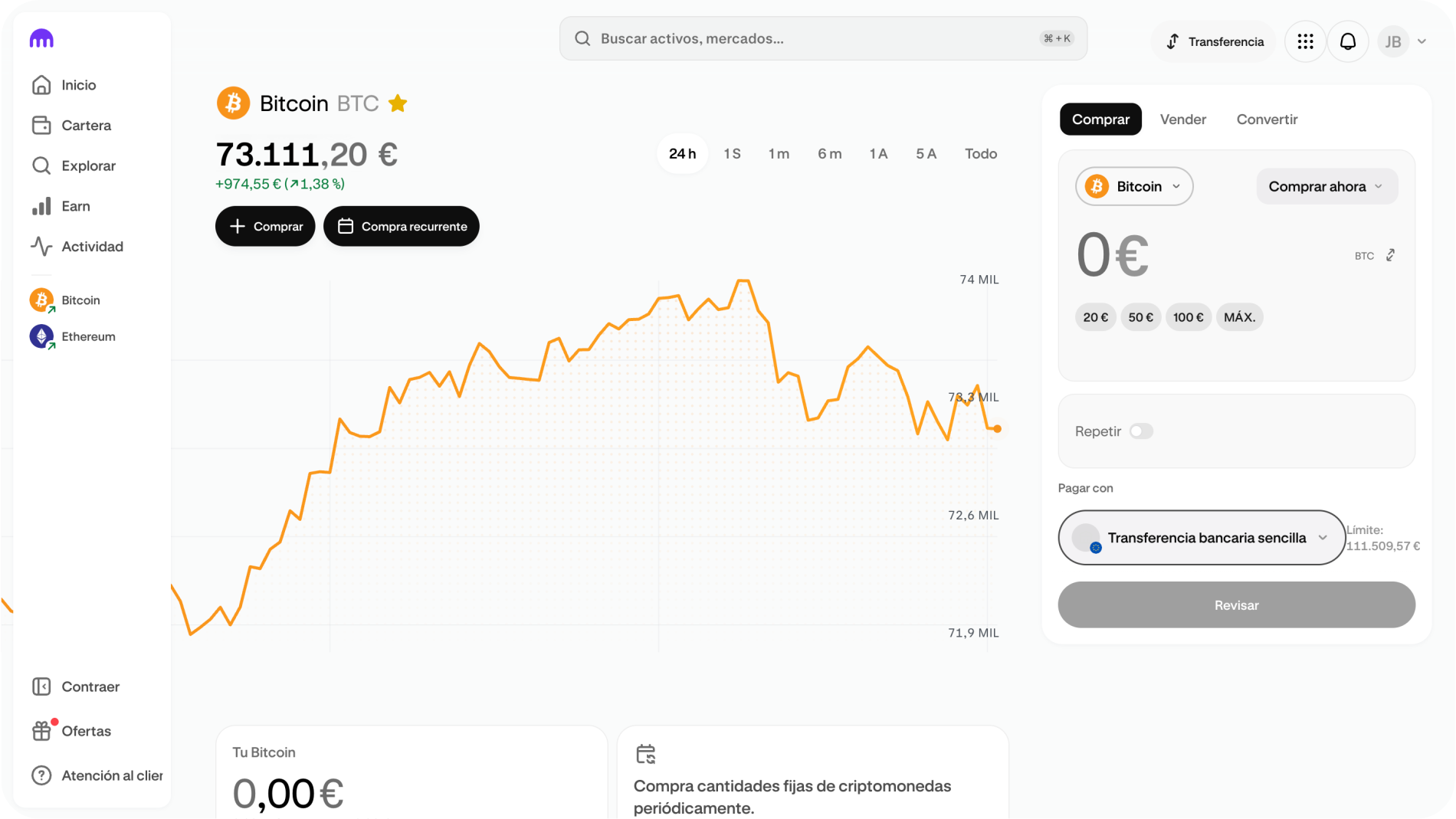
Also improves the performance of stablecoins such as USDG, USDC, RLUSD and qCAD, with up to 4.5% APY in USDG; no subscription receives about half. Add access to Kraken Reef airdrops, faster support and free tax reports with Koinly. It costs $4.99 per month and offers 30 days of free trial.
| Characteristic | Data |
|---|---|
| Price | $4.99/month or $49.99/year |
| Free Trial | 30 days |
| Trading without commissions | Up to $10,000/month |
| Stablecoins | Up to 4,5 % APY (USDG) |
| Airdrops | Kraken Reef |
| Support | Priority |
| Cancellation | Any time |
TradFi futures on Kraken: indices, gold and CME market currencies
TradFi futures are CME contracts on stock indices, currencies and commodities such as the S&P 500, Nasdaq, gold or oil. You trade them from Kraken Pro, in long or short, and they settle in cash, without owning the real asset. There are over 70 contracts, including micro and mini, of smaller size.
The intraday margin reduces the required capital: some microcontracts are opened with only 50 USD. You instantly transfer funds to your futures wallet for free and operate 23 hours, five days a week. You pay brokerage and market fees by contract, on entry and exit.
| Characteristic | Data |
|---|---|
| Contracts | 70+ of CME |
| Assets | Index, currencies and commodities |
| Schedule | 23 h, Monday to Friday |
| Margin | 50 USD (micro) |
| Liquidity | Cash |
| Available for | EEA Kraken Pro customers |
| Regulation | CySEC (MiFID II) |
Kraken stocks: over 7.000 securities without trading fees
Kraken allows investment in more than 7,000 stocks of NYSE, NASDAQ and AMEX, from blue chips like Apple or NVIDIA to emerging securities. Unlike xStocks, they are traditional actions. You trade from the same app where you already have your crypto, with no trading fees, although other costs may apply.
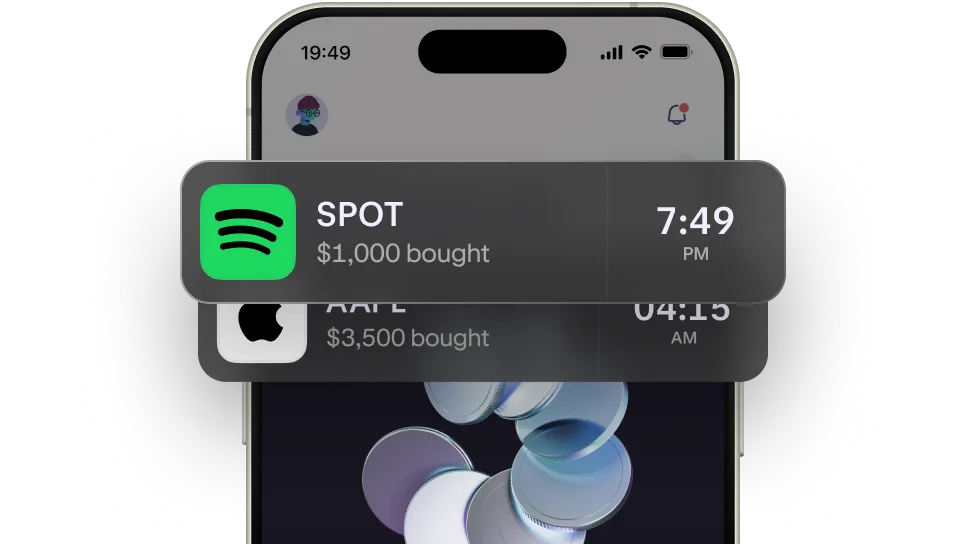
You can send orders at any time: if the market is closed, they are executed when the next session opens. After selling, you have the money available instantly. In Kraken Pro you operate 24 hours from Monday to Friday. Securities lending, optional, can give you unsecured income.
| Characteristic | Data |
|---|---|
| Stocks | 7.000+ |
| Markets | NYSE, NASDAQ and AMEX |
| Trade Fee | No fees |
| Kraken Pro schedule | 24h, monday to friday |
| Securities lending | Optional |
| Available for | EEE cityzens |
| Regulation | CySEC (MiFID II) |
xStocks: US stocks and ETFs tokenized in Kraken
The xStocks are tokenized versions of US stocks and ETFs, such as Apple, Tesla or the S&P 500. Each token is backed 1:1 by the real asset, so its price follows market. Buy them from the Kraken app, along with your cryptos, and you can start with just €1.
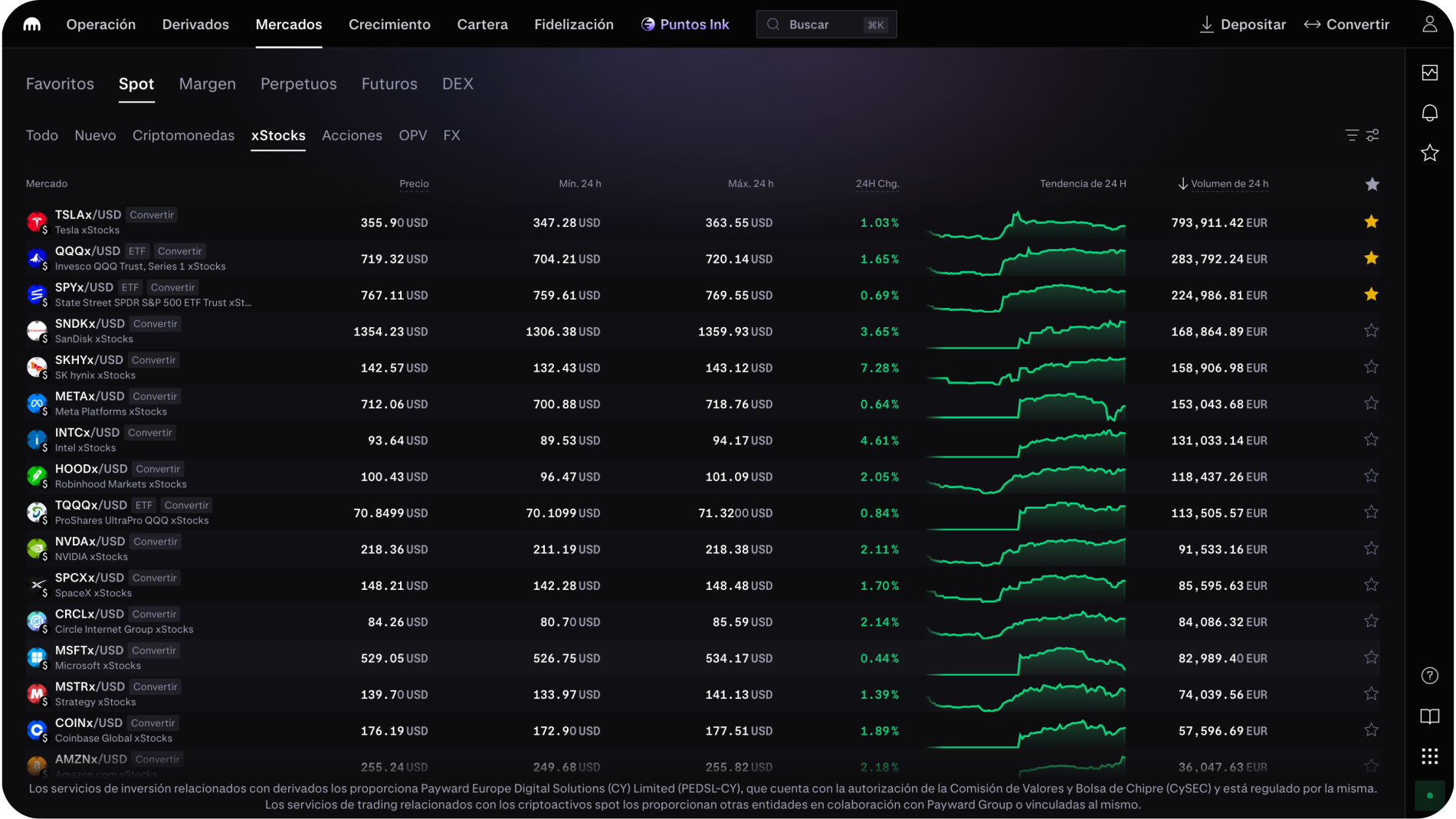
You can trade 24 hours a day, from Monday to Friday, and withdraw your tokens to your own wallet. Dividends are not paid in cash: they are reinvested automatically and your token balance increases. To buy in the EU, Kraken asks you for an eligibility test first.
| Characteristic | Data |
|---|---|
| Assets | 130+ stocks and ETF's |
| Backup | 1:1 |
| Minimum investment | 1 € |
| Schedule | 24h, monday to friday |
| Dividends | Reinvested |
| Vote rights | No |
| Withdrawal | To your wallet |
| Requirement | Suitability test |
xStocks fees on Kraken Pro
Kraken applies a maker-taker structure to xStocks based on your volume for the last 30 days, either from crypto spot or from xStocks spot. You start with 0% as maker and 0.08% as taker, and the taker goes down with volume. At higher levels, the maker becomes negative.
| Volume (30 days) | Maker | Taker |
|---|---|---|
| From $0 | 0 % | 0,080 % |
| From 1 M$ | 0 % | 0,070 % |
| From 10 M$ | 0 % | 0,055 % |
| From 50 M$ | -0,003 % | 0,050 % |
| From 100 M$ | -0,005 % | 0,045 % |
| From 1.000 M$ | -0,010 % | 0,025 % |
Kraken Pro: the advanced interface of your Kraken account
Kraken Pro is the advanced version of Kraken’s own platform, not a separate exchange. You use the same account, the same order book and the same liquidity, but with a more complete trading interface: charts, advanced orders and all your spot, margin and staking in one panel. No need to upgrade your account.
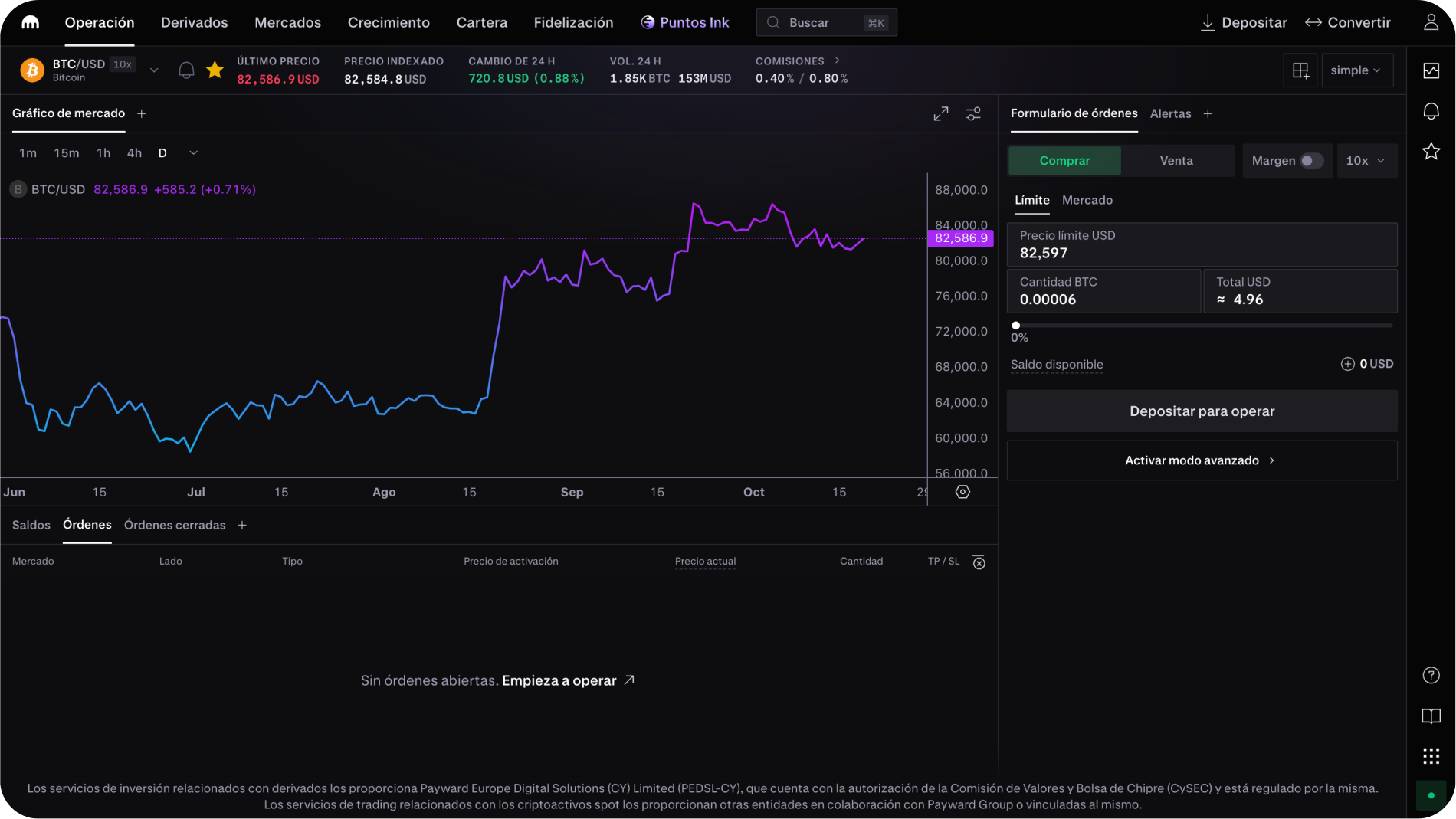
For hassle-free shopping, the regular app is sufficient; Kraken Pro compensates if you want to choose your price with limit orders, monitor the order book or use stop loss and take profit. You can customize more than 25 widgets and save multiple dashboards, on the web, mobile, or desktop. Used with your current account.
| Characteristic | Data |
|---|---|
| Account | Same as Kraken |
| Account upgrade | No needed |
| Available on | Web, phone and PC |
| Markets | Spot, margin and staking |
| Customization | 25+ widgets |
| Orders | Stop loss, take profit, IOC |
| Compare markets | Up to 4 at a time |
| Trading OTC | From 50.000 USD |
Spot fees on Kraken Pro: how much you pay for trading
On spot, Kraken Pro charges a commission for each trade which depends on two things: your volume of the last 30 days and whether your order is maker or taker. A maker order stays in the book waiting for someone to accept it; a taker is executed instantly. You always see the commission before confirming.
If you start from scratch, you pay 0.40% as a maker and 0.80% as a taker, and section drops depending on the number of operations. It’s cheaper than the simple app purchase, which costs 1% plus the spread. To pay less, use limit orders that act as a maker.
| 30-day volume (USD) | Maker | Taker |
|---|---|---|
| From $0 | 0,40 % | 0,80 % |
| Over $2,500 | 0,30 % | 0,60 % |
| Over 10.000 $ | 0,22 % | 0,38 % |
| Over 25.000 $ | 0,20 % | 0,35 % |
| Over 50.000 $ | 0,15 % | 0,30 % |
| Over 100.000 $ | 0,12 % | 0,25 % |
| Over 250.000 $ | 0,10 % | 0,22 % |
| Over 500.000 $ | 0,08 % | 0,20 % |
| Over 1.000.000 $ | 0,06 % | 0,18 % |
Kraken Pro futures fees
Kraken applies levels of maker-taker fees that fall based on your spot, margin and futures volume, and your assets on the platform (AoP), from the last 30 days. You start with a 0.02% maker and a 0.05% taker, and at high levels the maker becomes negative, that is, you are paid to provide liquidity.
| Futures volume (30 days) | Maker | Taker |
|---|---|---|
| Less than 5 M$ | 0,02 % | 0,05 % |
| From 10 M$ | 0,015 % | 0,04 % |
| From 25 M$ | 0,01 % | 0,03 % |
| From 50 M$ | 0,005 % | 0,025 % |
| From 100 M$ | 0 % | 0,02 % |
| From 250 M$ | -0,003 % | 0,0175 % |
| From 500 M$ | -0,005 % | 0,015 % |
| From 2.000 M$ | -0,006 % | 0,013 % |
Krak: the Kraken app for spending, sending and generating performance
Krak is the personal account app of Kraken: a single application to add funds, spend with the Krak card, send money with your Kraktag, no need for IBAN, and generate returns. It is intended to be used as a normal bank account, even if you have never operated with crypto, although it is not a bank.
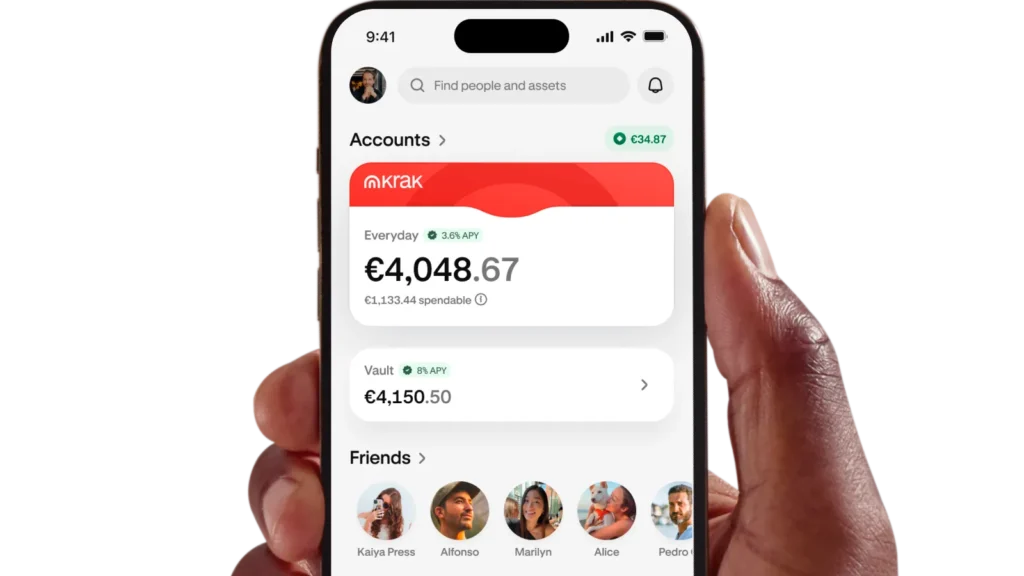
With the balance you earn an automatic 3.6% APY on eligible cryptoassets, or up to 5.12% on safes. Transfers have no commission and any fees are shown before confirming. You have 24/7 support in the app.
| Characteristic | Data |
|---|---|
| Available on | App Store and Google Play |
| Account | Free · not a bank |
| Add funds | Cripto, card or transfer |
| Deliveries | 600+ currencies to 160+ countries, no IBAN |
| Auto performance | 3,6 % APY (Auto Earn) |
| Safes | Up to 5,12 % APY |
| Security and support | Proof of reserves · support 24/7 |
Krak card: the debit Mastercard with cashback in euros or bitcoin
The Krak card is a debit Mastercard that you can use directly from your Krak Everyday account balance, with no monthly fees or currency exchange fees. You can have several currencies and choose in which order they are used when paying. You receive up to 2% cashback in euros, pounds or bitcoin when the purchase is settled.
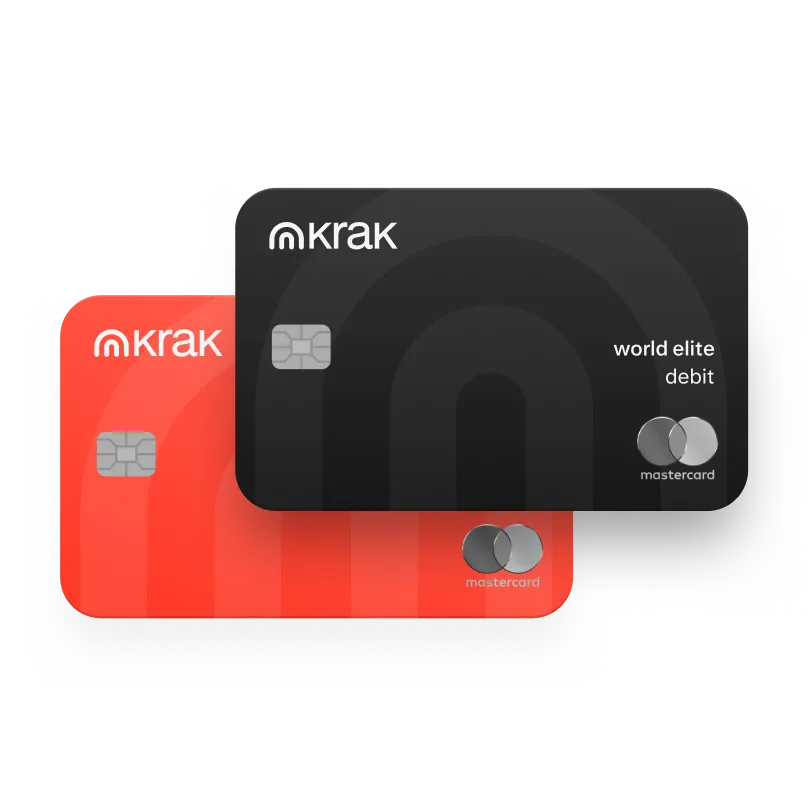
You need a Krak account with completed identity verification and be EU or UK resident. The virtual card is created in minutes and you can add it to Apple Pay. If you want the physical one, it’s free and you can choose orange or black.
| Characteristic | Data |
|---|---|
| Network | Mastercard debit card |
| Monthly and annual fee | 0 € |
| Currency exchange | No fees |
| Cashiers | No fees |
| Cashback | Up to 2 % in €, £ or BTC |
| Balance return | Up to 3,6 % APY |
| Issuance | Virtual instantly · physical-free |
| Metal card | Maximum cashback with €50,000/£ average in assets |
Kraken Desktop: the Kraken trading station for your computer
Kraken Desktop is the desktop application by Kraken for Mac, Windows and Linux, designed for advanced traders. Use your own Kraken account and allow you to view charts and trade on spot, margin and futures. It is developed in Rust, with low CPU and GPU consumption, and supports several windows to organize the space as you prefer.
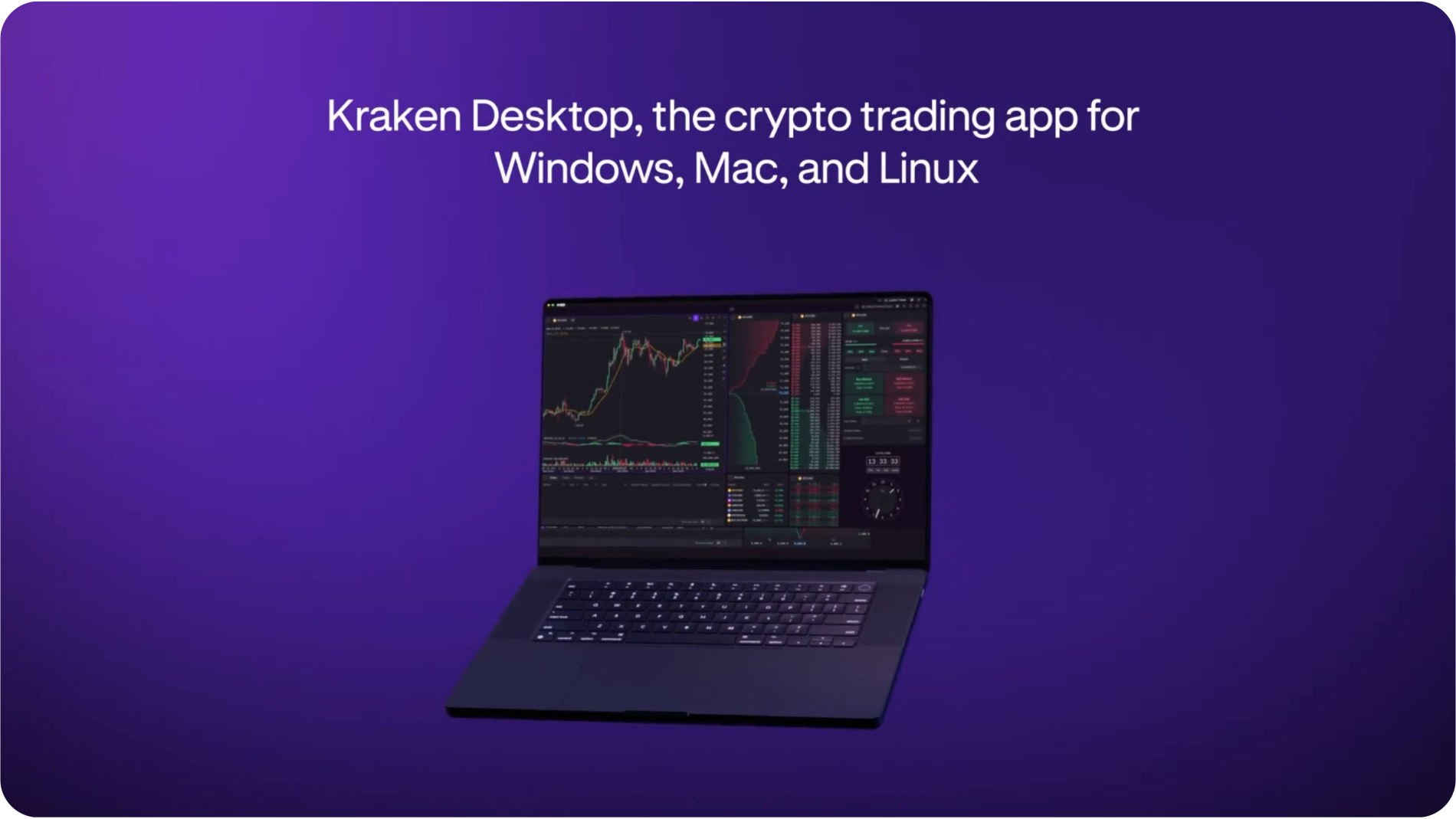
Includes more than 30 technical analysis indicators, price alerts, ticket orders and a ladder module that combines order book, time and sales and one-click order entry. You can customize themes and sounds, and import or share panels from the gallery. It’s complemented by the Pro mobile app.
| Characteristic | Data |
|---|---|
| Type | Desktop app |
| Systems | Windows, Mac, Linux |
| Markets | Spot, margin, futures |
| Indicators | More than 30 |
| Orders | Ticket and stairs |
| Customization | Themes, windows, and panels |
| Technology | Rust |
Kraken Wallet: Multi-Down Self-Service Wallet
Kraken Wallet is the free self-monitoring app from Kraken, available on iOS and Android. Unlike your account on the exchange, here you control the keys and the funds do not go to Kraken. You can see crypto, tokenized assets, NFTs and DeFi positions in one view.
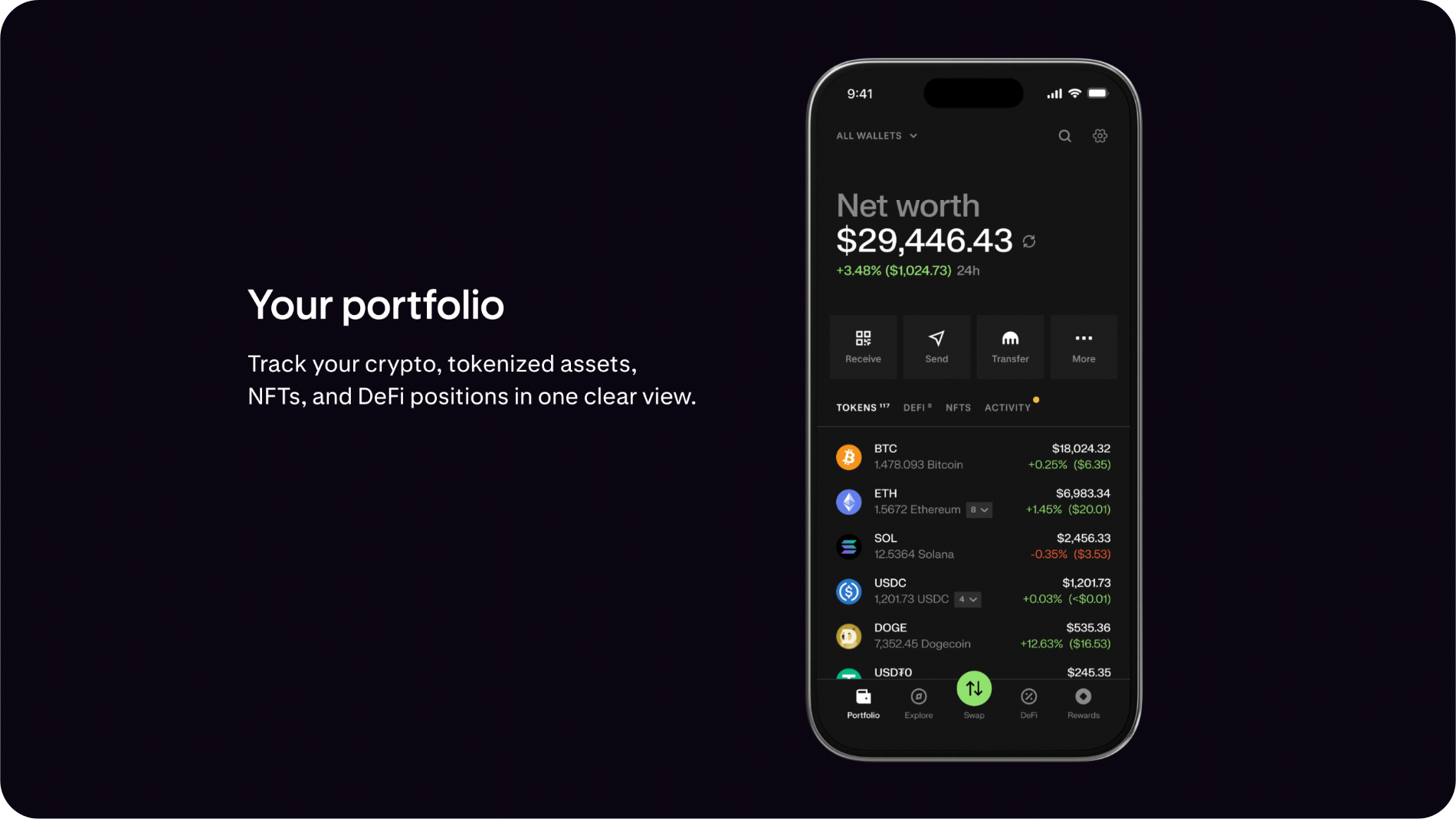
It is used to send, receive, exchange tokens between networks and participate in DeFi, such as depositing in vaults or gaining on-chain performance. You can create it with seed phrase or with an email or social account, without seed phrase. If you lose the sentence, there’s no way to get it back, so keep it safe.
| Characteristic | Data |
|---|---|
| Type | Self-custody wallet |
| Price | Free |
| Available on | iOS and Android |
| Keys | Under your control |
| Creation | Seed phrase, email, or social account |
| Networks | Bitcoin, Ethereum, Solana, Base and more |
| Functions | Send, receive, swap and DeFi |
| Assets | Crypto, tokenized and NFT |
Kraken CLI: the Kraken tool for AI agents and developers
Kraken CLI is an open-source, MIT-licensed command line tool that allows AI agents and developers to access the Kraken marketplaces without fighting with the API documentation. Each command returns valid JSON, supports MCP and covers spot, futures, xStocks, forex, staking, and WebSocket streaming.
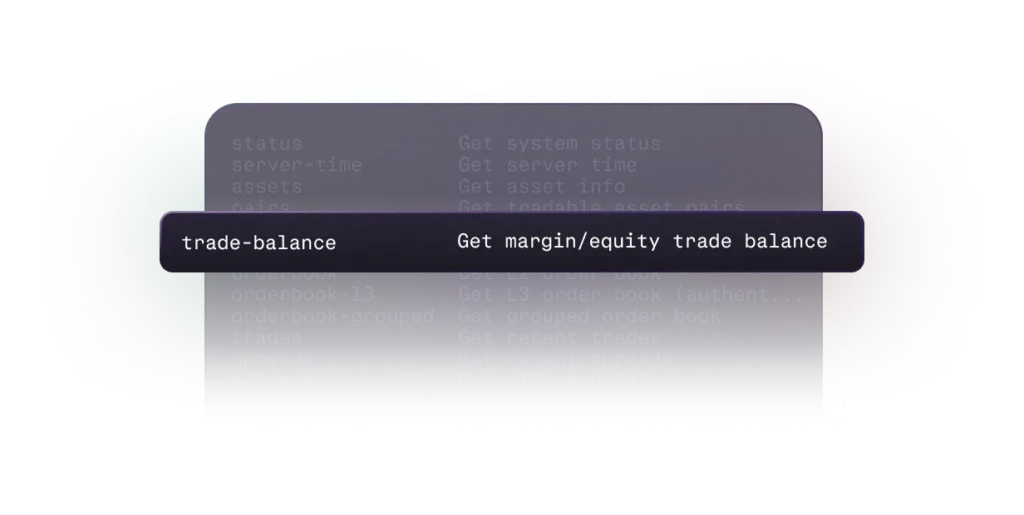
Works with Claude Code, Cursor, Codex, Copilot, Gemini CLI, Goose and OpenClaw. Includes paper trading with real prices and no credentials, to test strategies before actually trading. Also offers a "dead man’s switch" that cancels orders if the agent stops responding. Kraken calls it experimental software, so use it with caution.
| Characteristic | Data |
|---|---|
| Type | Command-line tool |
| License | Open Source (MIT) |
| Installation | macOS, Linux |
| Compatibility | MCP and any agents with CLI |
| Markets | Spot, futures, xStocks and forex |
| Paper trading | Yes, no API keys |
| Status | Experimental software |
Margin trading on Kraken: trade with leverage of up to 10x
Margin trading at Kraken Pro allows you to trade leveraged using your cryptocurrencies as collateral. You trade with real assets, not financial contracts, and can open long or short positions of up to 10x on selected assets. It has no maturity or forced rolls, and you can close the position at any time.
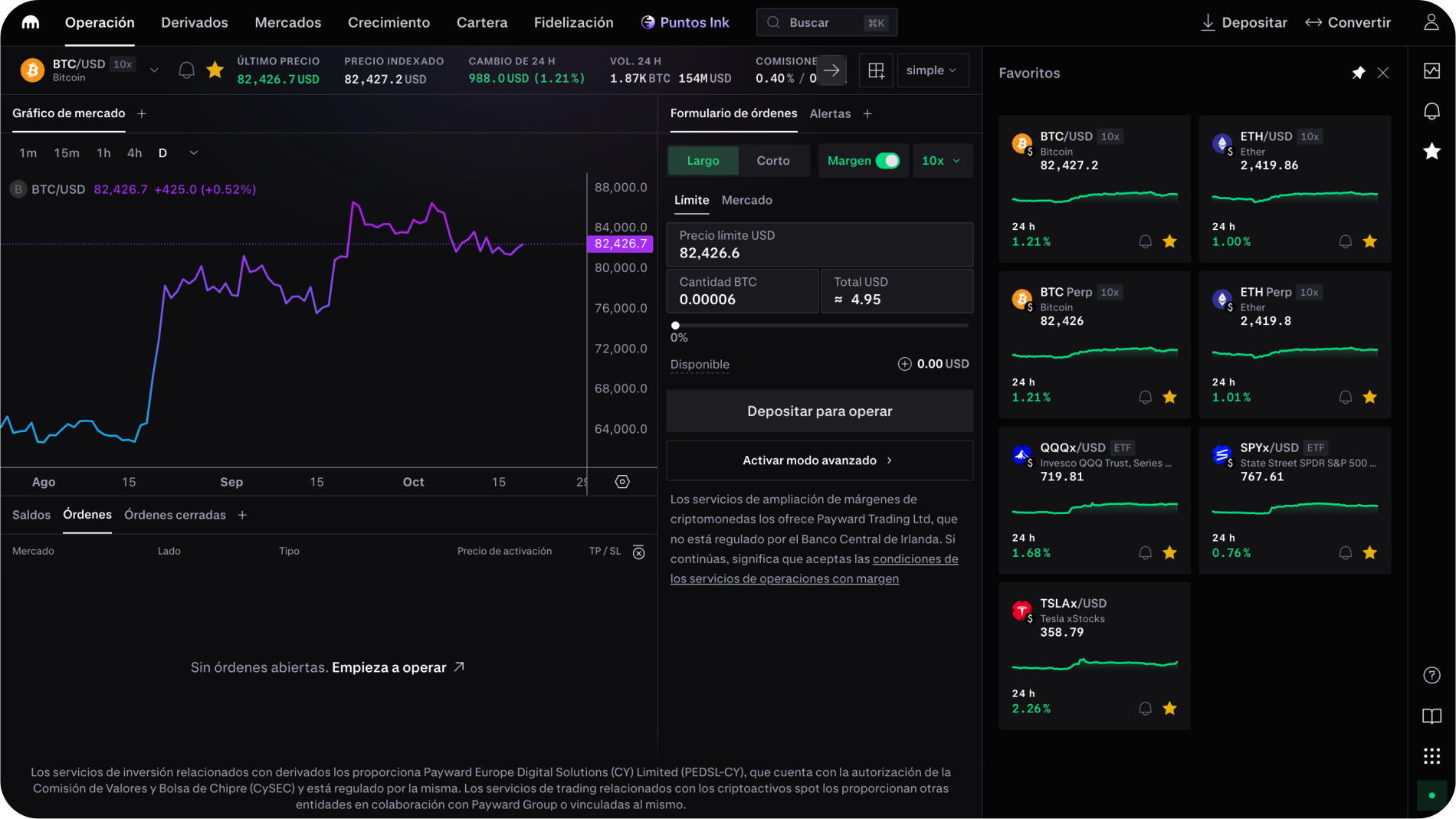
The collateral can be any of the more than 48 crypto-assets admitted, not just USDC. Before confirming, the order form shows the settlement price and loan cost, and you can set a stop-loss. Beware: if you are liquidated, your entire Kraken balance may be at risk.
| Characteristic | Data |
|---|---|
| Leverage | Up to 10X |
| Platform | Kraken Pro |
| Positions | Long and short |
| Colateral | More than 48 criptoactivos |
| Opening fee | 0,01 % – 0,05 % |
| Rollover | Same rate every 4 h |
| Expiration | Any |
Kraken customer service and support
The Kraken Customer Service Center gathers articles and guides on account verification, security, deposits and withdrawals, trading and Kraken Pro, as well as documentation for advanced orders and margin. For specific cases, you can write to the team by message 24 hours a day, every day of the year, or send a request by form if the problem is complex.
The team works in several languages, without closing on holidays, and in some countries offers voice assistance from the app with the "Call us" option. Responses to complex requests come in the mail. Kraken assures 90% customer satisfaction, according to its own data.
| Characteristic | Data |
|---|---|
| Channels | Message, form and voice |
| Availability | 24/7, all year |
| Languages | Multiple |
| Voice assistant | Based on location, in the app |
| Complex cases | Form, mail response |
| Help desk | Yes, with guides and articles |
| Stated satisfaction | 90 % |
Kraken in 2026: Is it worth it?
Kraken is a good choice for those who want to trade cryptocurrencies and stocks on a single regulated platform. Combines MiCA license from the Central Bank of Ireland, more than 700 cryptocurrencies, over 7,000 shares, Kraken Pro, margin, futures and staking, all in one account. It also offers 24/7 support and tools for advanced traders.
Keep in mind that the simple purchase costs 1% more than the spread, much more than on Kraken Pro, whose fees only decrease with volume. Crypto withdrawals have a fixed fee and there is no USDT in the EEA, so we rate it 4.7 out of 5.
| Criteria | Weight | Score |
|---|---|---|
| Fees | 25 % | 4,3 / 5 |
| Security and regulation | 25 % | 4,9 / 5 |
| Ease of use | 15 % | 4,6 / 5 |
| Products (Pro, Earn, Krak) | 15 % | 4,9 / 5 |
| Available Cryptocurrencies | 10 % | 4,8 / 5 |
| Customer service | 10 % | 4,6 / 5 |
| Final score | 100 % | 4,7 / 5 |
This review is based on actual platform usage and official information from Kraken. The data was reviewed in October 2026 and we updated the review as conditions changed. If you find any outdated data, write to us and we will correct it.
Frequently Asked Questions about Kraken (FAQ)
Kraken is designed for serious traders, offering professional features like margin trading, low-latency order execution, 24/7 support, and advanced analytical tools.
I am comfortable with Kraken.
I like Kraken for its security. It also has good fees and a VIP plan that lowers commissions even further.
Kraken works okay at best: good security but slow support and too many complications to solve simple problems.
My experience with Kraken's support wasn't very positive. My account was temporarily suspended, and it took them about 20 days to resolve the issue. During that time, I only received automated responses, so I would have appreciated faster assistance and the ability to speak with a representative when the problem arose.