
Before we dive into the detailed analysis, here is a ranked list of the 10 exchanges with the lowest fees and MiCA regulation in Europe, with the most important information about each one at a glance.


Investing in cryptocurrencies carries the risk of partial or total loss of capital. The content of this review is informative and does not constitute financial advice.
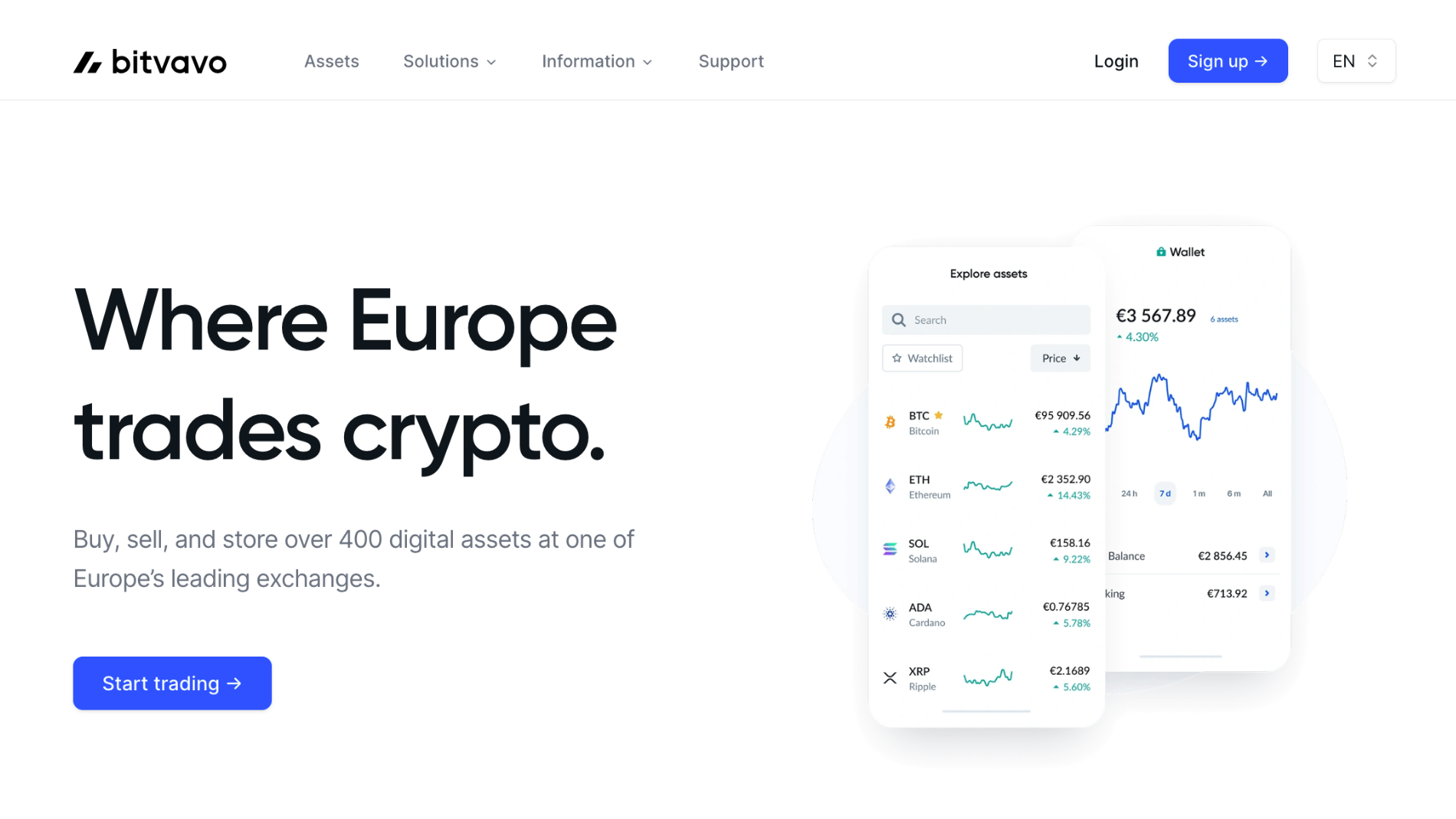
1. Bitvavo: Europe's cheapest exchange for trading in euros
Bitvavo is Europe's largest exchange by volume in euros, headquartered in Amsterdam and with over 2 million users. It ranks first because it combines some of the lowest fees among the top 10 exchanges, a selection of 428 cryptocurrencies, and an experience designed from the ground up for European users trading in euros, without the need for dollar-denominated stablecoins. It holds a MiCA (CASP) license granted by the Dutch AFM Starting in 2025, authorized to operate in all 27 EU countries under the European passport system, with joint supervision by the Dutch Central Bank (DNB).
Its fees are 0.15% for makers and 0.25% for takers at the basic level, dropping to 0.03%/0.05% at the highest levels based on monthly volume. The minimum deposit is just €1; SEPA deposits are free and credited the same day; and SEPA withdrawals are free of charge. A network fee is charged only when withdrawing cryptocurrency to an external wallet. See the full review of Bitvavo
Who is Bitvavo for? For users in the European Union who prioritize minimizing the cost per transaction in euros, with a transparent fee structure and no surprises.
Advantages:
- Fees among the lowest in all of Europe
- Free SEPA deposits and withdrawals
- MiCA license with a passport valid throughout the EU
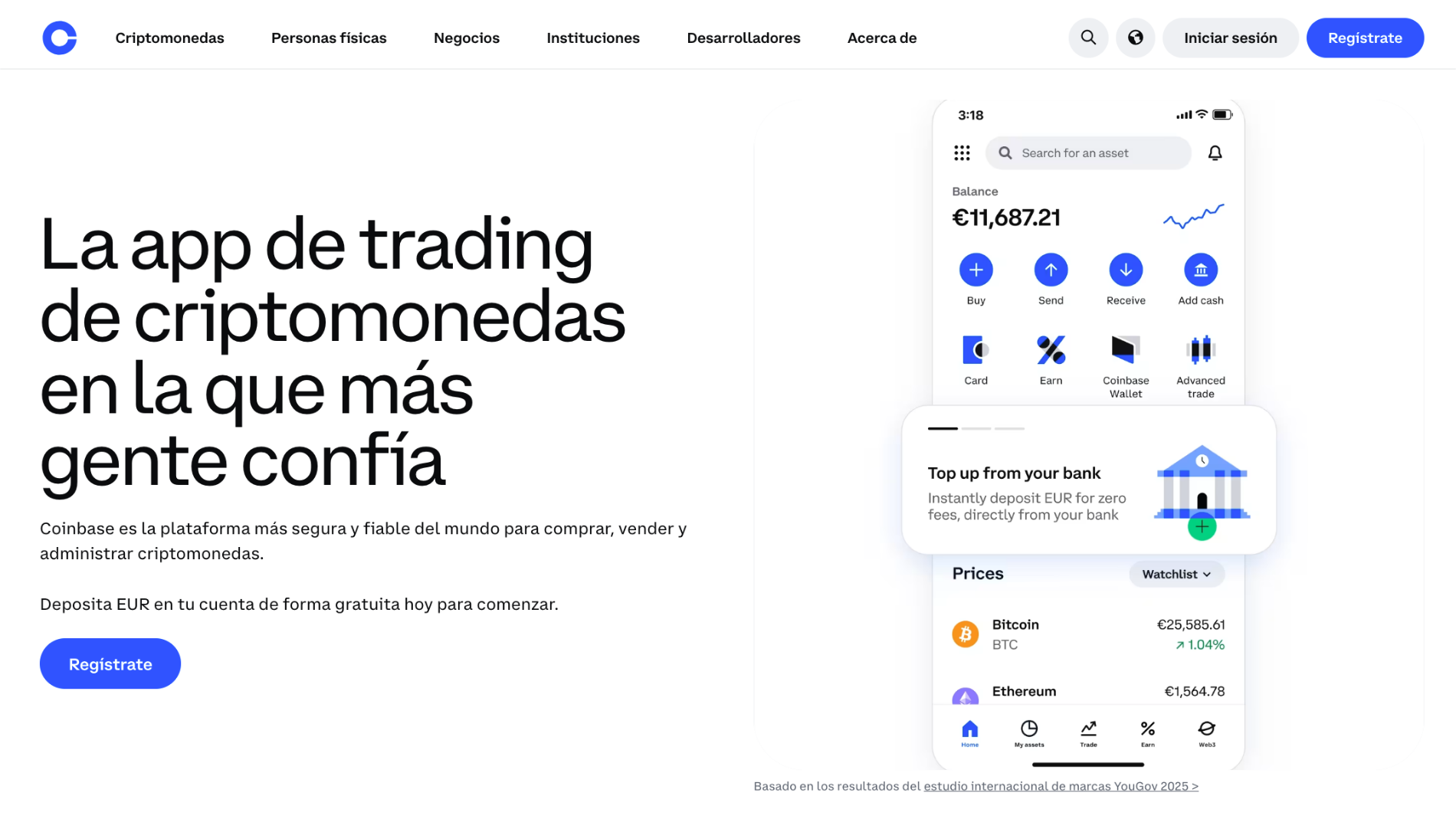
Disadvantages:
- A more limited selection of cryptocurrencies than other exchanges
- Few advanced trading features
- Customer service with more limited options
2. OKX Europe: the lowest spot trading fee in the ranking
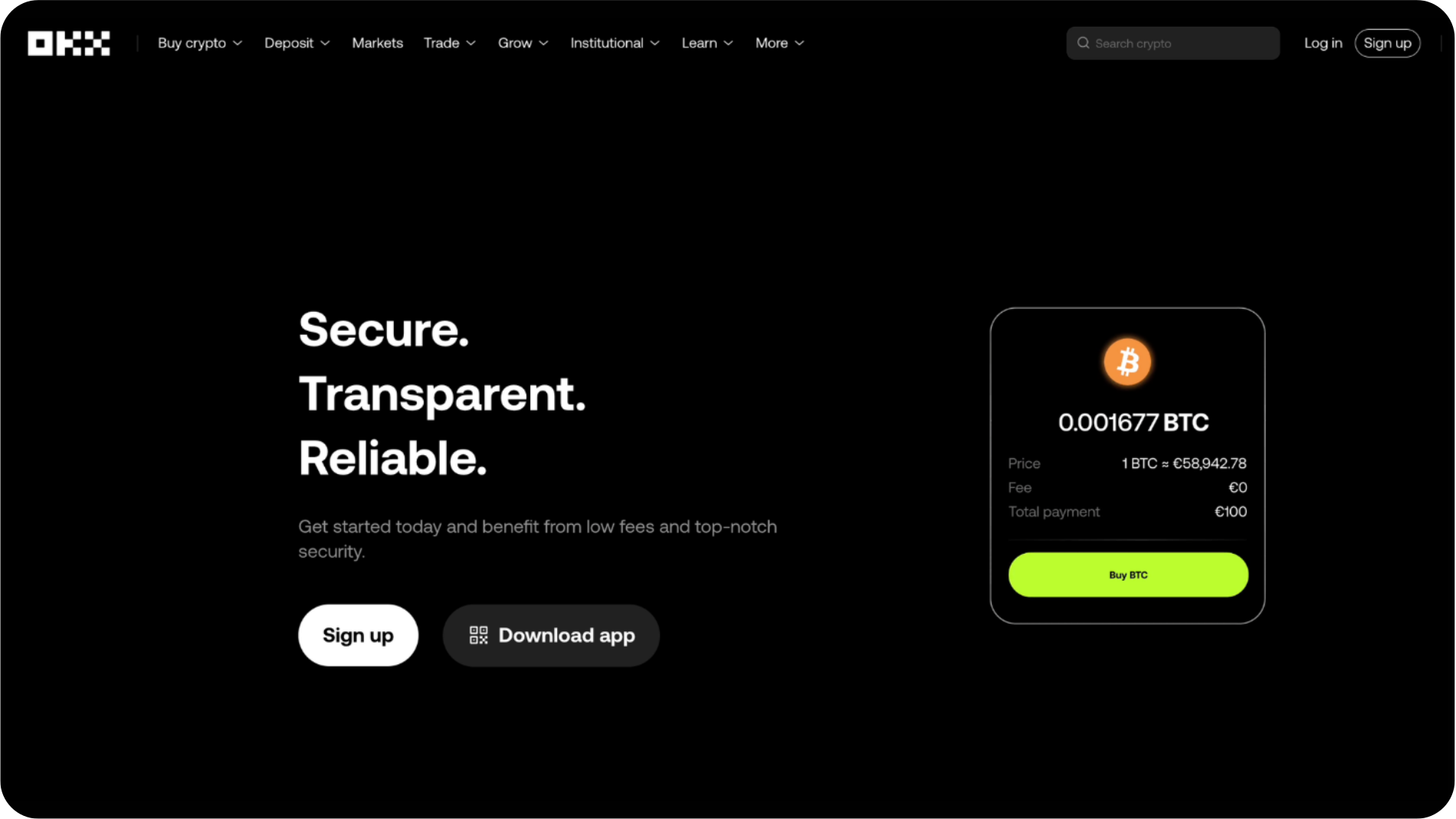
OKX Europe is the European arm of OKX, a global exchange that ranks among the top 10 most cost-effective options for frequent traders. It ranks second because, all else being equal—without Pro tiers or native tokens—it offers the lowest spot trading fee in the entire ranking. It was one of the first exchanges to obtain the MiCA (CASP) license in the EU, granted by the Maltese MFSA in January 2025.
Its spot trading fees are 0.08% for makers and 0.1% for takers starting at the first tier, with no minimum volume requirement, and additional discounts at higher tiers. The minimum deposit is just €1; SEPA deposits are free, and withdrawals in euros incur a low fixed fee that varies depending on the chosen method. View the full review of OKX Europe
Who is OKX Europe for? For users in the European Union who trade fairly frequently and are looking for the lowest possible spot commission starting with the first euro traded, without tiered rates.
Advantages:
- Spot commissions among the lowest in the industry, starting at the base rate
- Minimum deposit of just 1 €
- Reserve audits published quarterly
Disadvantages:
- It does not have its own guarantee fund
- Designed primarily for users with some experience
- Lower brand recognition than more established exchanges in Europe
3. Finst: the easiest fixed fee to calculate
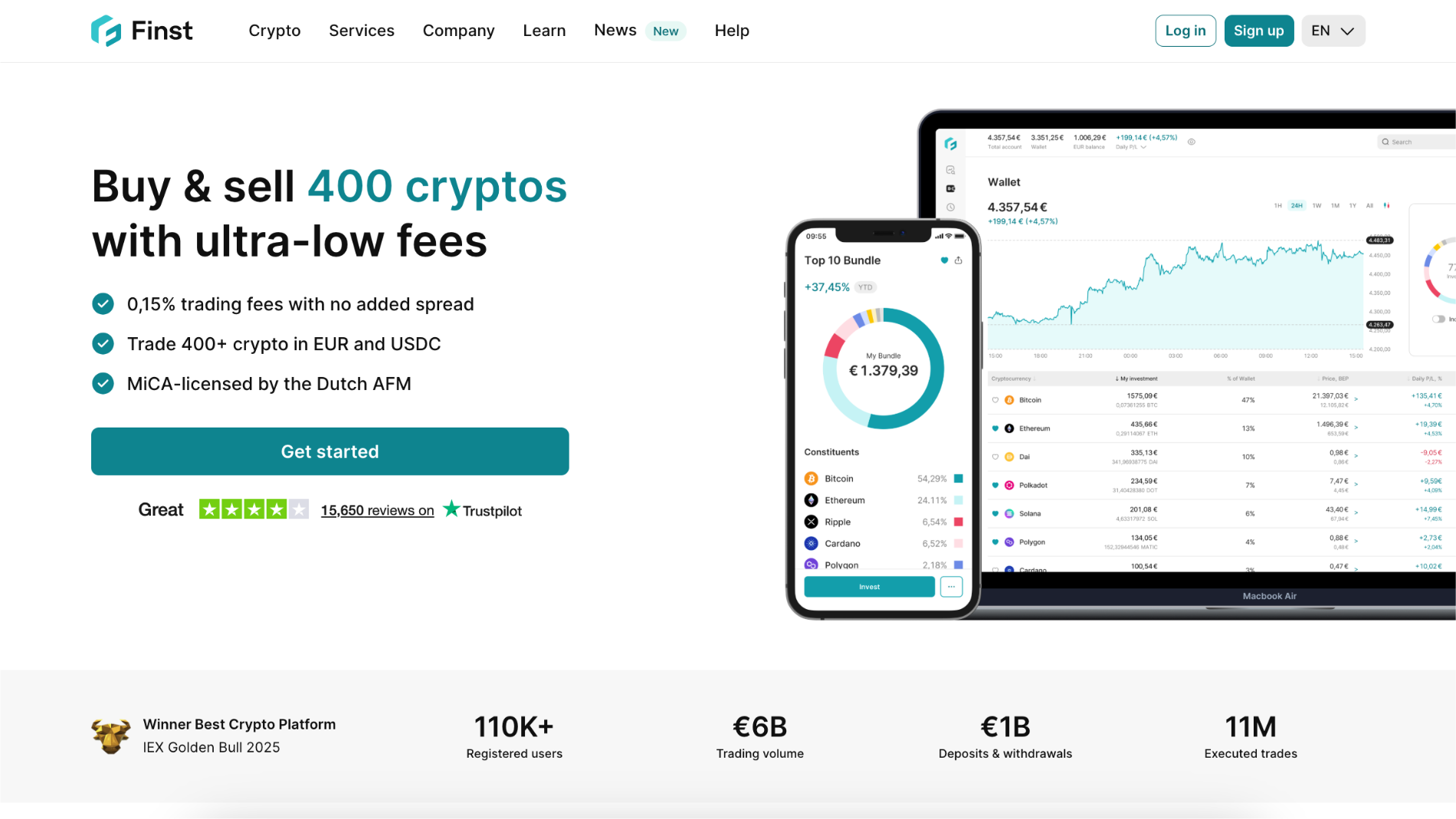
Finst is a Dutch exchange focused on simplicity and secure custody, headquartered in Amsterdam and licensed under MiCA (CASP) by the Dutch AFM in July 2025. It ranks third because, unlike the rest of the list, it does not use a tiered maker/taker model: it charges a single fixed commission on each trade, making its cost the easiest to calculate in advance.
We charge a flat fee of 0.15% on all transactions, with no tiered rates or hidden fees, whether you’re adding or withdrawing liquidity. Deposits in euros are free and credited almost immediately, and withdrawals incur no additional cost beyond the network fee when transferring crypto to an external wallet. See the full review of Finst
Who is Finst for? For users in the European Union who value knowing exactly how much they will pay for each transaction, regardless of whether they are a maker or a taker or of volume tiers.
Advantages:
- Fixed and transparent commission with no tiers
- Deposits and withdrawals in euros at no additional cost
- A very simple and fast-to-use interface
Disadvantages:
- Fewer features than other exchanges in the top 10
- No advanced trading tools
- More limited selection of cryptocurrencies
4. Bybit EU: Low fees designed for high-volume traders
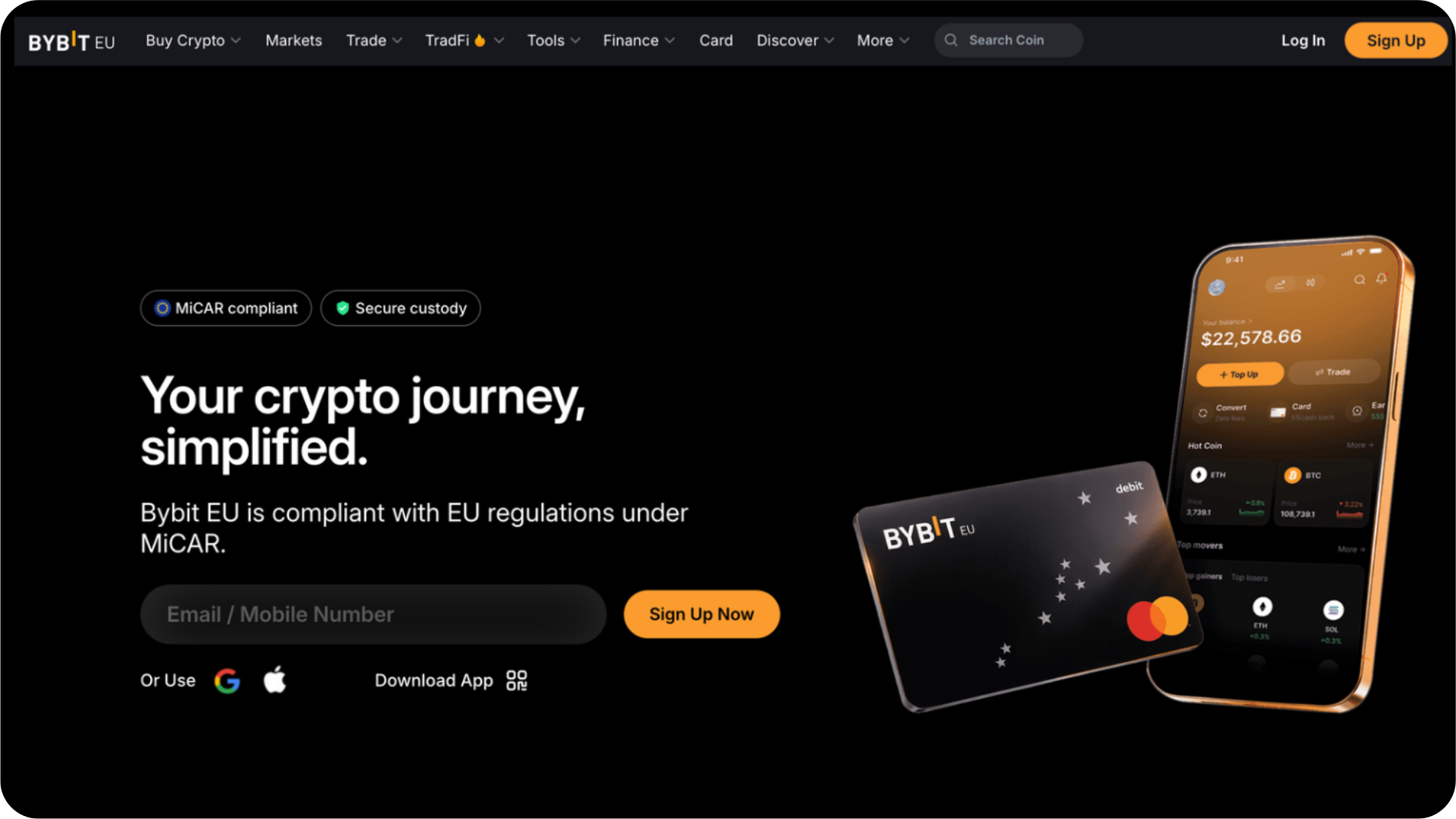
Bybit EU is the European arm of the world's second-largest exchange by volume, headquartered in Vienna after obtaining the MiCA (CASP) license from the Austrian FMA in May 2025. It ranks fourth because it combines competitive spot commissions with a structure designed for traders who handle a certain volume, rather than for occasional, small purchases.
Sus comisiones parten del 0,25% maker y 0,25% taker en spot, bajando con el volumen operado, e incluyen funciones como trading con margen en spot sin coste adicional de apertura. El depósito mínimo es reducido y los depósitos SEPA no tienen coste; los retiros en euros cuestan una comisión fija que se descuenta automáticamente del importe retirado. View the full review of Bybit EU
Who is Bybit EU for? For users in the European Union who trade at a certain volume and want low fees along with advanced trading tools—not just one-off purchases and custody.
Advantages:
- Competitive spot commissions starting at the first level
- Spot margin trading with no additional opening fees
- Entity regulated under a European MiCA license
Disadvantages:
- Less suitable for beginners
- Background on a major theft on the global platform
- Recent migration to the new bybit.eu platform
5. Bitpanda: the lowest fee in the ranking, but only for its Pro version
Bitpanda is an Austrian platform founded in 2014 that combines cryptocurrencies, stocks, ETFs, and precious metals in a single account, with more than 6 million users in Europe. It ranks fifth because its Pro version, Bitpanda Fusion, offers the lowest maker fee in the entire ranking, although its standard app—which most users use—charges significantly more. It was the first major crypto platform to obtain the MiCA license, granted by the Germany's BaFin in January 2025.
The standard app’s instant buy/sell feature charges a spread of 1.49%, while Bitpanda Fusion offers as low as 0.02% for makers and reduced taker fees based on volume. Deposits via bank transfer are free; a 1.5% fee applies for card deposits; and withdrawals in euros are free via standard SEPA. See the full review of Bitpanda
Who is Bitpanda for? For users in the European Union who are willing to use Bitpanda Fusion to get the lowest fee in the ranking—not for those who will only use the standard instant buy/sell feature.
Advantages:
- Lowest maker fee in the ranking, via Bitpanda Fusion
- Deposits via wire transfer with no fees
- A pioneer in obtaining the MiCA license in Europe
Disadvantages:
- Very high commission on standard instant trades (1.49%)
- Customer service is available in English only
- No live chat or phone support

6. Kraken Pro: competitive fees, but you have to switch from the standard app
Kraken is one of the industry’s longest-standing exchanges, founded in 2011, with more than 600 cryptocurrencies and a presence in over 190 countries. It ranks sixth because, like Bitpanda, its standard fee is high and only becomes competitive when using Kraken Pro. In Europe, it operates through Payward Europe Solutions Limited, which is authorized as a CASP by the Central Bank of Ireland Starting in June 2025, with a passport valid for all 30 EEA countries.
The standard app charges around 1% plus the spread, but Kraken Pro reduces the cost to 0.16% for makers and 0.26% for takers in the first tier, dropping to levels close to 0% as volume increases. The minimum deposit is €10; SEPA deposits are credited within 0 to 3 days at no cost; and withdrawals in euros incur a low fixed fee. View full Kraken review
Who is Kraken Pro for? For users in the European Union who are ready to trade using the Pro interface to take advantage of competitive commissions, with room to grow into advanced trading.
Advantages:
- Competitive fees on Kraken Pro, with tiered volume discounts
- Wide variety of cryptocurrencies and markets available
- A strong track record of safety since its founding in 2011
Disadvantages:
- High standard fee if you don't use Kraken Pro
- Higher minimum deposit than other exchanges in the ranking
- Learning curve to take full advantage of all its features
7. Crypto.com: Low fees at the basic level, with no need for Pro tiers
Crypto.com is one of the world's largest crypto platforms, with more than 150 million users. It ranks seventh because, unlike Kraken or Bitpanda, it offers low fees even at its basic tier, without requiring a separate Pro interface, although fees can be reduced even further by staking its native CRO token. It holds a MiCA (CASP) license from the Maltese MFSA and insurance coverage of up to $750 million on the funds in custody.
Fees start at 0.075% for makers and takers at the base level, decreasing based on trading volume or CRO staking. The minimum deposit is €1, and SEPA withdrawals also cost €1—one of the few fixed withdrawal fees in the entire ranking, albeit a nominal amount. See the full review of Crypto.com
Who is Crypto.com for? For users in the European Union who want low fees from day one, without having to rely on a separate Pro interface or meet a high minimum volume requirement.
Advantages:
- Low fees at the basic level, with no separate Pro interface
- Minimum deposit of just 1 €
- Comprehensive insurance coverage for funds in custody
Disadvantages:
- Better terms require holding the CRO token
- Small flat fee for SEPA withdrawals (€1)
- A somewhat complex ecosystem for new users
8. Bit2Me: Higher fees, offset by local support
Bit2Me is Spain's leading crypto platform, founded in 2014 and operating in more than 80 countries. It ranks eighth because, to be transparent, its fees are among the highest in the ranking; it makes this list because it is the only platform with a direct MiCA (CASP) license from the CNMV, obtained in July 2025, and because the discounts offered with the native B2M token can bring the cost closer to that of other exchanges in the ranking for those who already hold it.
Its fees range from 0.1% to 0.6%–0.95% depending on the type of transaction, with discounts if you hold B2M. Deposits in euros via SEPA incur no fees or currency conversion charges, and withdrawals are also free via standard SEPA, although the trading fees themselves are significantly higher than those of Bitvavo, OKX, or Finst. See the full review of Bit2Me
Who is Bit2Me for? For users in the European Union who prioritize support in Spanish and direct regulation by the CNMV over paying the lowest possible commission.
Advantages:
- Free SEPA deposits and withdrawals
- Direct regulation by the CNMV under the European passport system
- Significant discounts if you hold the native B2M token
Disadvantages:
- Trading commissions among the highest in the ranking
- You need to maintain B2M to get competitive commissions
- Smaller selection of cryptocurrencies
9. Bitstamp: high fees on low trading volumes; free for trades under €1,000
Bitstamp is the oldest active cryptocurrency exchange in Europe, founded in 2011 and owned by Robinhood (Nasdaq: HOOD) since 2025. It ranks ninth because, although its first tier of trading is commission-free, once that threshold is exceeded, its fees are among the highest in the ranking until high trading volumes are reached. It was the first platform to obtain the MiCA (CASP) license from the CSSF In May 2025, in addition to holding a MiFID license to operate as a multilateral trading facility.
Its tiered structure based on 30-day volume is commission-free for trades below 1,000 $, and rises to 0.30% for makers and 0.40% for takers in the next tier, gradually decreasing to marginal commissions for volumes above 20 million. There is no deposit fee, and withdrawals are free via ACH, with a fixed fee of 3 € for SEPA transfers. See the full review of Bitstamp
Who is Bitstamp for? For users in the European Union with very low trading volume (less than 1,000 $ per month) who want to trade for free, or with very high volume who already qualify for the lowest tiers in the fee schedule.
Advantages:
- Commission-free trading for monthly trading volume below 1,000 $
- No deposit fees and free ACH withdrawals
- Dual regulation under MiCA and MiFID licenses
Disadvantages:
- High commissions in the mid-volume range (0.30%/0.40%)
- SEPA withdrawal with a fixed fee of €3
- A smaller selection of cryptocurrencies than other exchanges in the ranking
10. Coinbase: the most expensive app in the ranking, competitive only in the Advanced category
Coinbase is a publicly traded exchange (Nasdaq: COIN since 2021) and one of the most heavily audited in the world, with more than 120 million users in over 100 countries. It rounds out the top 10 because its standard app is by far the most expensive in the ranking; it only becomes competitive if you use Coinbase Advanced Trade, its trading-focused interface. It holds a MiCA (CASP) license from the Luxembourg CSSF Effective June 2025, valid in all 27 EU countries.
The standard app charges fees of up to 3.99% for card transactions, while Coinbase Advanced reduces them to between 0.35% (maker) and 0.75% (taker) depending on volume, and Coinbase One eliminates fees for up to 10,000 € per month with a paid subscription. Deposits in euros via SEPA are free, as are withdrawals, although it’s best to avoid the standard app for recurring transactions due to its high cost. View full Coinbase review
Who is Coinbase for? For users in the European Union who have been using Coinbase Advanced Trade from the start, or who value brand trust more than the cost per trade.
Advantages:
- Free SEPA deposits and withdrawals
- Coinbase One waives fees on up to €10,000 per month (paid)
- A well-known brand listed on the stock exchange
Disadvantages:
- The standard app is the most expensive in the ranking, with fees of up to 3.99%
- You need to switch to Advanced Trade for competitive rates
- Coinbase One requires a paid subscription to eliminate fees
Comparison Table of Fees for Europe
Now that we've looked at the 10 exchanges, here's a comparison table that summarizes their maker/taker fees, SEPA deposit and withdrawal costs, and the MiCA regulatory framework applicable in Europe.
| Platform | Maker / Taker | SEPA Deposit | SEPA Withdrawal | Regulation |
|---|---|---|---|---|
 Bitvavo
|
0,15% / 0,25% | Free | Free | MiCA (AFM, Netherlands) |
 OKX Europe
|
0,08% / 0,10% | Free | Fixed, reduced commission | MiCA (MFSA, Malta) |
 Finst
Finst
|
0.15% / 0.15% (fixed) | Free | Free | MiCA (AFM, Netherlands) |
 Bybit EU
|
0,10% / 0,10% | Free | Fixed commission | MiCA (FMA, Austria) |
 Bitpanda
|
0.02% (Fusion) / 1.49% (standard) | Free | Free | MiCA (BaFin, Germany) |
 Kraken
(Kraken Pro)
Kraken
(Kraken Pro)
|
0,16% / 0,26% | Free | Fixed, reduced commission | MiCA (Central Bank of Ireland) |
 Crypto.com
|
0,075% / 0,075% | Free | 1 € | MiCA (MFSA, Malta) |
 Bit2Me
|
0,10% – 0,95% | Free | Free | MiCA (CNMV, Spain) |
 Bitstamp
|
0% (<1,000 $) / 0.30%–0.40% | Free | 3 € | MiCA + MiFID (CSSF, Luxembourg) |
 Coinbase
|
0.35% / 0.75% (Advanced) | Free | Free | MiCA (CSSF, Luxembourg) |
Bitpanda Fusion and OKX Europe offer the lowest fees for users who trade high volumes or use the Pro interface, while Bitvavo and Finst stand out for their combination of low fees and free deposits/withdrawals without requiring advanced account tiers. The best option will depend on your monthly trading volume and whether you’re willing to use a Pro interface to access the best price.
How did we selected the exchanges in this ranking
This ranking was compiled based on a comparative analysis of MiCA-authorized cryptocurrency exchanges available to customers in the European Union, focusing specifically on the actual cost of trading: maker/taker fees, deposit and withdrawal costs, and transparency of the pricing structure, to identify the cheapest options in 2026.
To compile the ranking, we evaluated each platform based on the following criteria:
| Platform | Maker / Taker | SEPA Deposit | SEPA Withdrawal | Regulation |
|---|---|---|---|---|
|
Bitvavo
|
0,15% / 0,25% | Free | Free | MiCA (AFM, Netherlands) |
|
OKX Europe
|
0,08% / 0,10% | Free | Fixed, reduced commission | MiCA (MFSA, Malta) |
|
Finst
|
0.15% / 0.15% (fixed) | Free | Free | MiCA (AFM, Netherlands) |
|
Bybit EU
|
0,25% / 0,25% | Free | Fixed commission | MiCA (FMA, Austria) |
|
Bitpanda
|
0.02% (Fusion) / 1.49% (standard) | Free | Free | MiCA (BaFin, Germany) |
|
Kraken
(Kraken Pro)
|
0,16% / 0,26% | Free | Fixed, reduced commission | MiCA (Central Bank of Ireland) |
|
Crypto.com
|
0,075% / 0,075% | Free | 1 € | MiCA (MFSA, Malta) |
|
Bit2Me
|
0,10% – 0,95% | Free | Free | MiCA (CNMV, Spain) |
|
Bitstamp
|
0% (<1,000 $) / 0.30%–0.40% | Free | 3 € | MiCA + MiFID (CSSF, Luxembourg) |
|
Coinbase
|
0.35% / 0.75% (Advanced) | Free | Free | MiCA (CSSF, Luxembourg) |
How did we selected the exchanges in this ranking
This ranking was compiled based on a comparative analysis of MiCA-authorized cryptocurrency exchanges available to customers in the European Union, combining real-world usage tests with technical, regulatory, and user experience evaluations to identify those best suited for European users in 2026, regardless of their country of residence.
To compile the ranking, we evaluated each platform based on the following criteria:
| Criteria | What We Evaluate | |
|---|---|---|
| 1 | License Regulation and Verification | We only include exchanges with full MiCA authorization, verifying each operator in the public registry of the ESMA and the national regulatory authority that issued the license. |
| 2 | Actual Maker/Taker Fee | Fees apply starting at the first tier, regardless of whether the user reaches high trading volumes or holds the exchange's native token. |
| 3 | Cost of Deposits and Withdrawals in Euros | Fees—or the lack thereof—when making deposits and withdrawals via SEPA, SEPA Instant, or card from a eurozone account. |
| 4 | Transparency of the pricing structure | Whether the applicable fee is easy to predict before trading, or whether it depends on tiers, Pro features, or native tokens that aren't immediately obvious to new users. |
| 5 | Minimum deposit | Minimum amount required to start trading on each platform. |
| 6 | Track Record and Transparency | Each exchange's security track record and transparency in the disclosure of reserves (Proof of Reserves). |
The testing was completed in September 2026, with a final verification of the fees and licenses in effect as listed in each exchange’s official documentation and in ESMA’s public registry as of the publication date. You can review the complete data research and verification process on our methodology.
Important note: We review this ranking periodically based on changes in the fees published by each exchange or new MiCA authorizations. Rankings may vary.
Regulation of cryptocurrency exchanges and cryptocurrencies in Europe
Platforms offering cryptocurrency services in the European Union operate under the Markets in Crypto-Assets (MiCA) regulation, which will apply to service providers as of December 30, 2024. The authorization and supervision of exchanges is harmonized: each provider obtains its CASP license from a single national regulator (such as the Dutch AFM, the German BaFin, the Maltese MFSA, the Austrian FMA, the Luxembourg CSSF, the Central Bank of Ireland, or the Spanish CNMV), and that license allows them to operate in all 27 member states under a European passport, without the need for additional country-by-country authorizations.
The transition period ended on July 1, 2026, and since then, only platforms authorized by one of these regulators or properly notified to the ESMA. MiCA regulates the authorization, custody of funds, and conduct of these providers, but it does not set or limit the fees that each exchange may charge: competition among platforms—not regulation—is what determines the final price paid by the user.
Important note: Binance does not appear in this ranking because it does not have a MiCA license. As of July 1, 2026, it will not accept new users or deposits in any European Union country and will only allow withdrawals.
The information presented in this ranking is for informational and educational purposes only. It does not constitute financial or tax advice, nor is it a personalized investment recommendation. Using cryptocurrency exchanges involves risks, and each user is responsible for assessing which platform best suits their profile, as well as for complying with applicable regulations and their legal and tax obligations under current Spanish law. Some links in this ranking are affiliate links: if you open an account through them, Exchange Selector may receive a commission at no additional cost to you. This does not influence the criteria or the order of this ranking.
(FAQ) How to Choose the Cheapest Exchange in Europe in 2026