
Before we dive into the detailed analysis, here's a summary of Bitstamp's most important data at a glance.

Bitstamp Quick Overview
About Bitstamp: Origins and Who It's Intended For
Bitstamp is one of the oldest cryptocurrency exchanges still in operation. It was founded in 2011 by Nejc Kodrič and Damijan Merlak and has established itself as a platform focused on regulation, liquidity, custody, and bridging the gap between traditional and crypto markets.
Pros
More than 14 years of experience and a MiCA license in Europe
More than 50 international licenses and registrations
95 % of assets in cold storage and external audits
Basic, Pro, and API Platforms, and Institutional Services
Cons
A smaller selection than Binance, MEXC, Coinbase, or Kraken
The rate of 0.30 % (maker) / 0.40 % (taker) is not very competitive in the initial paid tranche
Trustpilot is seeing a surge in complaints about account suspensions, KYC, and slow support
Fewer bots, copy trading, and Web3 products than other global exchanges
Bitstamp was founded in Slovenia, later moved part of its operations to the United Kingdom, and established Luxembourg as its primary European regulatory hub. In 2016, it obtained a payment institution license there, one of the first formal recognitions granted to a cryptocurrency exchange in Europe.
On June 2, 2025, Robinhood Markets completed the acquisition of Bitstamp for approximately $200 million. Since then, the brand has been operating as Bitstamp by Robinhood, although it retains its platform, entities, customers, and institutional business.
Who is Bitstamp for? For users who prioritize track record, regulation, bank transfers, and established asset markets.
The platform offers two plans. Basic simplifies buying and selling via the web or mobile; Pro includes charts, an order book, and advanced order types. It doesn't offer the same breadth of products as Binance, Bybit, or MEXC, but its interface is less overwhelming.
Bitstamp has built a significant portion of its business around institutional clients. It maintains API connections, order execution, market depth, custody, and liquidity services used by third parties, such as the integration that enables BBVA customers in Spain to buy and sell bitcoin and ether.
Its offering evolved following the acquisition by Robinhood. In 2026, it added regulated perpetual futures for eligible European users, expanded its presence in Asia, and obtained a VASP registration in the British Virgin Islands, while keeping spot trading at the core of its product.
What level of security does Bitstamp offer?
Bitstamp combines cold storage, 1:1 custody, asset segregation, multi-factor authentication, whitelisting, ISO and SOC 2 certifications, financial audits, and regulatory controls. Its long track record is an advantage, although it is not without its share of past incidents.
The public rating is displayed as follows:
Global Regulation and MiCA Authorization
On May 16, 2025, Bitstamp Europe S.A. received authorization as a Crypto-Asset Service Provider under MiCA from the Commission de Surveillance du Secteur Financier of Luxembourg. This passport allows the company to provide the authorized services throughout the European Union and the European Economic Area.
The license covers the operation of the platform, the execution of orders on behalf of clients, and the custody of cryptoassets. For residents of Spain, Bitstamp operates within the harmonized framework of MiCA and is subject to the applicable European complaint and supervisory procedures.
Bitstamp also obtained a MiFID license to operate a multilateral trading facility and launch regulated products. In April 2026, it began offering perpetual futures on BTC, ETH, SOL, DOGE, XRP, SUI, ADA, AVAX, LINK, and HYPE to eligible European customers.
Custody and protection of funds
Bitstamp states that it holds customer crypto assets on a 1:1 basis and keeps them separate from corporate funds. Approximately 95 % is stored offline using cold storage solutions and BitGo’s custody services.
Fiat balances are held in bank accounts with regulated institutions. This does not mean that all amounts are covered by a public deposit insurance system: coverage depends on the institution, the country, the account structure, and applicable law.
Bitstamp states that it does not lend, trade, or reuse assets without specific instructions from the customer. When a user voluntarily participates in staking, lending, or another product, different terms and risks apply.
Key protection measures include:
- Approximately 95 % of cryptoassets are in cold storage.
- 1:1 custody and segregation of client assets.
- Two-factor authentication and withdrawal confirmation.
- Whitelist of addresses and anti-fraud controls.
- ISO/IEC 27001 and SOC 2 Type 2 certifications.
- Annual audits of the group's entities since 2016.
Reserve Test and transparency
Bitstamp publicly explains how the Reserve Proof works and its limitations, but as of August 2026, it does not offer a Merkle tool equivalent to those provided by Kraken, Binance, Bybit, or MEXC that would allow each user to verify that their balance is included.
These reviews, segregation, and regulatory oversight provide important safeguards, but they do not offer the same public and individual verification as a cryptographic proof of reserves. Users continue to rely on corporate disclosures, auditors, and the regulator.
Account Security
Bitstamp allows you to secure access with a password, 2FA, and email confirmations. Whitelisting limits withdrawals to pre-authorized addresses and reduces potential damage if your credentials are compromised.
Compliance systems may temporarily block deposits, trades, or withdrawals while verifying identity, residency, source of funds, or activity. On a regulated platform, these controls are mandatory, but public reviews indicate prolonged delays and impersonal responses.
Pros
MiCA license, NYDFS license, and more than 50 global registrations or licenses
95 % in cold storage, segregation, and 1:1 custody
ISO 27001, SOC 2 Type 2, and annual audits
Insurance Against Certain Crimes
Cons
The protections depend on the user's organization and location
No individual public Merkle proof in August 2026
The 2015 attack remains a historical precedent
Trustpilot has received complaints about account suspensions and prolonged reviews
Where is Bitstamp available?
Bitstamp serves retail and institutional clients in Europe, the United Kingdom, the United States, Latin America, and parts of the Asia-Pacific region. Exact availability depends on the entity, place of residence, nationality, and product requested.
It operates in the 27 countries of the European Union and the EEA under the MiCA passport issued to Bitstamp Europe S.A. Spain is included, and the platform supports the use of euros, SEPA transfers, and services compliant with European regulations.
Jurisdictions that have historically been excluded include Afghanistan, Algeria, Bangladesh, Myanmar, the Central African Republic, China, Cuba, the Democratic Republic of the Congo, Ethiopia, Iran, Iraq, Mali, Nicaragua, North Korea, Somalia, South Sudan, Sudan, Syria, Yemen, Zimbabwe, and sanctioned Ukrainian territories. The list is subject to change.
Bitstamp Fees: How Much Does Trading Really Cost?
Bitstamp uses a maker/taker structure based on the cumulative volume over the past 30 days. Fiat/stablecoin pairs and certain institutional programs may be subject to different fees.
Spot commission: 0.30 % maker and 0.40 % taker in the initial tranche, paid
Bitstamp offers a fee-free tier for the first $1,000 in trading volume for 30 days. Once that threshold is exceeded, the standard retail fee for volumes under $10,000 is 0.30 % for makers and 0.40 % for takers.
| Platform | Maker | Taker |
|---|---|---|
 Bitget
|
0,10% | 0,10% |
 Bybit
Bybit
|
0,10% | 0,10% |
 Finst
Finst
|
0,15% | 0,15% |
 Bitvavo
|
0,15% | 0,25% |
 Bitstamp
|
0,30% | 0,40% |
 Gemini
|
0,60% | 1,20% |
Comparison based on initial spot rates for users without volume discounts.
Fees decrease as trading volume increases. Clients who trade hundreds of thousands or millions of dollars can access much lower costs. FastPass is temporarily offering a 0.03 % maker/taker rate to new customers with external volume of $500,000 to $5 million and a 0.01 % rate for volumes above $5 million, subject to terms and conditions.
Did you know? A €1,000 order in the paid tier costs €3 if executed as a maker and €4 as a taker. With the 0.10 % fee charged by several global competitors, the same trade would cost €1.
Global Fiat Deposits and Withdrawals
SEPA deposits in euros are free of charge through Bitstamp and can be processed via SEPA Instant if both banks support it. A SEPA withdrawal typically incurs a flat fee of €3.
International transfers may be subject to a percentage-based fee with a minimum charge, in addition to fees charged by the sending, receiving, or correspondent bank. The exact amount should be verified in the regional bank's fee schedule.
Instant purchases made with a credit card, Apple Pay, Google Pay, or PayPal can cost around 4–5 %, depending on the country and provider. This method is much more expensive than depositing via bank transfer and trading on Pro.
Earn Commission and Advanced Products
Bitstamp Earn allows users to stake Ethereum and Cardano in supported markets. The platform typically deducts 15 % from the rewards generated before crediting them to the user.
European perpetual futures follow their own trading, funding, and settlement schedule. The total cost includes maker/taker fees, periodic funding, and any conversion or margin charges; it should not be confused with the spot rate.
| Concept | Price on Bitstamp |
|---|---|
| Spot trading volume of up to 1,000 USD in 30 days | 0 % maker / 0 % taker |
| Commercial, paid opening segment | 0.30 % maker / 0.40 % taker |
| SEPA Deposit | Free through Bitstamp; the bank may charge a fee |
| SEPA Withdrawal | Approximately €3 |
| Pay with a card or digital wallet | Approximately 4–5 %, depending on the region and provider |
| Cryptocurrency Deposit | 0 € via Bitstamp; the source network fee is paid |
| Crypto Withdrawal | Rate varies depending on the asset and network |
| Bitstamp Earn Staking | 15 % Commission on Rewards |
| Perpetual futures | Maker/taker, funding, and settlement as specified in the contract |
Step-by-Step Guide to Opening an Account on Bitstamp
Opening an account requires registration, identity verification, and selecting the entity corresponding to your place of residence. The process can be completed on the website or through the mobile app.
Step 1: Initial registration
The user enters their email address, name, date of birth, country, and password. Bitstamp sends a link or code to verify the user's information and activate the account.
Residency must be declared correctly because it determines the entity, assets, fiat currencies, and available products. A Spanish resident operates through the European structure authorized under MiCA.
Before making a deposit, you should enable 2FA, verify the official domain, and set up the address whitelist if you plan to withdraw cryptocurrency.
Step 2: Identity Verification (KYC)
Bitstamp requires full KYC verification. The process typically includes:
- National ID card, passport, or valid official document.
- Selfie, video, or biometric verification.
It may also request proof of address, tax residence, occupation, purpose of the account, assets, and source of funds. The documents must be recent, legible, and match the information on file.
Verification can be completed quickly, but a manual review or Enhanced Due Diligence may take longer. Public comments indicate that this is one of the main sources of friction.
Step 3: Link a bank account
Methods vary by country:
- SEPA and SEPA Instant for euros.
- ACH and wire transfers for eligible U.S. customers.
- International transfers in supported currencies.
- Credit card, Apple Pay, Google Pay, or PayPal, where available.
- Depositing cryptocurrency from an external wallet.
The bank account or card must be in the name of the verified account holder. Any discrepancy may result in the payment being returned or subject to further review.
Did you know? Depositing 1,000 € via SEPA and placing a taker order on Pro can cost around 4 €. Using an instant card purchase at a rate of 5 % would raise the estimated cost to €50, before any bank fees.
Step 4: First deposit and first trade
After receiving the funds, you can use Basic for a direct purchase or Pro to control the price and order type. Pro is usually the most transparent option for comparing maker, taker, and order book depth.
The standard minimum order is 10 EUR, USD, GBP, or stablecoins in supported pairs, although different minimums apply to markets denominated in BTC or ETH.
Summary of Requirements for Opening an Account on Bitstamp
- Be older than 18.
- Reside in a country approved by the relevant organization.
- Have a valid identification document.
- Complete the selfie or biometric verification.
- Please provide your address and tax information.
- Use your own bank account or card.
- Provide proof of the source of funds when requested.
Important note: lThe limits, methods, and timeframes vary by country and risk profile. It’s a good idea to make a small initial transfer and withdrawal before depositing a large amount.
Available cryptocurrencies: more than 100 assets
Bitstamp offers more than 100 cryptocurrencies, including Bitcoin, Ether, XRP, Solana, Cardano, Dogecoin, Avalanche, Chainlink, SUI, Polkadot, Litecoin, Bitcoin Cash, Stellar, Uniswap, Aave, and compatible stablecoins.
The selection is considerably smaller than that of Binance, MEXC, Bitget, or Coinbase. Bitstamp employs a more conservative listing process and delists assets when they no longer meet its technical, regulatory, or liquidity criteria.
Availability varies by region. In the EEA, assets such as USDT, DAI, PYUSD, WBTC, and other tokens that do not comply with MiCA have either been delisted or converted. In the United States, some tokens are also not available in all states.
Bitstamp Learn, Pro, and Institutional Services: Education and Tools
Bitstamp combines a user-friendly interface with trading tools and enterprise-grade infrastructure. The Learn Center features over 100 articles on blockchain, security, assets, and strategies.
| Product | Focus |
|---|---|
| Bitstamp Basic | Easy buying and selling via the web or mobile app |
| Bitstamp Pro | Order Book, Charts, and Advanced Order Types |
| Bitstamp Earn | ETH and ADA Staking by Region |
| Perpetual Futures | Regulated derivatives for eligible European clients |
| API and OTC | Professional and Institutional Implementation |
| Bitstamp-as-a-Service | Liquidity and Infrastructure for Banks and Fintech Companies |
Beyond buying and selling, Bitstamp offers:
- REST API, WebSocket, and FIX for professional clients.
- OTC and RFQ for larger transactions.
- Staking with periodic payouts.
- Alerts, history, and advanced charts.
- Custody, lending, and institutional infrastructure services.
Bitstamp Earn: Earnings on Your Cryptocurrencies
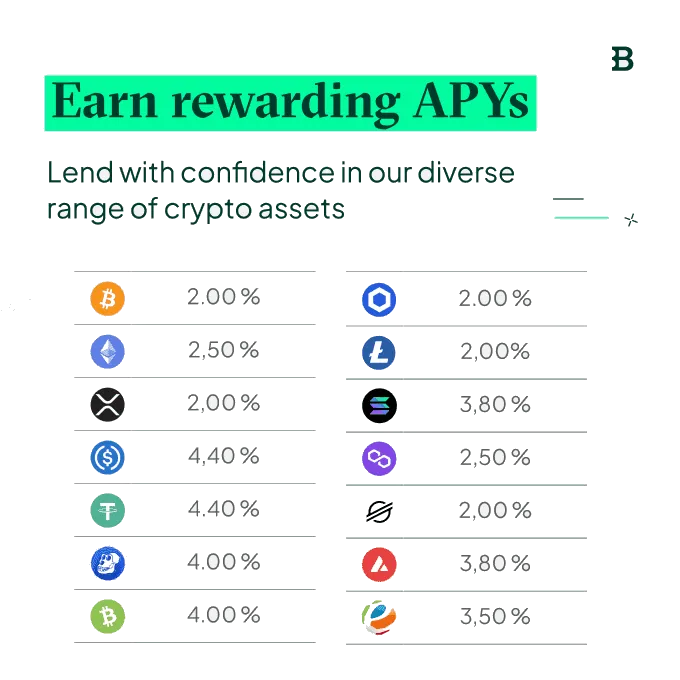
Bitstamp Earn allows you to earn rewards on ETH and ADA in supported jurisdictions. Ethereum requires activation and may be subject to an entry or exit queue; Cardano can distribute rewards automatically, with an opt-out option.
The most important thing about Bitstamp Earn:
- A streamlined staking catalog focused on established assets.
- Standard 15 % commission on rewards.
- Variable APY, determined in part by the protocol.
- Activation and unlock periods for ETH.
- Availability varies in the U.S., Canada, Japan, Singapore, and other regions.
Regular Purchases (DCA): Automate Your Purchases
Bitstamp allows users to set up recurring purchases on supported markets and through supported payment methods. Users specify the asset, amount, and frequency to implement a DCA strategy.
Each transaction is subject to the applicable fee and payment method used. Paying for recurring purchases using your account balance or a bank transfer is usually cheaper than using a credit card for each transaction.
Available order types
Bitstamp Pro offers various order types:
- Market order: Executes immediately and incurs a taker fee.
- Limit order: Sets a price and may pay a maker fee if it remains on the order book.
- Stop order: Triggers an order when the specified price is reached.
- Stop-limit: combines a trigger with a limit price.
The API and certain professional markets offer additional options. Perpetual futures include take-profit, stop-loss, margin, and liquidation features.
Bitstamp vs. Kraken
The most natural comparison is between Bitstamp and Kraken. Both are long-established exchanges, regulated in Europe under MiCA, and geared toward both retail and institutional investors.
| Characteristic | Bitstamp | Kraken |
|---|---|---|
| Foundation | 2011 | 2011 |
| European Center | Luxembourg | Ireland |
| Regulation | MiCA via the CSSF; NYDFS, Singapore, and the BVI | MiCA via the Central Bank of Ireland and regional licenses |
| Initial spot commission paid | 0.30 % maker / 0.40 % taker | Approximately 0.25 % maker / 0.45 % taker |
| Free section | Up to 1,000 USD in trading volume over 30 days | No general equivalent |
| Cryptocurrencies | More than 80 | More than 400, depending on the region |
| Security | 95 % cold storage, SOC 2, ISO 27001, and audits | Verifiable PoR, cold storage, and advanced controls |
| Unique Product | Banking and Institutional Infrastructure | Expanded Catalog, Kraken Pro, and Reservation Trial |
| Platform | Basic, Pro, app, API, and OTC | Web, app, Pro, API, OTC, and derivatives |
| Ideal for | Users who prioritize track record and regulation | Users looking for more assets and tools |
Bitstamp offers a more streamlined experience, bank integration, and a particularly strong regulatory track record in Luxembourg. The fee-free tier may be appealing for small purchases.
Kraken offers more assets, a verifiable Proof of Reserves, and a more comprehensive Pro platform. For a frequent trader, the choice will depend on the specific trading pairs, volume, and fees.
Apps and Platform: How Do You Use Bitstamp on a Daily Basis?
Bitstamp offers apps for iOS and Android, Basic and Pro web platforms, an API, and institutional services. The interface allows you to switch between a simple purchase and the order book without switching accounts.
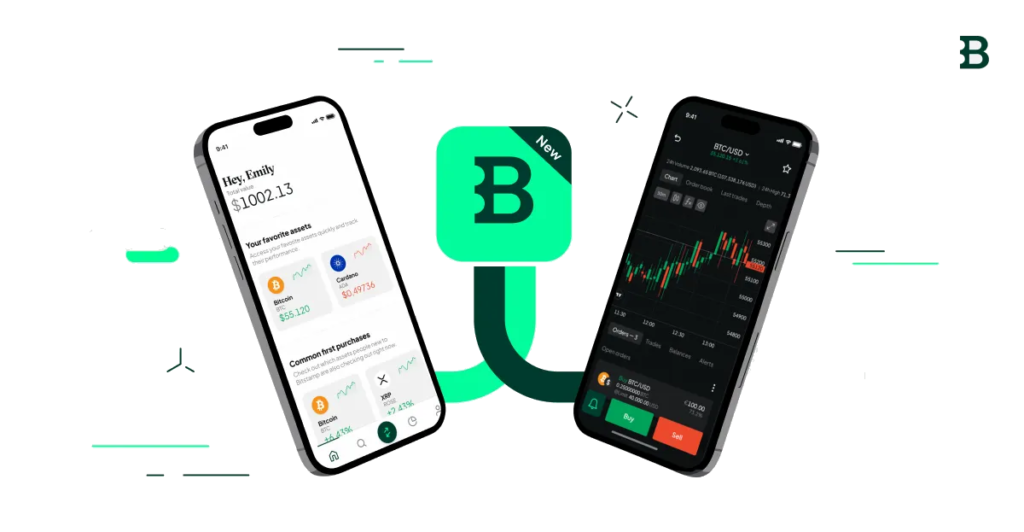
The navigation is organized into several sections:
- Portfolio: Balance, Performance, and Allocation.
- Markets: Assets, Pairs, and Prices.
- Trade: Simple Buy or Pro Execution.
- Earn: Staking and rewards available.
- Deposit/Withdraw: fiat and crypto transfers.
The Basic plan is straightforward for beginners, while the Pro plan reduces reliance on real-time quotes and allows you to control the price. The app isn't as cluttered with promotions as MEXC or Binance.
The integration with Robinhood still needs to be evaluated over the long term. Bitstamp retains its own brand and systems, but ownership, strategy, and product development now depend on the U.S. group.
Final Verdict: Is Bitstamp Worth It in 2026?
Bitstamp is one of the most reliable options for those who prioritize track record, European regulation, euros, and institutional services. Its MiCA license from the CSSF, audits, 95% of assets held in cold storage, and 1:1 custody make for a compelling security proposition.
The acquisition by Robinhood brings resources, distribution, and new products. In 2026, Bitstamp combines spot trading, staking, APIs, OTC, and European perpetual futures without straying from its relatively conservative approach.
Its weaknesses are clear: with more than 80 assets, it falls short compared to other exchanges; the 0.30 % maker / 0.40 % taker fee isn't cheap; and Trustpilot lists numerous complaints about KYC, account suspensions, and customer support.
All things considered, Bitstamp is worth considering for euro purchases, trading established assets, and institutional infrastructure. For altcoins, bots, or low fees, there are better alternatives; for regulation, longevity, and simplicity, it remains one of the leading European exchanges.
This review is based on our actual experience using Bitstamp. We tested the platform by making deposits, purchases, sales, and withdrawals of cryptocurrencies, and we also evaluated its fees, security, and ease of use. The rating you see here reflects our hands-on experience, not just a first impression.
Not Bitstamp for you? Explore other alternatives

Veteran exchange focused on security and compliance. Allows buying, selling, and staking, with pro tools and solid support.

Derivatives and copy trading-focused exchange with a fast app. Includes futures, multiple pairs, and advanced features for agile trading.

Leading global platform by trading volume. It offers spot and futures trading, staking, and a broad ecosystem with reduced fees through BNB.

Dutch MiCA-regulated crypto exchange with a flat 0.15% trading fee, institutional-grade custody through Fireblocks, and no minimum deposit.

Social trading and derivatives-focused platform with a simple interface. It includes copy trading, futures, and fast purchase options using a card.

Popular exchange for derivatives and spot trading, with high liquidity, a fast interface, and advanced tools geared toward active and professional traders.

Spanish exchange focused on ease of use, local support in Spanish, and integrated options for buying, saving, and custodial asset management.

Comprehensive platform offering spot, futures, and earn products. Strong global liquidity, pro tools, and a built-in Web3 wallet for active traders.
Frequently Asked Questions about Bitstamp (Frequently Asked Questions)

Customer support is practically nonexistent. My account has been blocked for a month because they need to verify my address. Every time I contact them, I get the same generic response, with no real solution. At this point, the situation is pretty absurd.