
Before we dive into the detailed analysis, here’s a ranked list of the 10 best cryptocurrency exchanges for United States, with the key information you need to know about each one.


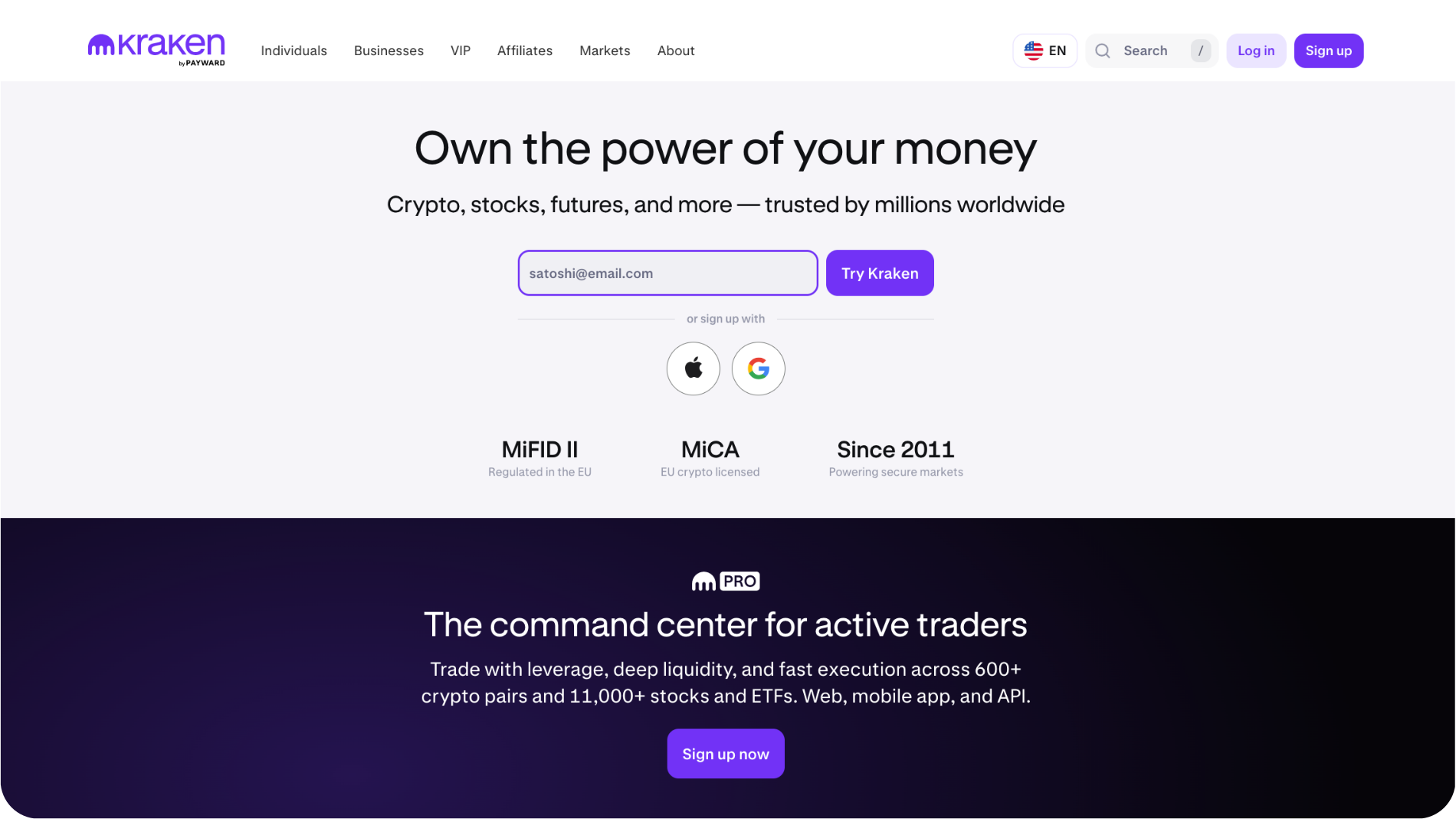
1. Kraken: The Most Comprehensive Platform for Making the Leap to Advanced Trading
Kraken is one of the industry’s longest-standing exchanges, founded in San Francisco in 2011 and operational since 2013, with more than 600 cryptocurrencies and a presence in over 190 countries. It ranks first because it combines a long track record of security, quarterly Proof of Reserves audits with 1:1 backing, and the most extensive selection among the top 10—a profile that inspires confidence in even the most demanding U.S. traders. It is registered as a Money Services Business (MSB) with FinCEN and holds state money transmitter licenses in virtually all of the states where it operates.
Its standard fee is 0.25% for makers and 0.40% for takers at the basic level, decreasing with volume at higher levels. The minimum deposit is $10. For users in the United States, Kraken offers margin trading, futures for eligible customers, and staking in dozens of cryptocurrencies—something very few competitors can match in the local market. View full Kraken review
Who is Kraken for? For users in the United States looking for a long-established, highly secure exchange with room to grow into advanced trading and staking.
Advantages:
- Wide variety of cryptocurrencies and markets available
- A strong track record of safety since its founding in 2011
- Access to margin trading, futures, and staking for dozens of cryptocurrencies
Disadvantages:
- Some advanced features are not available in all states
- Higher standard fees than those charged by exchanges specializing in spot trading
- Learning curve to take full advantage of all its features
2. Crypto.com: Spend Your Cryptocurrency with the Everyday Visa Card
Crypto.com is one of the world’s largest crypto platforms, with more than 150 million users and a business model focused on everyday spending thanks to its Visa card linked to users’ crypto balances. It ranks second due to this combination of an exchange and a payment method—something no other platform in the top 10 offers with such reliability for U.S. users. It operates in the United States as an MSB registered with FinCEN, holding state-by-state money transmitter licenses.
Fees start at 0.075% for makers and takers at the base level, decreasing based on trading volume or CRO token staking; the Visa card offers cashback of up to 5% in the United States. For users in the United States, the app also provides access to NFTs and an interest-bearing savings product in stablecoins, within an ecosystem designed for everyday use. See the full review of Crypto.com
Who is Crypto.com for? For users in the United States who want to use their cryptocurrency for everyday purchases with a Visa card, in addition to trading on the exchange.
Advantages:
- Visa Card with Cash Back in the United States
- Low fees at the basic level
- A comprehensive ecosystem featuring staking and savings in stablecoins
Disadvantages:
- Better terms require holding the CRO token
- A somewhat complex ecosystem for new users
- Some features are limited or unavailable in certain states

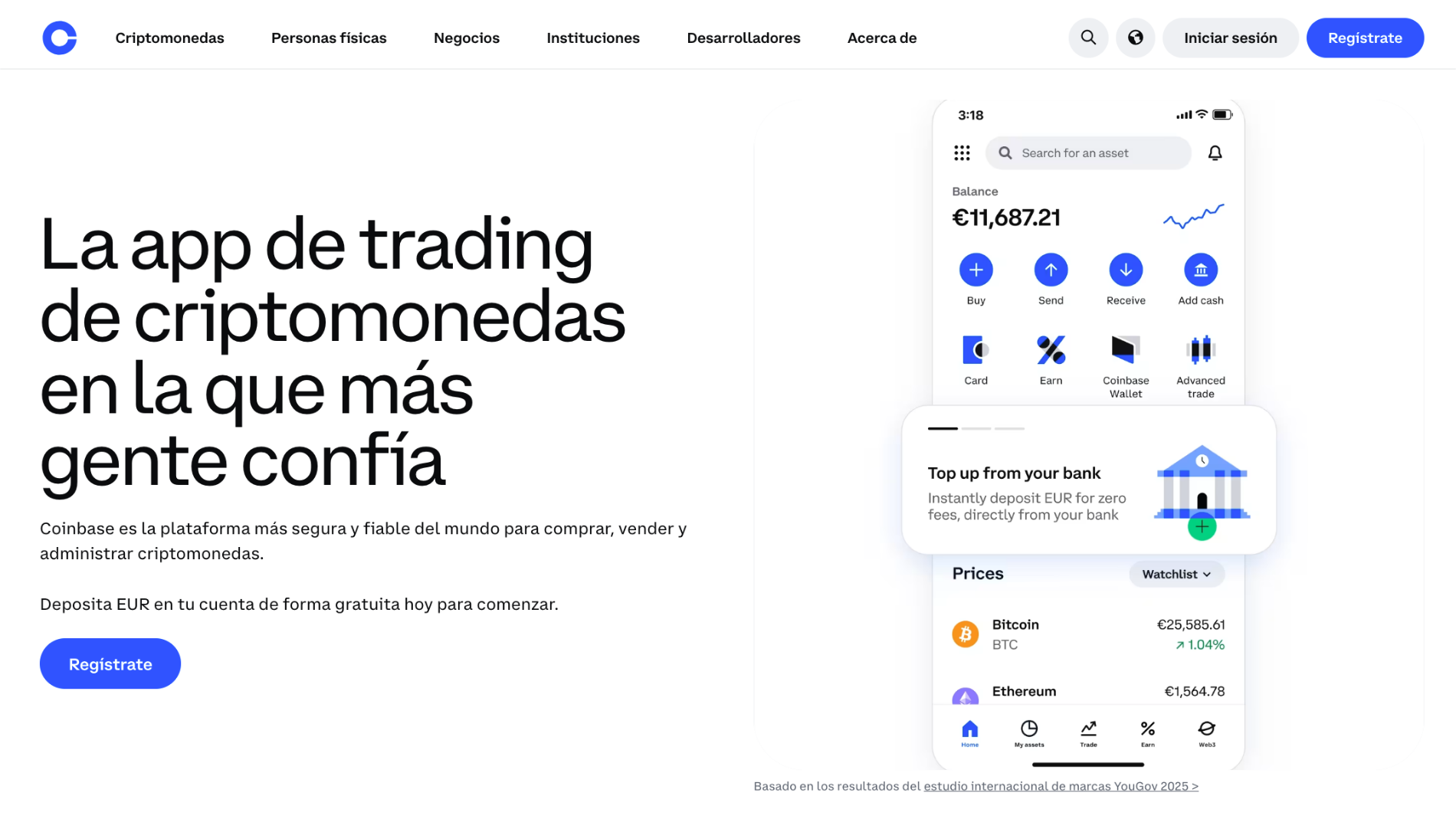
3. Coinbase: the best-known option with the greatest regulatory weight
Coinbase is a publicly traded exchange (Nasdaq: COIN since 2021) and one of the most heavily audited in the world, with more than 120 million users in over 100 countries. It ranks third for combining the highest brand trust among the top 10 with the greatest regulatory weight in the United States: it holds a BitLicense from the NYDFS to operate in New York, as well as money transmitter licenses in virtually every state and registration as an MSB with FinCEN.
The standard app charges fees of up to 3.99% for card transactions, but Coinbase Advanced reduces them to between 0.35% and 0.75% depending on volume, and Coinbase One eliminates fees for up to 10,000 USD per month with a subscription. For users in the United States, it will issue Form 1099-DA starting with the 2026 tax year and offers tax reports that can be downloaded directly from the app. View full Coinbase review
Who is Coinbase for? For users in the United States who are just getting started with crypto and prefer the trustworthiness of a publicly traded company with a BitLicense.
Advantages:
- A well-known brand listed on the stock exchange
- NYDFS BitLicense, also available in New York
- Tax reports (Form 1099-DA) integrated into the app
Disadvantages:
- High fees in the standard app
- You must upgrade to Advanced to get competitive rates
- Less suitable for those who already have advanced experience
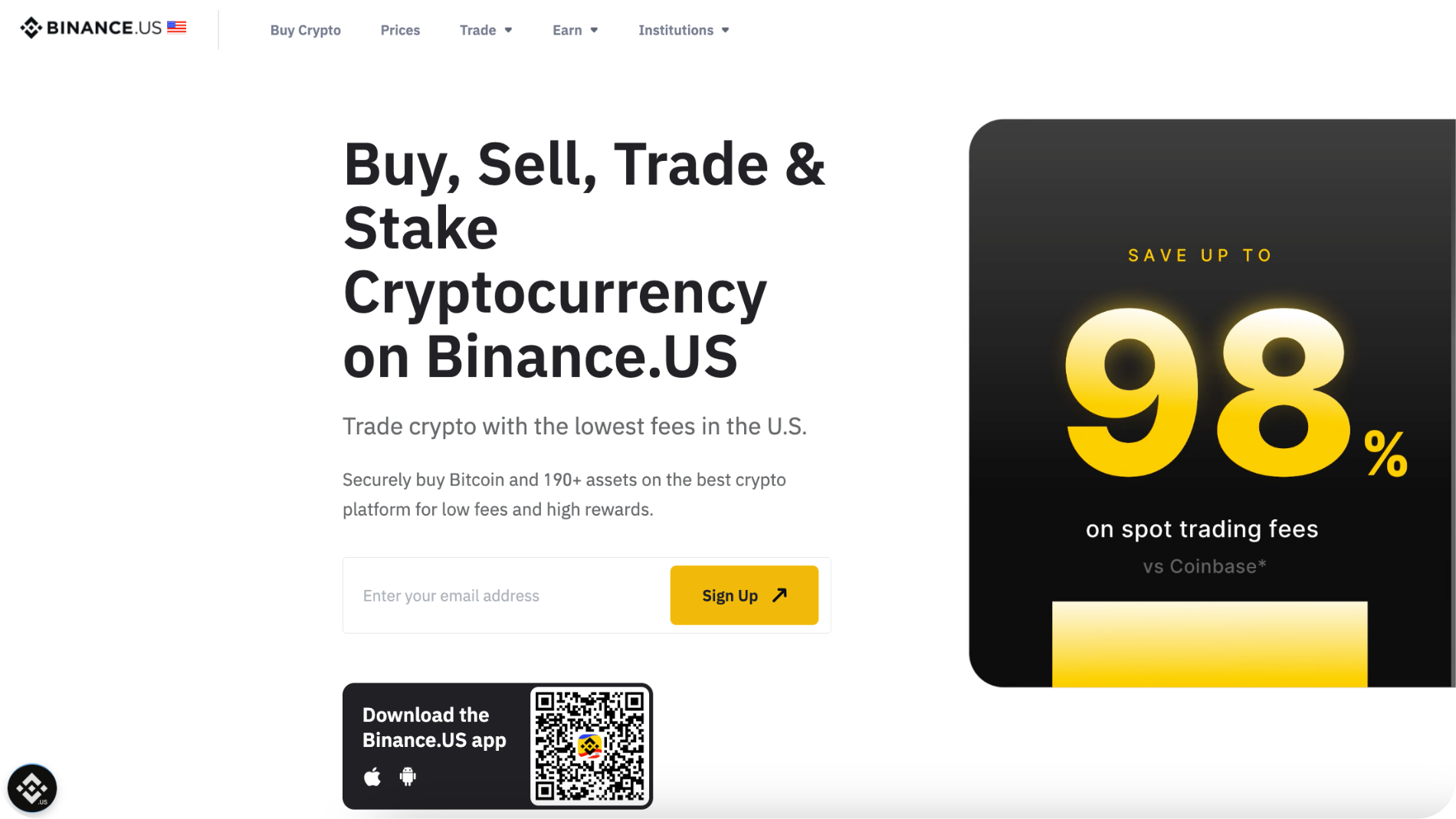
4. Binance.US: Low fees and a wide selection for active traders
Binance.US is the independent U.S. entity affiliated with Binance, operated under its own corporate structure and registered as an MSB with FinCEN, with state-by-state money transmitter licenses. It ranks fourth for offering a wide range of products and competitive fees within the U.S. regulatory framework, although it provides fewer services than Binance’s global platform due to local regulatory restrictions.
Its spot fees start at 0.10% for makers and takers, decreasing as trading volume increases at higher tiers. For users in the United States, the service is not available in all states (New York and Texas, among others, are excluded from its coverage), so it’s a good idea to check availability before signing up. See the full review of Binance.US
Who is Binance.US for? For users in the United States who are looking for low fees and a wide selection, and who live in a state where the platform is available.
Advantages:
- Competitive spot commissions within the U.S. market
- Extensive cryptocurrency catalog for the local market
- Registered as an MSB with state money transmitter licenses
Disadvantages:
- Not available in several states, including New York and Texas
- Fewer features than Binance's global platform
- A smaller selection of derivative products compared to other exchanges in the top 10
5. Robinhood: Cryptocurrencies, stocks, and ETFs all in one app, licensed under BitLicense
Robinhood is the U.S. brokerage firm listed on the Nasdaq (HOOD) that popularized commission-free trading of stocks and options, and which now combines crypto, stocks, and ETFs in a single account. It ranks fifth as one of the few platforms in the top 10 with a BitLicense from the NYDFS, and for having strengthened its crypto business following the $200 million acquisition of Bitstamp in 2025.
Robinhood Crypto does not charge a direct commission; instead, it incorporates the cost into the spread on each trade, which is available in more than 30 states. For users in the United States, those in New York operate under more restricted conditions: they cannot withdraw crypto to external wallets or access features such as staking, unlike users in the rest of the country.
Who is Robinhood for? For users in the United States who already use the app for stocks and ETFs and want to add crypto without having to manage a separate account.
Advantages:
- NYDFS BitLicense, available in New York
- Cryptocurrencies, stocks, and ETFs all in one app
- Support for the acquisition of Bitstamp, with institutional-grade infrastructure
Disadvantages:
- Users in New York cannot withdraw crypto to external wallets
- Cost implicit in the spread, with no visible commission per trade
- A smaller selection of cryptocurrencies than specialized exchanges

6. Gemini: the most heavily regulated option, founded by the Winklevoss brothers
Gemini is the New York-based exchange founded in 2014 by Cameron and Tyler Winklevoss, built from the ground up with a focus on regulatory compliance. It ranks sixth for operating under a Limited Purpose Trust Charter from the NYDFS, a regulatory framework that is distinct from and more stringent than the standard BitLicense, which subjects Gemini to periodic scrutiny as if it were a fiduciary entity.
Its fees vary depending on the size of the trade and the access method (standard app vs. ActiveTrader), generally being higher on the basic app and more competitive on its Pro platform. For users in the United States, Gemini offers its own credit card with crypto rewards and an institutional custody program—two products designed for users seeking the highest level of regulatory compliance. See the full review of Gemini
Who is Gemini for? For users in the United States who prioritize maximum regulatory robustness and institutional custody over the lowest fees.
Advantages:
- NYDFS Limited Purpose Trust Charter, which is more stringent than the standard BitLicense
- Our own credit card with crypto rewards
- Strong focus on institutional custody and regulatory compliance
Disadvantages:
- Higher commissions on the standard app than on ActiveTrader
- A smaller selection of cryptocurrencies than other exchanges in the top 10
- Fewer advanced trading features for retail users

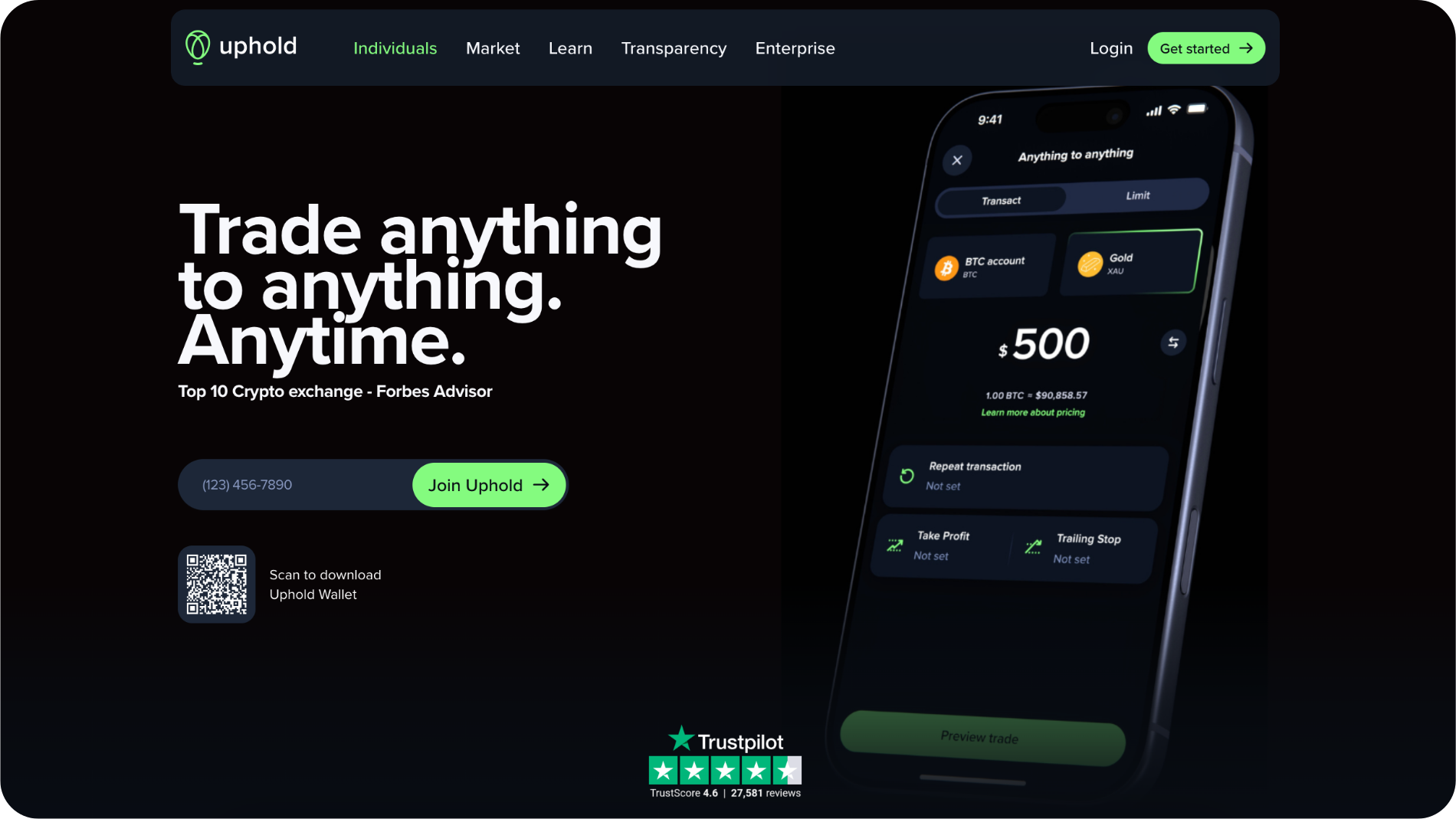
7. Uphold: multi-asset platform with access to dozens of currencies and metals
Uphold is a U.S.-based platform that combines cryptocurrencies, fiat currencies, and precious metals in a single account, with more than 10 million registered users. It ranks seventh for being the most multi-asset option in the top 10, allowing users to convert directly between crypto, dollars, euros, or gold without any intermediate steps. It is registered as an MSB with FinCEN and holds money transmitter licenses in most states.
Its fees are applied via the spread, generally ranging from 0.8% to 1.2% depending on the traded pair, with no explicit trading commission. For users in the United States, it allows them to hold a balance directly in USD alongside the rest of their assets, which is useful for those who want to manage crypto and traditional savings from a single app.
Who is Uphold for? For users in the United States who want to combine cryptocurrencies, foreign currencies, and precious metals in a single account, without having to manage multiple apps.
Advantages:
- Direct conversion between cryptocurrencies, fiat currencies, and precious metals
- No explicit trading commission; cost included in the spread
- Multi-asset account designed for diversified savings
Disadvantages:
- A spread that is less transparent than a published fixed commission
- A more limited selection of cryptocurrencies than on specialized exchanges
- Fewer advanced trading tools for active users
8. Bitstamp: The long-standing exchange, now backed by Robinhood
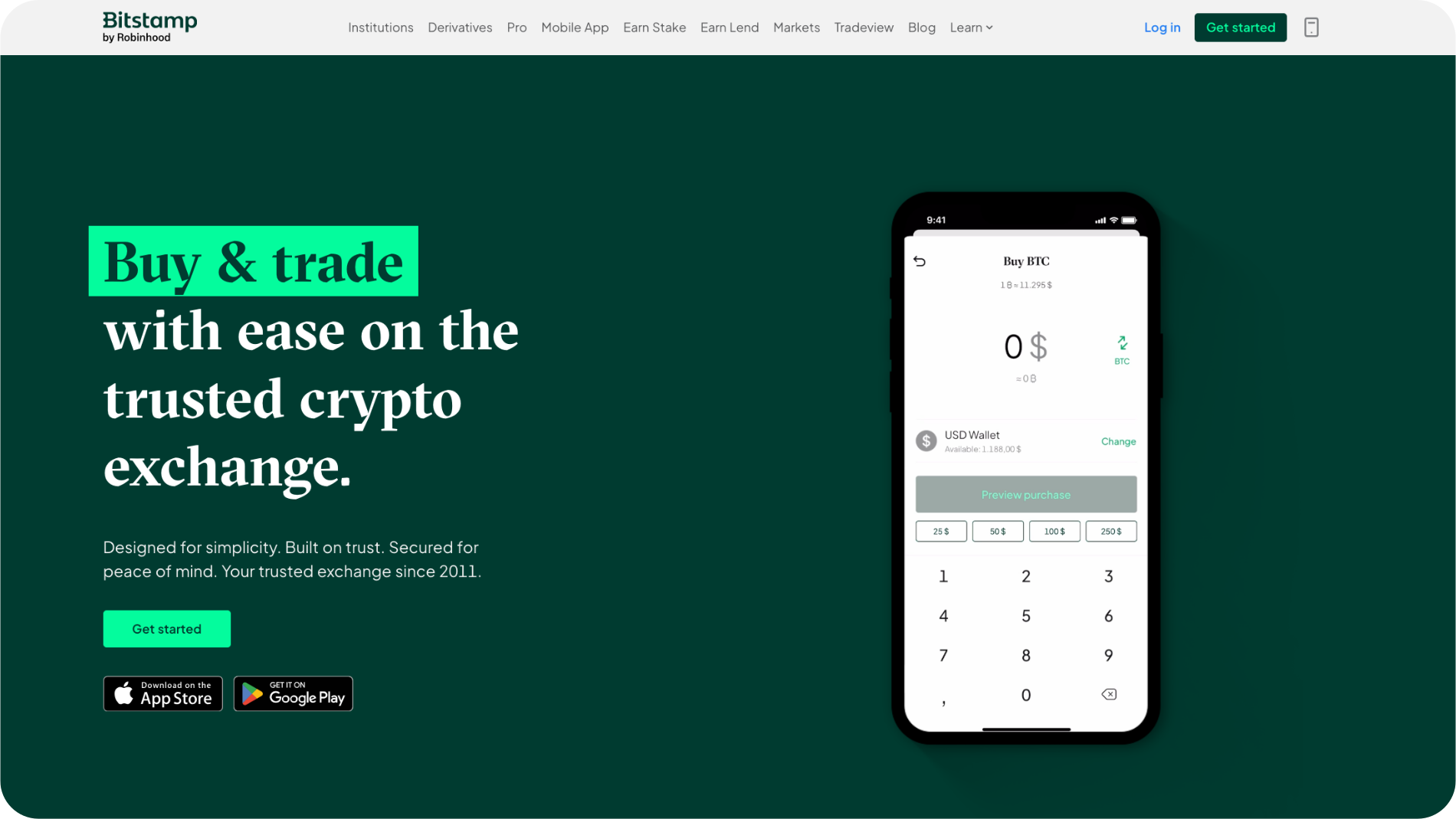
Bitstamp is Europe’s oldest active cryptocurrency exchange, founded in 2011, with offices in the United States as well, and owned by Robinhood Markets (Nasdaq: HOOD) following its $200 million acquisition, which was finalized in 2025. It ranks eighth due to its track record of more than a decade without any serious security incidents—a particularly attractive feature for conservative users, who now benefit from the institutional backing of a Nasdaq-listed broker.
Its commissions are in line with market averages and decrease based on trading volume, with more than 85 tradable assets in its portfolio. For users in the United States, integration with Robinhood is underway following the acquisition, which is expected to expand its institutional product offerings in the coming years. See the full review of Bitstamp
Who is Bitstamp for? For users in the United States who prioritize Robinhood's track record—and now its institutional backing—over product variety.
Advantages:
- A track record of more than a decade without serious incidents
- Backed by the Nasdaq-listed Robinhood Group
- More than 85 tradable assets, including institutional products
Disadvantages:
- Integration with Robinhood is still in progress
- A smaller selection of cryptocurrencies than specialized exchanges
- Commissions are average; they are not among the lowest
9. bitFlyer: The Japanese exchange specializing in Bitcoin
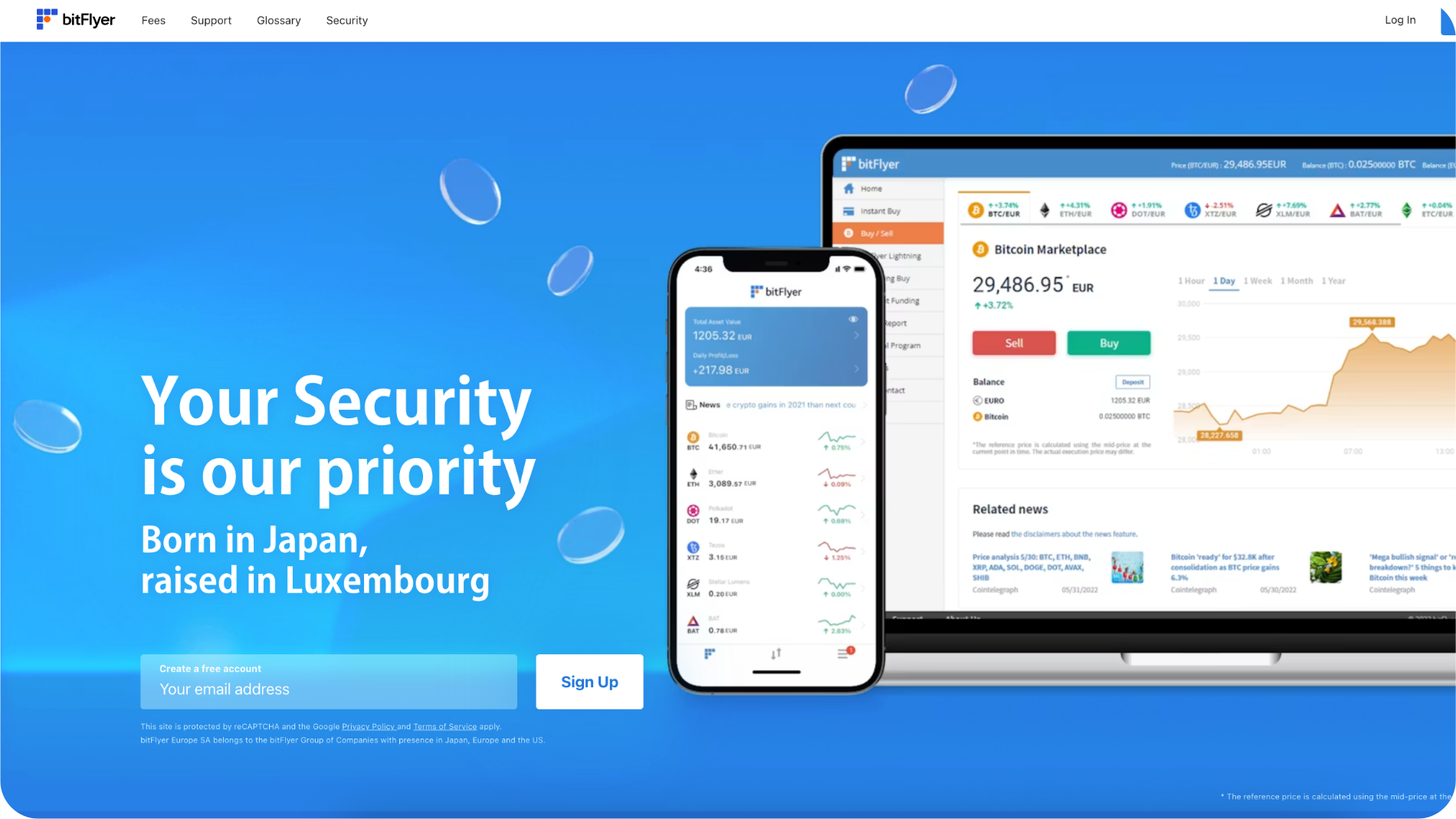
bitFlyer is Japan’s largest cryptocurrency exchange; it has also had a presence in the United States since 2017, where it operates under its own state-by-state money transmitter license and is registered as an MSB with FinCEN. It ranks ninth due to its strong focus on Bitcoin and for offering a level of market depth that is uncommon among mid-sized exchanges in the U.S. market.
Its fees start at 0.01% for makers and 0.15% for takers on its Lightning (Pro) platform, decreasing as trading volume increases. For users in the United States, bitFlyer is particularly attractive if your trading focuses on Bitcoin and you want access to the liquidity of an exchange with a strong presence in the Asian market as well. See the full review of bitFlyer
Who is bitFlyer for? For users in the United States who focus their trading on Bitcoin and are looking for an exchange with market depth and advanced trading features.
Advantages:
- Low fees on its Lightning (Pro) platform
- High Specialization and Liquidity in Bitcoin
- A well-established presence in the Asian market as well
Disadvantages:
- A smaller selection of cryptocurrencies than on general-purpose exchanges
- Lower brand recognition in the United States
- Limited availability in some states
10. eToro: The social investing platform with built-in crypto
eToro is the social investing platform that combines stocks, ETFs, and cryptocurrencies in a single account, with its CopyTrader feature as its key differentiator: it allows users to automatically replicate other investors’ trades. It rounds out the top 10 as the most social-investing-focused option in the ranking, with eToro USA LLC registered as an MSB with FinCEN and holding state-by-state money transmitter licenses.
Its crypto commissions start at a minimum spread of 1%, which is higher than that of exchanges specializing in spot trading. For users in the United States, the crypto offering is more limited than what is available in other eToro markets, in line with local regulatory restrictions on certain digital assets. See the full review of eToro
Who is eToro for? For users in the United States who want to combine crypto, stocks, and ETFs, and who value the ability to copy other investors' strategies.
Advantages:
- CopyTrader feature for replicating other investors' strategies
- Cryptocurrencies, stocks, and ETFs all in one account
- Registered as an MSB with state money transmitter licenses
Disadvantages:
- Higher spread than on exchanges specializing in spot trading
- A more limited selection of cryptocurrencies than on other eToro markets
- Less suitable for traders who are only interested in cryptocurrency

Comparison Table of Exchanges in the United States
After reviewing the 10 exchanges, here is a comparison table that summarizes each one’s cryptocurrency offerings, maker/taker fees, and MiCA compliance for users in the United States.
| Platform | Cryptos | Maker / Taker | Regulation |
|---|---|---|---|
 Kraken
|
600+ | 0,25% / 0,40% | MSB (FinCEN) + state licenses |
 Crypto.com
|
250+ | 0,075% / 0,075% | MSB (FinCEN) + state licenses |
 Coinbase
|
400+ | 0.35% / 0.75% (Advanced) | BitLicense (NYDFS) + State Licenses |
 Binance.US
|
150+ | 0,10% / 0,10% | MSB (FinCEN) + state licenses |
 Robinhood
|
20+ | Cost via spread | BitLicense (NYDFS) + State Licenses |
 Gemini
|
80+ | Varies by platform | Limited Purpose Trust Charter (NYDFS) |
 Uphold
|
250+ | Cost via spread (~0.8%–1.2%) | MSB (FinCEN) + state licenses |
 Bitstamp
|
85+ | In line with the market average | MSB (FinCEN) + state licenses |
 bitFlyer
|
25+ | 0.01% / 0.15% (Lightning) | MSB (FinCEN) + state licenses |
 eToro
eToro
|
40+ | Spread from 1% | MSB (FinCEN) + state licenses |
All the exchanges in the ranking are registered as Money Services Businesses with FinCEN, and several also hold specific New York licenses (BitLicense or Trust Charter), which constitute the most stringent state regulatory framework in the country. The best option will depend on whether you prioritize low fees, availability in your state, or the strongest possible regulatory backing.
How are cryptocurrencies taxed in the United States in 2026?
The United States does not have a specific tax on cryptocurrencies: the IRS has treated them as property since Notice 2014-21, not as currency, so the same rules apply as for stocks or other capital assets. The key factor is the holding period, because it determines the applicable tax rate. Selling for dollars, exchanging one cryptocurrency for another, or paying for goods or services with cryptocurrency counts as a taxable disposition; buying with dollars and holding the asset without selling it is not taxable.
Depending on the type of transaction and the holding period, different rules apply:
- Short-term capital gains (less than 12 months): Gains from the sale or exchange of cryptocurrencies held for less than one year are taxed as ordinary income, with federal tax rates ranging from 10% to 37% depending on the tax bracket.
- Long-term capital gains (more than 12 months): Gains on assets held for more than one year are taxed at reduced rates of 0%, 15%, or 20%, depending on the taxpayer's income level.
- Staking, mining, and airdrops: This income is taxed as ordinary income at the time the taxpayer obtains control of the asset, in accordance with Revenue Ruling 2023-14 and Revenue Ruling 2019-24.
- Form 8949 and Schedule D: Each disposition is reported separately on Form 8949, and the totals are summarized on Schedule D of Form 1040; income from staking or mining, if not part of a business activity, is reported on Schedule 1.
Starting with the 2026 tax year, exchanges are required to issue the new Form 1099-DA for sales made on or after January 1, 2025, reporting gross proceeds directly to the IRS and, beginning in 2026, the cost basis for each transaction as well. The most sensible approach is to keep your own record of purchases, sales, and acquisition dates, and report everything to the IRS by April 15.
How did we selected the exchanges in this ranking
This ranking was compiled based on a comparative analysis of cryptocurrency exchanges available to customers in the United States, combining real-world usage tests with technical, regulatory, and user experience evaluations to identify those best suited for U.S. residents in 2026.
To compile the ranking, we evaluated each platform based on the following criteria:
| Criterion | What We Evaluate | |
|---|---|---|
| 1 | Licensing Regulations and Verification | We verify the entity's registration as a Money Services Business (MSB) with FinCEN, its state money transmitter licenses, and, where applicable, whether it holds a BitLicense or Trust Charter from the NYDFS, in addition to the necessary authorizations to provide services in each jurisdiction. |
| 2 | Availability by State | We check which states each platform is available in and what territorial restrictions apply, paying special attention to jurisdictions with specific requirements, such as New York and Texas. |
| 3 | Tax Adjustment | We evaluate the clarity of tax reports and the ease of preparing the information required for Form 1099-DA, Form 8949, and Schedule D, including the distinction between short-term and long-term gains. |
| 4 | Transactions in dollars | We analyze the ease of depositing and withdrawing USD via ACH, bank transfers, and cards, as well as settlement times and available payment options. |
| 5 | Actual Trading Costs | We run simulations on each platform to calculate the combined cost of commissions, spreads, and withdrawal fees, rather than relying solely on the published rates. |
| 6 | Track Record and Transparency | We review each exchange's security track record, relevant incidents, and the level of transparency regarding its reserves, including the publication of Proof of Reserves when available. |
The testing was completed in September 2026, with a final verification of current registrations and licenses in the public databases of FinCEN and NYDFS as of the publication date. You can review the complete data research and verification process on our methodology.
Important note: We review this ranking periodically based on new state licenses, changes in availability by state, or tax updates from the IRS. Rankings are subject to change.
Regulation of Exchanges and Cryptocurrencies in the United States
Unlike other markets with a single national regulator, the United States combines federal and state oversight. At the federal level, every exchange must register as a Money Services Business (MSB) with FinCEN, which requires it to comply with anti-money laundering (BSA/AML) and know-your-customer (KYC) regulations. At the state level, each exchange also needs money transmitter licenses in most of the states where it operates, with New York being the most stringent: there, the NYDFS requires a BitLicense or, in the case of Gemini, a Limited Purpose Trust Charter—a regulatory framework unique to that state and distinct from the rest of the country.
This fragmentation explains why some exchanges, such as Binance.US, do not operate in all states, and why others, such as Robinhood, impose additional restrictions (no withdrawals to external wallets or staking) specifically on their New York users. Consolidation in the sector has also been notable: Robinhood acquired Bitstamp for $200 million in 2025, strengthening its institutional infrastructure. In terms of assets, the SEC and the CFTC share oversight depending on whether a token is considered a security or a commodity—a distinction that continues to evolve on a case-by-case basis.
Important note: Just because an exchange is registered as an MSB does not mean it offers the same services in every state; you should always check the specific availability in your state of residence before signing up.
The information presented in this ranking is for informational and educational purposes only. It does not constitute financial or tax advice, nor is it a personalized investment recommendation. Using cryptocurrency exchanges involves risks, and each user is responsible for assessing which platform best suits their profile, as well as for complying with applicable regulations and their legal and tax obligations under current Spanish law. Some links in this ranking are affiliate links: if you open an account through them, Exchange Selector may receive a commission at no additional cost to you. This does not influence the criteria or the order of this ranking.