

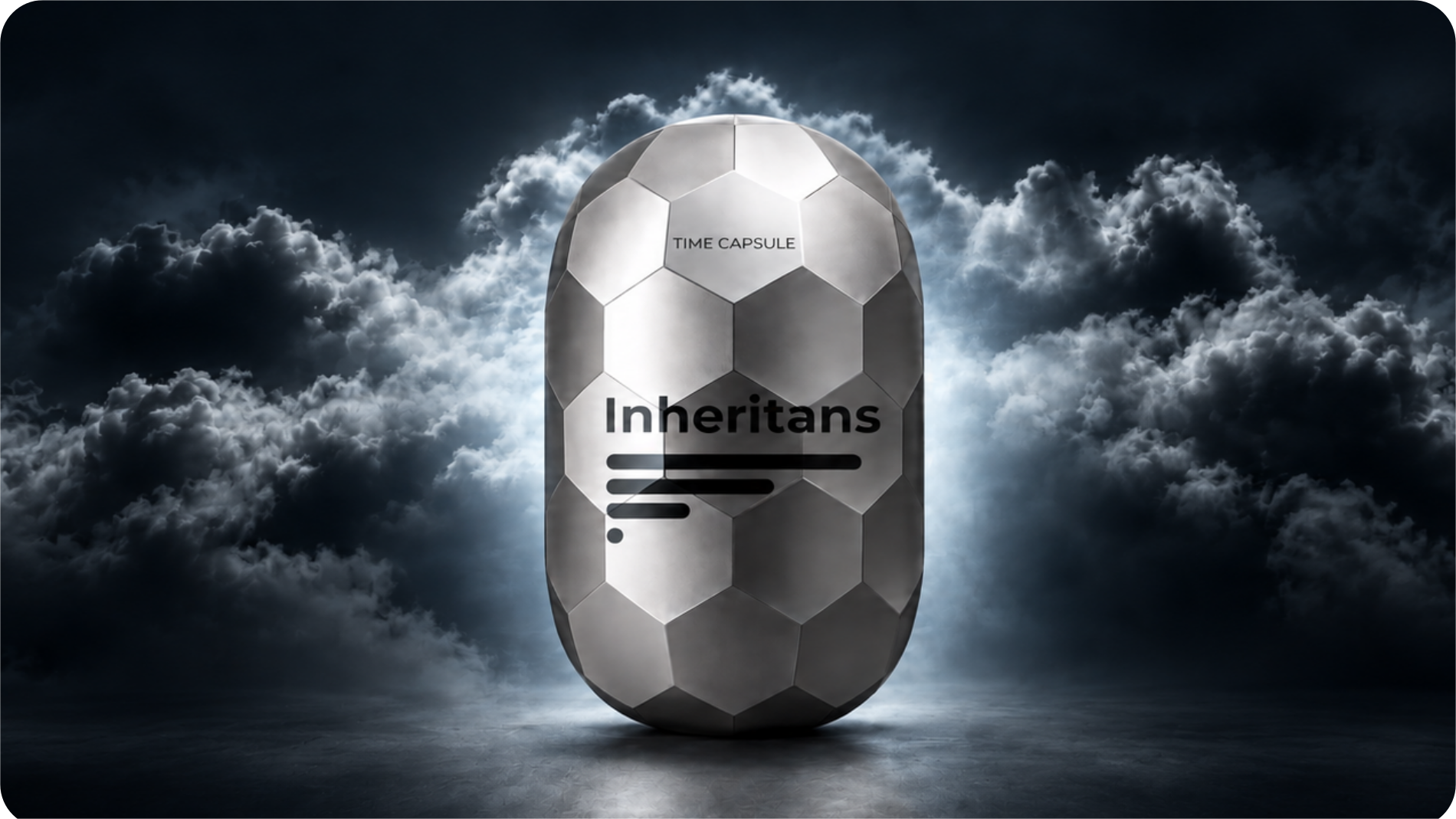
Most people never get around to organizing their digital and physical estate until it's too late. We'll explain how Inheritans turns that chaos into a clear, verified plan.

| Score | |
| Category | Digital and Cultural Heritage |
| How It Works | Legacy Capsules (subscription) |
| Plans | 4 (Freedom, Basic, Plus, Lattice) |
| Price | From €0 to €199.99 per year |
| Free Trial | 15 days on payment plans |
| Security | External audit, 0 vulnerabilities |
| Infrastructure | AWS with Encryption |
A legacy doesn't fail because of a lack of money; it fails because of a lack of a plan
No one thinks about this until it hits close to home. An account you «will get around to organizing,» a password only you know, a wallet whose seed phrase you never shared with anyone. As long as you’re here to explain it, it doesn’t matter: everything works. The problem arises the day you can no longer explain it yourself, and the person left behind has to blindly piece together something that was obvious to you.
The figures confirm that this fear is not overblown: it is estimated that up to 20% of all Bitcoin ever issued is lost forever, largely because the private keys existed only in one person’s mind. And that’s just the crypto side of things. Inactive accounts, unclaimed insurance policies, social media accounts left open, legal documents that no one knows exist: what is lost due to a lack of organization is far more than what is lost due to bad luck.
Inheritans is not a substitute for a will, nor is it a key-management product. It’s the missing link between what you know today and what your loved ones will need to know when you’re no longer here to tell them: where everything is, how it’s managed, and who should receive it.
| What's up? | No legacy plan | With Inheritans |
|---|---|---|
| Cryptocurrency, exchanges, and wallets | They're lost if no one knows where they are or how to access them | Included in the package, with clear instructions |
| Accounts and Financial Assets | Money, brokers, or insurance policies that no one claims | Listed and explained one by one, by entity |
| Digital Access Points | Lockouts due to passwords, 2FA, or primary email | Predefined recovery paths |
| Personal Will and Desires | Your loved ones have to figure things out on their own during a difficult time | Personalized messages, by recipient |
| Verification of Death | Non-existent or prone to errors | Multi-layered verification before activating anything |
What Is a Legacy Capsule, Really?
Inheritans works through what the platform itself calls «capsules»: private spaces where you can gradually—and at your own pace—save the information that, for now, only you have in your head. It’s not a static document that you fill out once and forget about, but a dynamic dashboard that you can update whenever you want, as your accounts, your assets, or the people you want to notify change.
Within each capsule, you can combine various types of content: text messages, attachments, voice or video notes, and a description of each asset (a wallet, a bank account, an insurance policy, digital access) along with instructions on how to locate or retrieve it. Each item is addressed to one or more specific recipients, and nothing is released from the capsule until the verification system confirms that it should be activated.
The underlying idea is simple but unusual: separating «where the information is» from «when and to whom it should be delivered.» That’s what makes it possible, for example, to leave a message that will only be delivered 30 days after death, or to restrict certain information to a business partner only and not share it with the rest of the family.
Important note: A legacy capsule is not a will and has no legal validity on its own. It is the means by which you document the «how» and «where» of your estate; the «who inherits what» still depends on your will.
What plans does Inheritans offer?
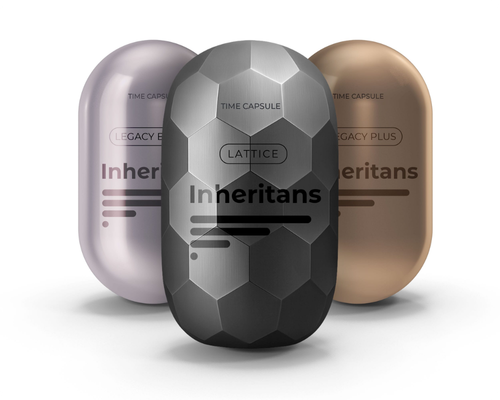
Inheritans is divided into two categories: Legacy, with three plans (Freedom, Basic, and Plus), and Lattice, the premium plan, which is a step above the rest. The real difference isn’t security—which is the same across all plans—but rather how many people you need to notify, how many assets you have to document, and how much control you want over how and when each message is delivered.
| Concept | Freedom | Basic | Plus | Lattice |
|---|---|---|---|---|
| Price | Free | €69.99/year | €129.99/year | €199.99/year |
| Activation | Automatic Postmortem | Verified | Verified | Verified (3 layers) |
| Messages | 1 | 1 | 1 (up to 10 contacts) | Unlimited and unique per contact |
| Limit per message | 1,024 characters | 2,048 characters | 4,096 characters | No practical limit |
| Contacts | 1 | Up to 2 | Up to 10 | Unlimited |
| Types of Assets | — | 1 | Up to 10 | Up to 50 |
| Attached Resources | — | 1 | Up to 10 | Up to 50 |
| Assisted recovery | No | No | Yes | Yes |
| Shipping Rules | No | No | No | Yes |
| Support | — | Basic 24/7 | 24/7 Priority | 24/7 Priority |
LegacyFreedom · The Starting Point
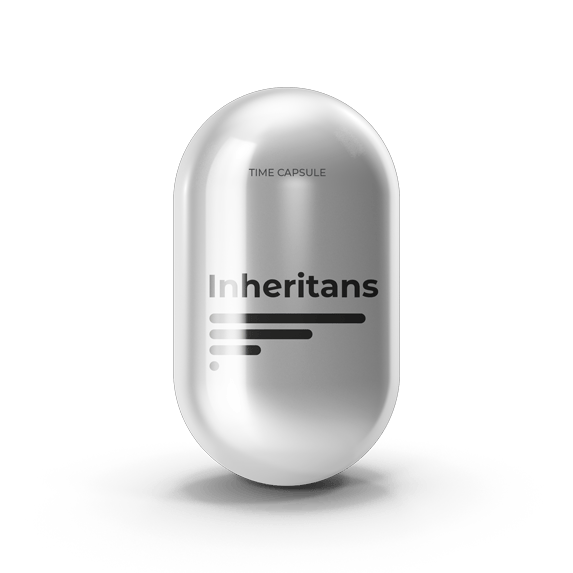
It’s the entry point—free forever—designed for anyone who wants to try out the tool without committing. It does not include proactive life verification: activation is postmortem and fully automatic, with no manual validation, so it’s a good idea to reference the capsule in your will itself to ensure there is a record that this information exists. A message and a contact are sufficient for light use.
LegacyBasic · For the essentials, without the hassle
Designed for those whose financial and family situations aren't overly complex: sending the same message to one or two people is enough. It includes verified activation, activity verification, and an attached file (text, PDF, video, or audio), as well as basic 24/7 support.
LegacyPlus · when there are more people and more assets
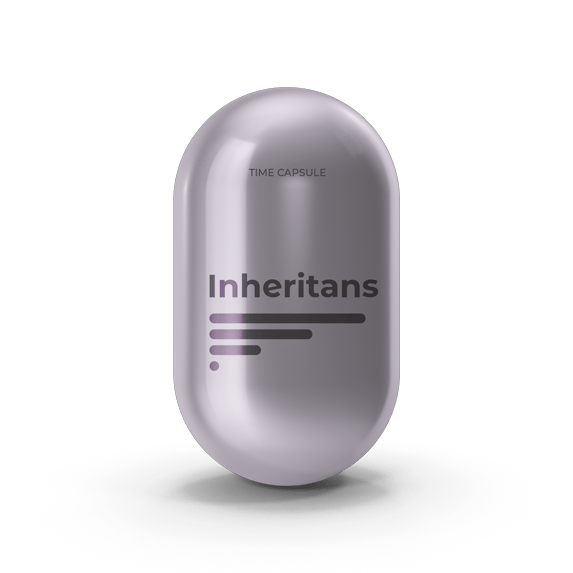
This upgrade makes sense if you want to notify more people—siblings, parents, a spouse, children—or document more types of assets. It allows you to send the same message to up to 10 contacts, each with up to 10 attached assets, and includes a recovery and assistance service for recipients: the team helps heirs recover complex assets, such as cryptocurrencies, when they lack the technical knowledge to do so on their own.
Lattice · The Unlimited Plan, Recommended
It is the only one with a three-tiered life verification process: a reference in the will, a periodic automatic check (a button you click to confirm you’re still here), and, if you don’t respond, a manual protocol in which the team calls to verify the death and contacts the legal heirs to request a death certificate and ID before taking any further action.
The other major difference from Legacy is that you don’t send a single message: you can create different messages for each contact, with private and specific information for each one, with no limits on recipients or content, and you can also send them to people who aren’t family members, such as business partners. You can attach up to 50 files and, as a unique feature, set delivery rules: you can schedule one message to be sent immediately upon death, another to be sent 30 days later, or a third to be sent only after the second recipient has opened their message.
Did you know? All payment plans include a 15-day free trial, so you can set up your own capsule, see how the verification process works, and decide if it's worth it before you're charged anything.
How Your Capsule Is Organized on the Inside
Inside the capsule, everything depends on everything else. A message, a contact, and an asset don't function as separate elements: the system requires them to be connected to one another before anything is considered complete.
A message without a linked contact is useless, because there’s no one to send it to. An asset without a linked message doesn’t deliver itself either: it stays stored in the capsule, but no one will receive it when the time comes. This interdependence among the three elements explains the progress indicator you see as soon as you enter the dashboard—the famous «44% completed.» It doesn’t measure how much you’ve filled out; it measures how many message, contact, and asset chains you’ve fully closed.

The best order in which to work
The panel lets you move freely between sections, but there's a specific order that prevents dead ends and repetition:
- Start by going to "Getting Started.". There are seven videos, about 30 minutes in total, that explain the method before you start writing. This isn’t just filler content: the lessons on «the four pillars» and «the art of writing your legacy» are what truly shape how you write afterward. Skipping them usually results in messages that are more generic than they should be.
- First, create and approve your contacts. Since a message can’t be sent without a recipient, having your contact list ready saves you from having to switch back and forth between sections. Each contact requires a name, email address, phone number, and ID number. That last piece of information is what’s later cross-checked against the death certificate, so it’s best to make sure it’s spelled correctly from the start.
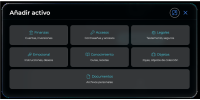
- Upload or describe your assets, if applicable. It’s the only step marked as optional, and for good reason: not everyone has anything to document beyond a message. Each file can be up to 250 MB in size, whether it’s text, an image, a video, a PDF, or an audio file, and each asset is classified into one of seven categories: Finance, Access, Legal, Emotional, Knowledge, Objects, and Documents. This classification isn’t just for aesthetics—it’s what allows a family recipe and a bank password to coexist in the same system without getting mixed up.
- Compose the message and close it. The panel is very clear on this: you can't start a new message until the previous one is complete, with content and a linked contact. This is an intentional restriction, not a limitation of the plan: it forces you to finish one thing before starting another, rather than leaving several half-finished messages floating around in the capsule.
That said, setting up your capsule on Inheritans isn't complicated, but it does require you to go through the first steps—contacts, assets, and message—in an order that actually makes sense.
How Death Verification Works
The most delicate aspect of any legacy plan is not storing the information, but deciding when to release it. Activating a capsule by mistake, or failing to activate it on time, are the two failures that a system of this kind cannot afford. That is why Inheritans builds verification into layers that become increasingly strict according to the plan:
- Reference in the will. For plans with verified activation, it is recommended to document the existence of the capsule in the will, so that there is a legal record that this information exists and should be consulted.
- Periodic automatic check. The system regularly asks if you're still active, with a simple confirmation button. As long as you respond, nothing happens.
- Manual Verification Protocol (Lattice only). If you stop responding to the periodic follow-up, the Inheritans team will contact you directly by phone to try to confirm the situation, and if they are unable to do so, they will contact the legal heirs to request the death certificate and ID before activating any messages or data.
This distinction is what sets Freedom—which is activated automatically after death without human intervention—apart from Lattice, where nothing is released until a real person has confirmed the death with official documentation.
Security and Infrastructure
Trust in a tool like this hinges on two factors: how well the information is protected while it’s in the capsule, and how easy it is to join and leave the service without any strings attached. Inheritans addresses both.
The entire platform runs on AWS infrastructure, with encryption both in transit and at rest: every message, document, or asset description you upload is protected from the very beginning and remains locked until the verification system corresponding to your subscription plan confirms that it should be released. Not even the Inheritans team itself has any way to access the contents of a capsule while the owner is still alive.
That infrastructure has undergone an independent external security audit conducted by Zer0D, which found no exploitable vulnerabilities in the system. This is a step that many platforms of this type skip, and here it serves as objective proof that the promise of security is not just marketing talk.
Did you know? Not even the Inheritans team can read the contents of your capsule while you're still alive: the encryption ensures that the information is only readable once the verification system releases it.
In addition to the technical aspects, Inheritans backs the purchase with several guarantees:
| Warranty | What does it mean to you? |
|---|---|
| 15-day free trial | Try the full suite on any payment plan before committing to an annual subscription |
| Cancellation at Any Time | No minimum contract term or cancellation fee for Basic, Plus, and Lattice |
| Data Under Your Control | Unique encryption keys for each user, with no cross-account access |
| Unlimited Updates | Add, edit, or delete contacts, assets, and messages as often as you need while the plan is active |
In practice, this means a system designed to minimize two risks that would be unacceptable in a service of this kind: that a third party might access your information prematurely, and that you might be stuck with a subscription you no longer need.
An estate plan isn't pessimism—it's foresight
After reviewing how Inheritans works from start to finish, the conclusion is simple: the problem has never been technical—it has been one of responsibility. Most legacy or digital disasters don’t stem from a sophisticated failure; they stem from poorly managed access, information that was stored only in one person’s head, and close associates who have to improvise at the worst possible moment.
Inheritans doesn't just handle the crypto side or just the financial side: it covers everything from a bank account to pet care, including digital access, legal documents, and personal messages, all within a single dashboard, with a setup designed to minimize errors and an external audit that validates the underlying infrastructure. With four plans ranging from trying the tool for free to managing complex assets and a network of contacts, it makes sense for virtually any user profile—from someone who just wants to keep a record of a couple of things to someone who needs to coordinate a staggered handover among several people.
If you're still not sure which one to choose, here's a quick summary:
| Your situation | Recommended Plan |
|---|---|
| Would you like to try the tool for free? | LegacyFreedom |
| Low complexity, one or two recipients | LegacyBasic |
| Several assets and up to 10 people to be notified | LegacyPlus |
| You own crypto assets and want to provide support to your heirs | LegacyPlus or Lattice |
| Do you need different messages, unlimited contacts, or scheduled sends? | Lattice |
This review is based on a trial period of actual use. During that time, we created several legacy capsules, configured personalized messages using various types of resources, tested the available activation systems, and verified the results of the external security audit conducted by Zer0D.