
Before we dive into the detailed analysis, here is a ranked list of the 10 best platforms for buying tokenized stocks, with the most important information about each one at a glance.


1. Kraken: owner of xStocks and the entire infrastructure behind it
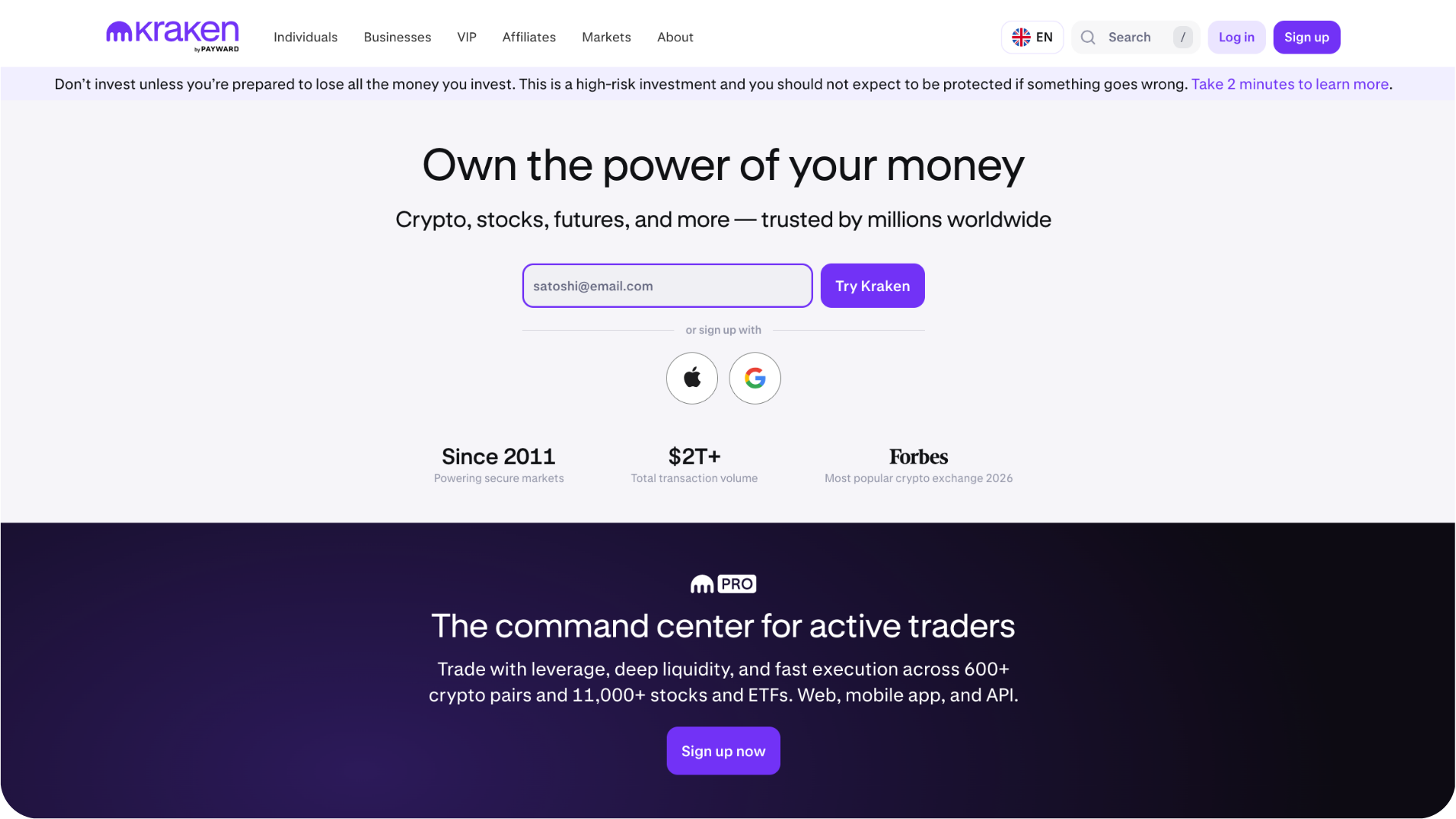
Kraken is one of the industry’s longest-standing exchanges, founded in 2011, and today the market leader in tokenized stocks: in December 2025, it acquired Backed Finance, the Swiss-Jersey firm that issues xStocks, the industry’s largest tokenized stock framework. It ranks first because it not only distributes xStocks but also controls the entire chain of issuance, custody, and settlement—something no other exchange in this ranking can match.
xStocks offers more than 60 tokenized stocks and ETFs (Apple, Nvidia, Tesla, Amazon, Coinbase, among others), backed 1:1 by the actual shares held in regulated custody, available on Solana and Ethereum with an announced expansion to TON, Tron, Mantle, and BNB Chain. The product has surpassed $10 billion in combined exchange and on-chain volume since its launch in mid-2025 and is traded 24/7 both on Kraken and directly on the blockchain. View full Kraken review
Who is Kraken's tokenized stock service for? For users who want the most established infrastructure in the industry, with the assurance that the exchange itself controls the issuance and custody of the underlying asset.
Advantages:
- Full control of the issuance and custody chain following the acquisition of Backed Finance
- xStocks' catalog is constantly expanding to include new blockchains
- Operational 24/7 both on the exchange and on-chain
Disadvantages:
- This product is not available to U.S. residents.
- The token does not confer voting rights or direct ownership of the stock
- Additional, specific verification is required to access xStocks
2. Ondo Global Markets: The Largest Selection of Tokenized Stocks and ETFs
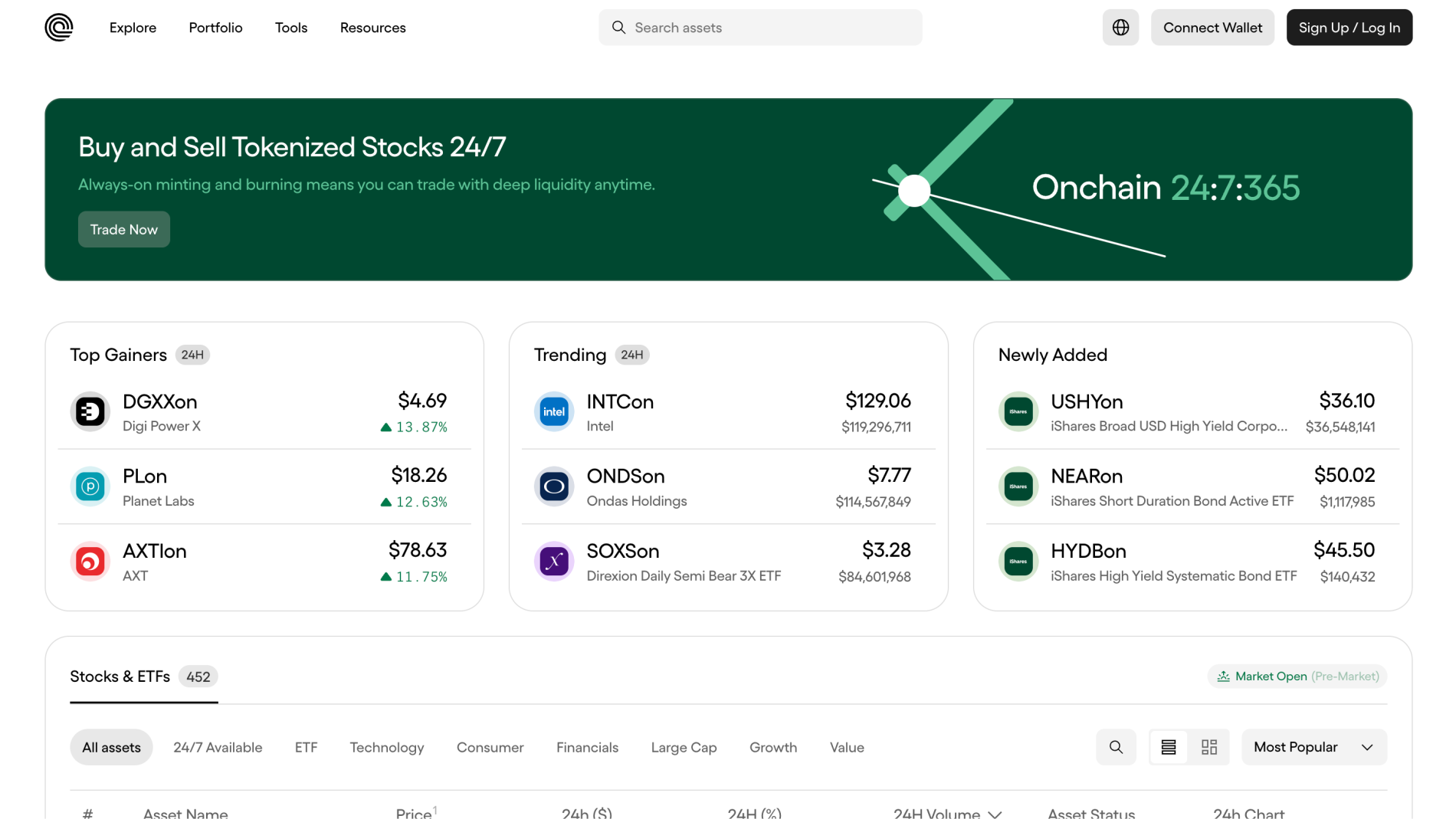
Ondo Global Markets is the Ondo Finance platform launched in September 2025; it is not a centralized exchange but rather the infrastructure that powers most of the exchanges in this ranking. It ranks second because, with more than 430 tokenized stocks and ETFs on Ethereum, Solana, and BNB Chain, and a market share of over 70% among tokenized equity issuers, it is the largest provider of tokenized stocks in existence today.
Each token is backed 1:1 by the actual stock, held in custody by a U.S.-registered broker-dealer, and tracks the total return on the position, including dividends. The platform surpassed $1 billion in total value locked in May 2026, less than eight months after its launch, with cumulative volume already exceeding $18 billion. Ondo is available through partner wallets and exchanges such as OKX Wallet, Bitget Wallet, Trust Wallet, Gate, and MEXC.
Who is Ondo Global Markets for? For users who prioritize the widest possible selection of tokenized stocks and ETFs, including niche sectors (AI, robotics, defense, energy) that centralized exchanges do not offer on their own.
Advantages:
- The industry's most extensive portfolio, with more than 430 assets
- Total return replica, including dividends
- Available through multiple partner wallets and exchanges
Disadvantages:
- It is not an exchange in its own right, but rather infrastructure that relies on third parties to operate
- Not available to residents of the U.S., the U.K., or the EEA
- It requires the use of a compatible wallet or exchange, not a single centralized account
3. Bybit: xStocks integrated with the rest of your crypto portfolio
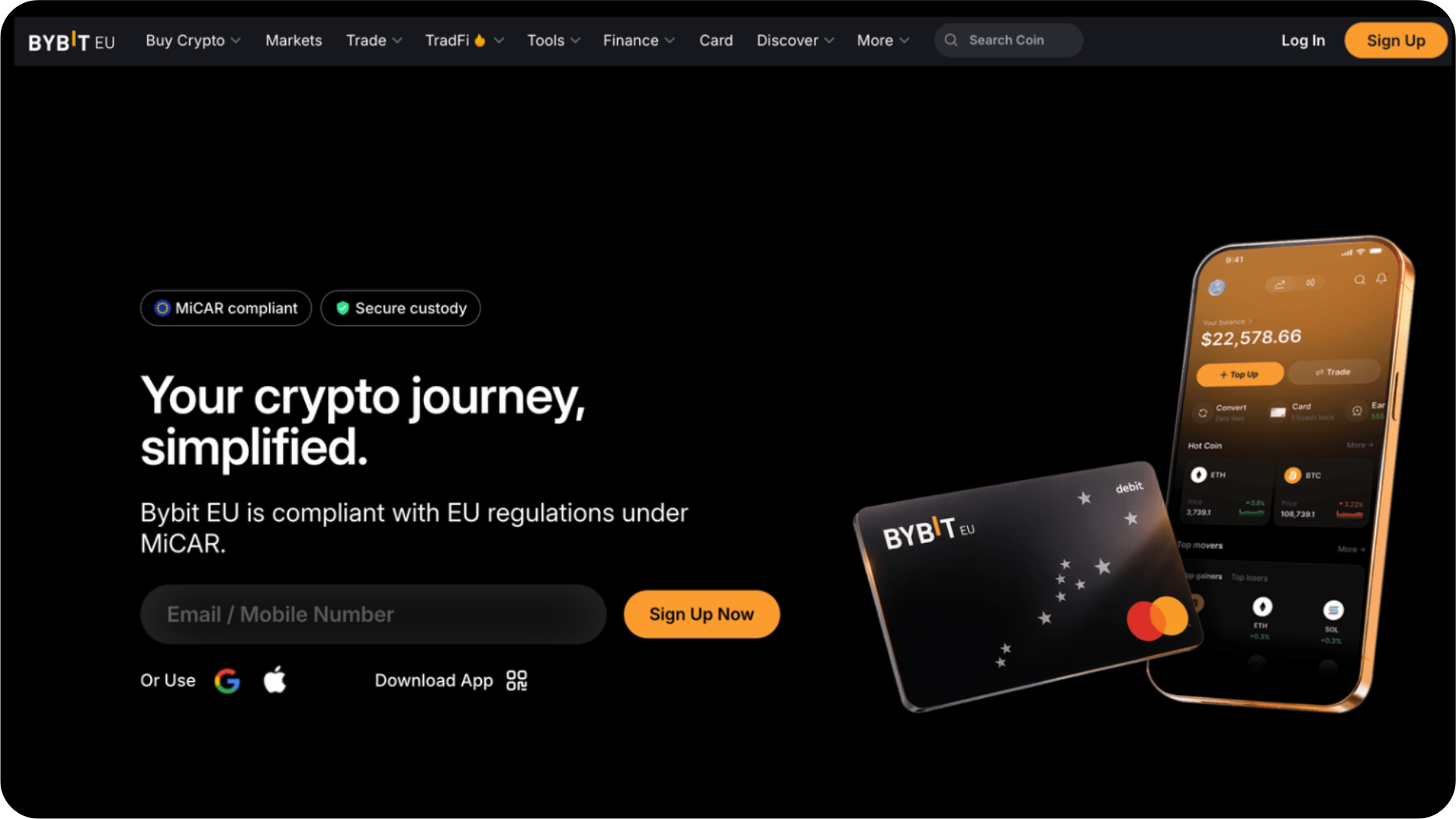
Bybit is the world’s second-largest exchange by derivatives volume, and one of the two exchanges (along with Kraken) that launched xStocks on the very day of its debut, June 30, 2025. It ranks third because it integrates Backed Finance’s tokenized stocks directly into the same account where you already trade cryptocurrencies and derivatives, without the need to open a separate account or product.
Bybit’s tokenized stocks include companies such as Netflix, Meta, Coinbase, Nvidia, McDonald’s, Apple, and Tesla, which can be traded 24 hours a day, 5 business days a week, and are freely transferable off the platform. For users who already trade on Bybit, this means they can switch between crypto and U.S. equities without leaving the exchange or transferring funds between platforms. See the full Bybit review
Who is Bybit's tokenized stock platform for? For traders who already trade crypto and derivatives on Bybit and want to add exposure to U.S. stocks without spreading their portfolio across multiple platforms.
Advantages:
- One of the first two exchanges to launch xStocks, with the most experience
- Direct integration into the same crypto trading account
- Tokenized shares that are freely transferable outside the exchange
Disadvantages:
- Catalog limited to the assets offered by xStocks; no additional proprietary catalog
- Not available in all jurisdictions
- Less explicit regulatory focus than competitors such as Gemini
4. Gate: gStocks, Ondo, and xStocks Under One Roof
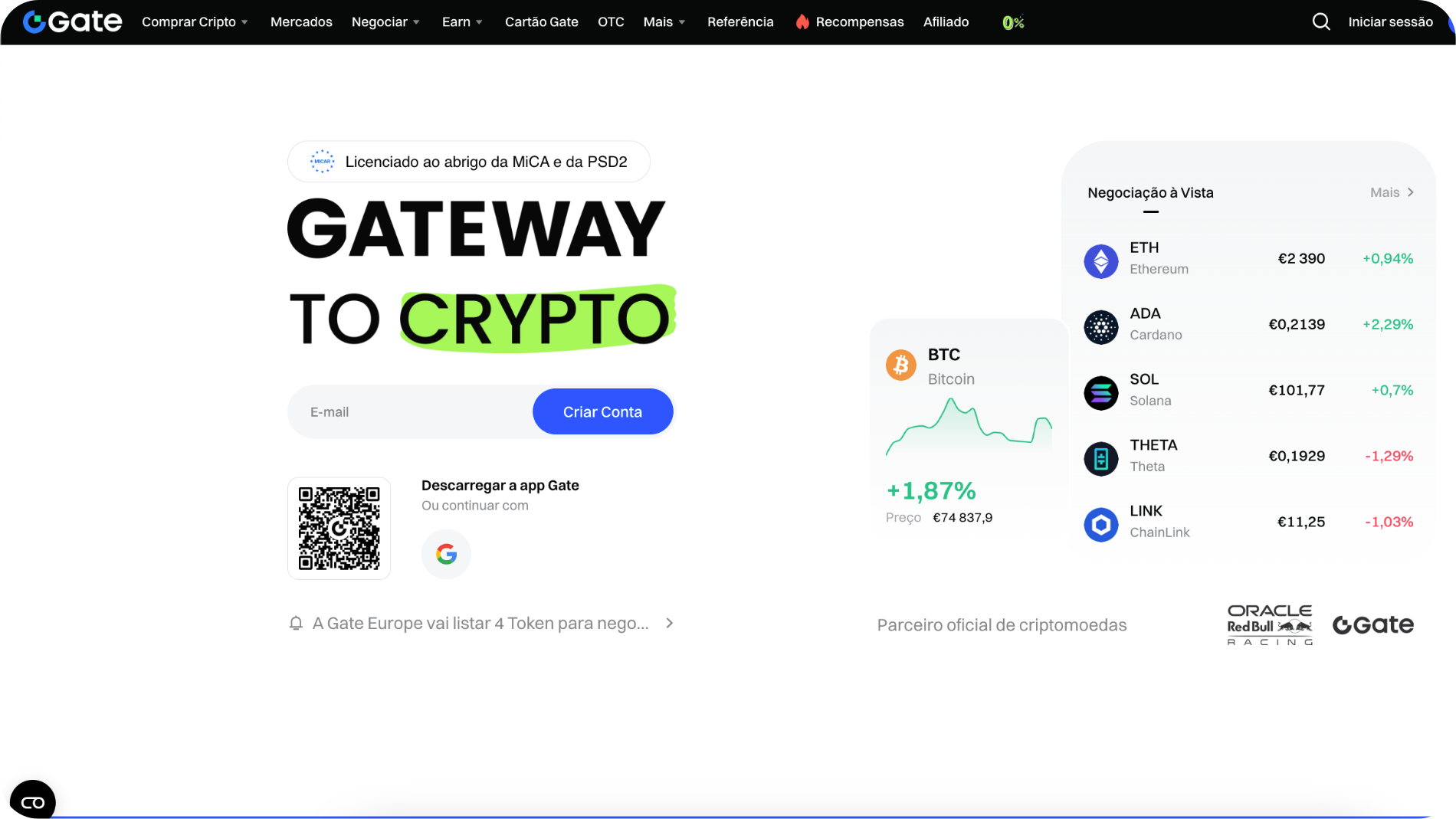
Gate is a global exchange that, in August 2026, made the most ambitious leap in the rankings in this segment: through a partnership with the brokerage firm Alpaca, it launched gStocks, providing access to more than 10,000 U.S.-listed stocks and ETFs, as well as IPO allocations. It ranks fourth because it combines three distinct layers (gStocks via Alpaca, tokenized stocks from Ondo, and xStocks) into a single platform, offering the broadest combined catalog in the ranking.
This move follows in the footsteps of Binance, which in June 2026 added 7,000 U.S. stocks, also using Alpaca’s infrastructure for custody, dividends, and corporate events. For Gate users, this means being able to choose between purely tokenized exposure (Ondo, xStocks) or closer access to the actual stock through gStocks, depending on what they’re looking for.
Who is Gate for when it comes to tokenized stocks? For users who want the broadest possible selection and the flexibility to choose between different access models (pure tokenized or via a broker) from the same account.
Advantages:
- The most comprehensive combined portfolio in the ranking, with more than 10,000 assets via gStocks
- Three different access models (gStocks, Ondo, xStocks) on a single platform
- Support for dividend processing and corporate events via Alpaca
Disadvantages:
- The wide variety of models can make it confusing to know exactly which product you're buying
- gStocks was launched very recently and has been in use for a shorter time than xStocks or Ondo
- Terms and availability may vary significantly depending on the product you choose
5. OKX: extensive selection and a unified market for crypto and stocks
OKX is a global exchange that has gradually incorporated both xStocks and Ondo Finance’s tokenized assets, becoming one of the most comprehensive platforms for traders who are already comfortable operating within the crypto ecosystem. It ranks fifth for combining both product lines (xStocks and Ondo, including products such as oSPY and oQQQ) into a single, unified marketplace alongside the rest of its crypto offerings.
OKX Wallet was one of the infrastructure partners in the launch of Ondo Global Markets, giving it exclusive access to the industry’s broadest catalog of tokenized stocks. For OKX users, this makes it possible to switch from trading Bitcoin to trading tokenized Tesla or Nvidia without leaving the app or splitting liquidity across different platforms. See the full OKX review
Who is OKX's tokenized stock platform for? For users who already trade frequently on OKX and want to gain exposure to U.S. equities within the same unified marketplace, without switching platforms.
Advantages:
- Combined access to xStocks and the Ondo Finance catalog
- A unified market for cryptocurrencies and tokenized stocks
- Infrastructure Partner since the launch of Ondo Global Markets
Disadvantages:
- Availability and product offerings may vary by jurisdiction
- Less explicit regulatory focus in Europe than among other competitors
- It relies on third parties (Ondo, Backed) to issue the underlying asset
6. Robinhood: The Most Polished Retail Experience, Designed for Europe
Robinhood is a U.S. brokerage firm listed on the Nasdaq that, in June 2025, launched its tokenized stock product specifically for European Union customers, providing access to more than 200 U.S. stocks and ETFs. It ranks sixth as the exchange with a user experience most similar to that of a traditional brokerage: zero commissions, dividend support, and an interface designed for those coming from the world of investing—not just crypto.
The product operates through an SPV (special purpose vehicle) that holds the underlying shares; it was initially issued on Arbitrum, with a planned migration to Robinhood’s own blockchain. The launch was not without controversy: the Bank of Lithuania, Robinhood’s primary regulator in the EU, launched an investigation into the tokens linked to OpenAI and SpaceX after OpenAI itself denied any connection to the product.
Who is Robinhood's tokenized stock service for? For users in the European Union who are looking for an experience that most closely resembles that of a traditional brokerage—with zero commissions and dividend support—rather than a crypto-native approach.
Advantages:
- Zero commission and dividend support—uncommon in the industry
- A user experience designed for those coming from traditional investing
- Backed by a Nasdaq-listed company with a brokerage license in the EU
Disadvantages:
- Active regulatory scrutiny by the Bank of Lithuania regarding certain products
- Tokens do not confer voting rights or direct ownership
- Available only in the EU and the EEA, excluding the United Kingdom and the United States
7. Gemini: dShares, the most heavily regulated approach in the industry
Gemini is the New York-based exchange founded by the Winklevoss brothers, which launched its dShares for European Union customers in June 2025, starting with Strategy (MSTR) and rapidly expanding its lineup. It ranks seventh because it operates under the most explicit regulatory framework in the European rankings: dShares are distributed through Gemini Intergalactic EU Artemis, Ltd., which is authorized by the Malta Financial Services Authority (MFSA) under a MiFID II license for investment services.
The catalog, launched in partnership with Dinari (registered as a broker-dealer with FINRA), has grown in successive waves to include more than 50 tokenized stocks, including blue-chip stocks (Apple, Microsoft, Meta), crypto-related names (Coinbase, MARA, Circle), and ETFs such as the SPY and various Bitcoin ETFs. For users in the EU, this means trading tokenized stocks within a regulated investment services framework, not just under crypto regulations. See the full review of Gemini
Who is Gemini's tokenized stock offering intended for? For users who prioritize trading under an explicit MiFID II license over a wide range of products or lower commissions.
Advantages:
- MFSA MiFID II License for Investment Services on dShares
- A constantly expanding catalog, with new releases almost every week
- Partner (Dinari) registered as a broker-dealer with FINRA in the U.S.
Disadvantages:
- A smaller selection than Kraken, Ondo, or Gate
- Available only to eligible customers in the EU; not available in the U.S.
- Trading is limited to 24/5, unlike the 24/7 service offered by other competitors
8. Bitget: Tokenized Stocks Integrated with Margin, Grid, and Yield Trading
Bitget is a global exchange that launched Bitget Stocks 2.0 in June 2026, its second-generation tokenized stock product issued by Reality, a licensed RWA issuance platform. It ranks eighth because, unlike other exchanges that merely list the token, Bitget integrates it into the rest of its ecosystem: eligible tokenized stocks can be used as margin for futures, connected to grid trading, copy trading, and yield products.
Its cumulative spot trading volume for tokenized stocks exceeded $1 billion in January 2026, while its tokenized stock futures have already accumulated more than $10 billion in trading volume. Bitget is also a member of the Global Markets Alliance led by Ondo Finance, which expands its offering to more than 100 tokenized stocks, ETFs, and money market funds. See the full review of Bitget
Who is Bitget's tokenized stock platform for? For advanced traders who want to use tokenized stocks as an active part of their strategy (margin, grid trading, futures), not just as a passive long-term position.
Advantages:
- Tokenized stocks that can be used as collateral for futures and strategies
- High trading volume in both spot and futures markets for tokenized stocks
- Member of Ondo Finance's Global Markets Alliance
Disadvantages:
- This product is not available to U.S. residents.
- Greater complexity; designed more for advanced users than for beginners
- Availability is subject to jurisdiction and eligibility and may vary by country
9. KuCoin: xStocks for a Truly Global User Base
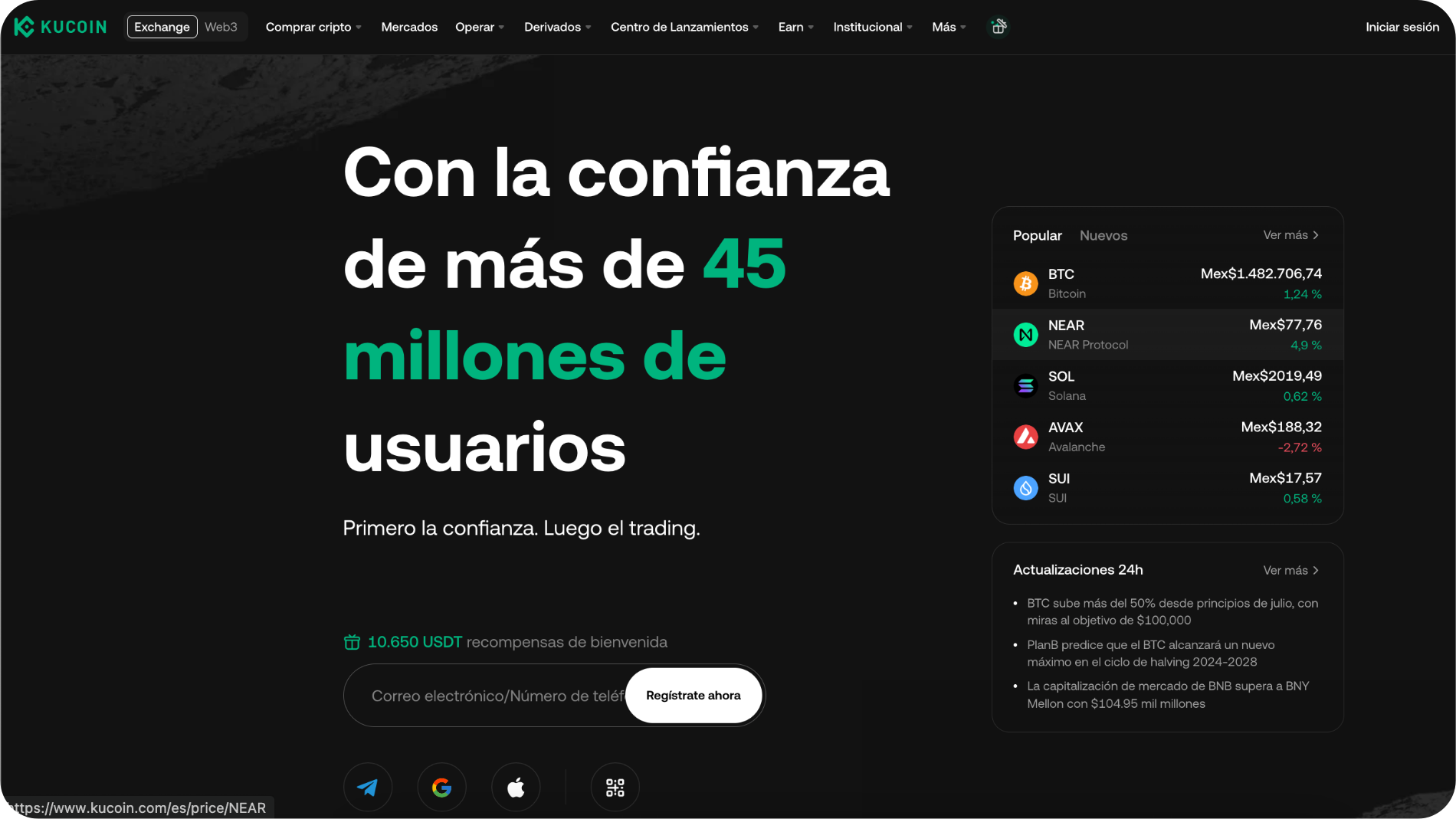
KuCoin is a global exchange with more than 41 million users in over 200 countries, which joined the xStocks alliance in July 2025 with an initial batch that included SPYx (S&P 500 ETF), CRCLx (Circle), TSLAx (Tesla), MSTRx (MicroStrategy), and NVDAx (Nvidia). It ranks ninth because, according to the platform itself, it is the first exchange to offer USDT-denominated tokenized stocks accessible from the largest number of countries and regions.
Each xStock on KuCoin is backed 1:1 by the actual stock, held in remote, insolvency-protected collateral accounts and issued on the Solana blockchain. For KuCoin users, this allows them to switch between crypto exposure and tokenized U.S. stocks without leaving the ecosystem or managing multiple accounts across different jurisdictions. See the full review of KuCoin
Who is KuCoin's tokenized stock platform for? For users in markets where access to traditional U.S. brokers is limited or nonexistent, and who are seeking exposure to U.S. equities denominated in USDT.
Advantages:
- Access from one of the largest numbers of countries and regions in the industry
- Tokenized shares denominated in USDT, with no currency friction
- 1:1 Backing for Collateral Accounts Protected Against Insolvency
Disadvantages:
- A smaller initial catalog than that of Kraken or Ondo
- Less explicit regulatory focus than competitors such as Gemini
- It relies on third-party infrastructure (Backed Finance) for the product
10. MEXC: From tokenized stocks to real stocks, commission-free
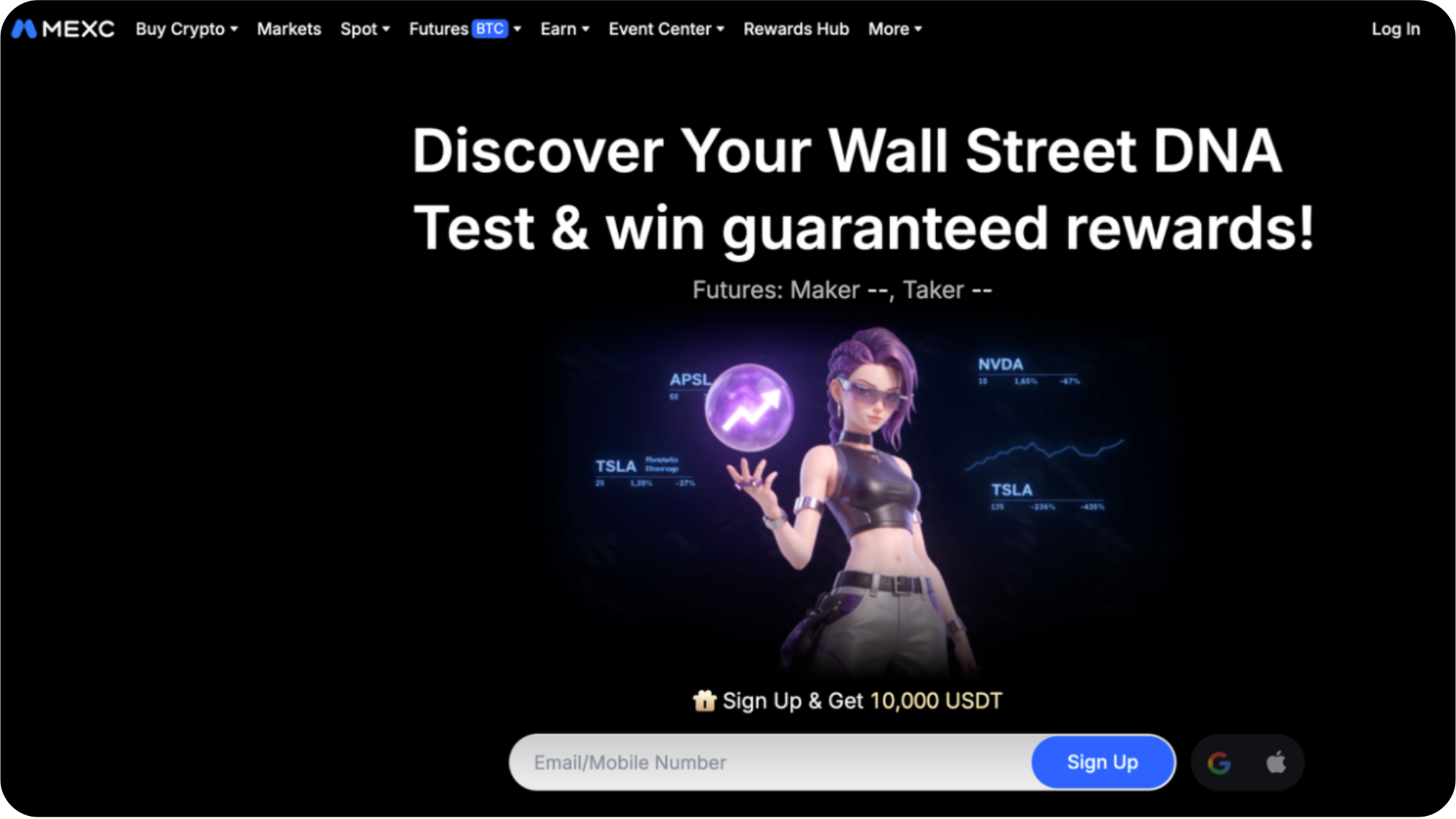
MEXC is a fast-growing global exchange with more than 40 million users in over 170 countries. It launched its first wave of tokenized stocks in partnership with Ondo Finance in September 2025 and has already completed nine phases of expanding its offerings, including defense and energy stocks in March 2026. It rounds out the top 10 as the exchange that has taken the “zero-cost” proposition the furthest, offering zero fees during the first 30 days of each new batch of trading pairs.
In June 2026, MEXC took it a step further with the launch of RealStocks, a product that provides access to real U.S. stocks (not just tokenized ones) through a licensed partner brokerage firm, offering entitlement to actual dividends and liquidity consistent with the traditional stock market, and validated in beta by more than 20,000 users prior to its official launch. See the full review of MEXC
Who is MEXC's tokenized stock platform for? For users who want to start with zero-cost tokenized exposure and, later on, make the leap to actual stocks through RealStocks without switching platforms.
Advantages:
- No commission for the first 30 days of each new block of shares
- A constantly expanding catalog, with nine expansion phases already completed
- RealStocks offers access to actual stock, with real dividends, in addition to the tokenized product
Disadvantages:
- Tokenized products and RealStocks have different terms and risks that should not be confused
- Less explicit regulatory history than competitors such as Gemini
- Availability of RealStocks is subject to the affiliated broker and eligibility by country
Comparison Table of Exchanges for Tokenized Stocks
After reviewing the 10 exchanges and platforms, here is a comparison table summarizing the range of tokenized stocks available on each one, the model used, and the infrastructure or issuer backing the assets.
| Platform | Approximate Catalog | Model | Infrastructure / Issuer |
|---|---|---|---|
 Kraken |
60+ (xStocks) | Proprietary exchange with a built-in issuer | xStocks (Backed Finance, owned by Kraken) |
 Ondo Global Markets |
430+ | Multi-exchange and wallet infrastructure | Ondo Finance |
 Bybit |
60+ (xStocks) | Integrated into the crypto trading account | xStocks (Backed Finance) |
 Gate |
10,000+ (gStocks) + Ondo + xStocks | Three combined models | Alpaca (gStocks), Ondo, Backed Finance |
 OKX |
Combined Catalog (xStocks + Ondo) | Unified Crypto and Stock Market | xStocks + Ondo Finance |
 Robinhood |
200+ | In-house SPV, broker-style experience | In-house production (Robinhood) |
 Gemini |
50+ (dShares) | Regulated under a MiFID II license | Dinari (FINRA-registered broker-dealer) |
 Bitget |
100+ (via Global Markets Alliance) | Integrated into margin, grid, and futures | Reality (Bitget Stocks 2.0) + Ondo Finance |
 KuCoin |
5+ initials, expanding (xStocks) | Priced in USDT, global reach | xStocks (Backed Finance) |
 MEXC |
Expanding in Phases (Ondo) + RealStocks | Tokenized (Ondo) and real stock (RealStocks) | Ondo Finance + licensed affiliate broker |
Kraken and Ondo Finance are currently the two pillars of this market: Kraken because it purchased directly from the largest issuer of xStocks, and Ondo because it provides the catalog to most of the other exchanges in this ranking. The best option will depend on whether you prioritize the broadest selection, integration with your usual crypto trading workflow, or the most explicit regulatory framework.
What are tokenized stocks, and what risks should you be aware of?
A tokenized stock is a digital token that tracks the price of a real stock or ETF, typically backed 1:1 by the underlying asset held by a regulated custodian or through a financial structure (SPV, remote collateral accounts). Unlike buying the stock through a traditional broker, the token generally does not grant voting rights or direct ownership of the stock: you are the economic beneficiary of the position, not a registered shareholder. This distinction became particularly clear in July 2025, when OpenAI publicly denied any connection to the Robinhood tokens bearing its name, even though they tracked the price of its private valuation.
Before choosing a platform, it's important to be clear about the following:
- Who holds the actual asset: whether it is a registered broker-dealer (such as Ondo or Dinari), an entity owned by the exchange (such as Backed Finance on Kraken), or an SPV-type structure (such as Robinhood).
- If the token entitles the holder to dividends: Some platforms track total returns, including dividends (Ondo), while others track only the price.
- The regulatory framework under which each platform operates in your country: ranging from explicit MiFID II licenses (Gemini in the EU) to models that are less clearly defined by regulation in other jurisdictions.
- If the product is available in your country: Most of these products exclude U.S. residents, and some, such as Robinhood, are limited exclusively to the European Union.
The European directive has been in effect since January 2026 DAC8: Exchanges are already collecting data from their customers and will submit the first reports in 2027—covering transactions from 2026—so the tax authorities can cross-check them with your tax return. The most sensible approach is to keep your own record of purchases, sales, and commissions, calculate your gains using the FIFO method (the oldest units are sold first), and report everything on Form 100 by June 30.
The information presented in this ranking is for informational and educational purposes only. It does not constitute financial or tax advice, nor is it a personalized investment recommendation. Using cryptocurrency exchanges involves risks, and each user is responsible for assessing which platform best suits their profile, as well as for complying with applicable regulations and their legal and tax obligations under current Spanish law. Some links in this ranking are affiliate links: if you open an account through them, Exchange Selector may receive a commission at no additional cost to you. This does not influence the criteria or the order of this ranking.
Frequently Asked Questions About Tokenized Stocks