

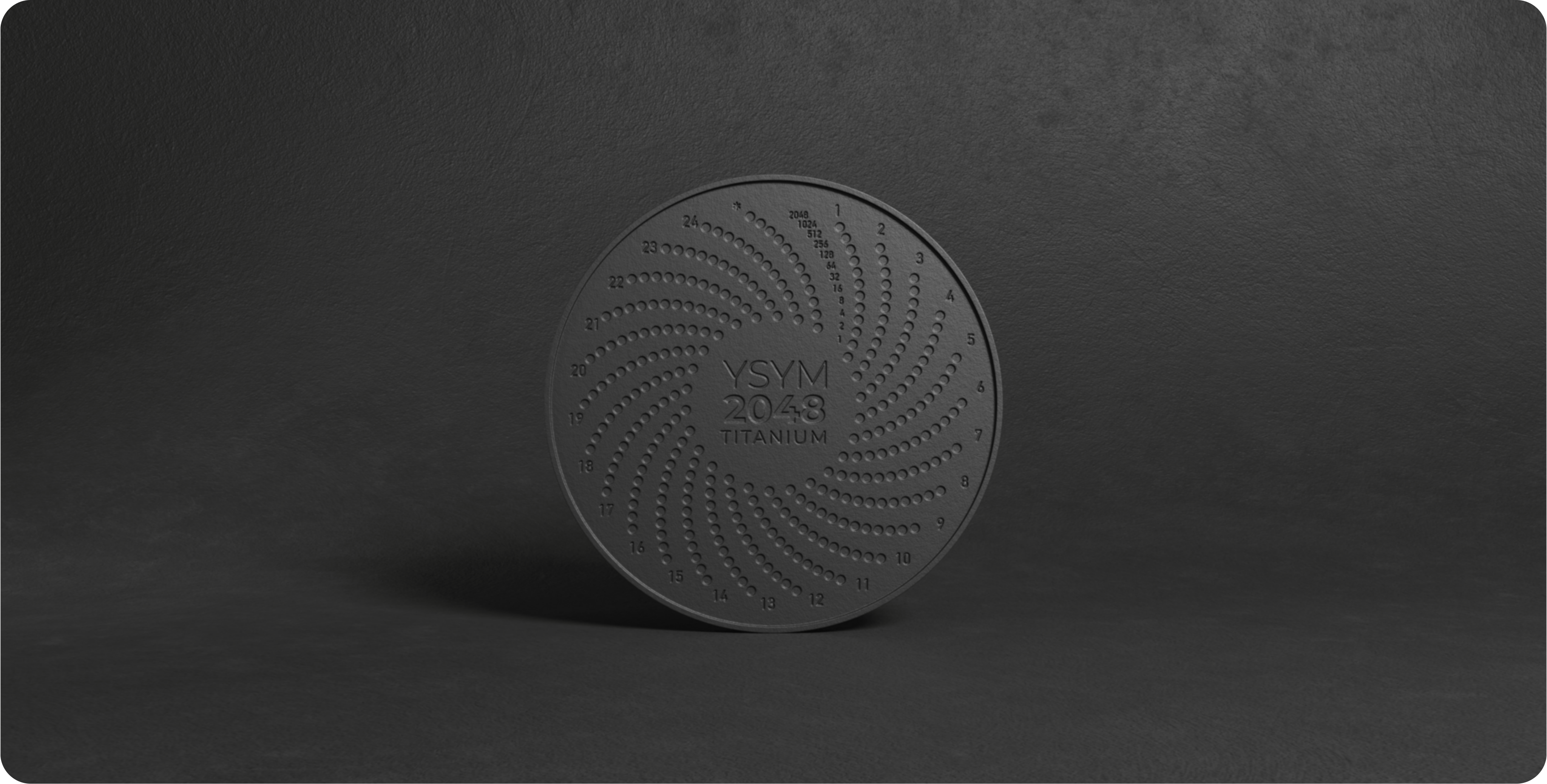
Thousands of people store the access to their cryptocurrencies on a simple piece of paper without realizing the risk they’re taking. We’ll tell you how Yoseyomo, winner of a 2025 Red Dot Award, solves that problem.

Quick Summary: Yoseyomo
| Score | |
| Established in | 2023 |
| Headquarters | Valencia, Spain |
| Materials | Copper, Steel, and Titanium |
| Compatibility | BIP39 / SLIP39 |
| Connectivity | None (100% offline) |
| Resistance | Fire, Water, and Corrosion |
| Manufacturing | Handcrafted, made in Spain |
Paper—the weakest link in your crypto
Paper seems like the simplest option, and for years, it has been: you grab a pen, write down the words, and go about your day, never giving it another thought. The problem is that its fragility isn’t apparent until it’s too late: it gets lost, gets wet, or gets erased. And the numbers confirm it: it’s estimated that nearly 20% of all Bitcoin ever issued—about 3.7 million BTC—is lost forever, largely because seed phrases were misplaced or became illegible over time.
The most delicate aspect of the paper wallet is not only that it can be lost, but also that it does not allow for even a single mistake: if just one word is wrong, the entire wallet becomes unrecoverable. There’s no technical support to call and no «I forgot my password» issue to resolve, because if the seed phrase doesn’t match exactly, the funds are lost forever.
| What is being compared? | Paper | Yoseyomo |
|---|---|---|
| Fire resistance | It burns at temperatures of 230°C and above | Up to 1,700°C, depending on the model |
| Water resistance | The ink smudges and becomes illegible | Resistant to fresh and salt water |
| The Passage of Time | The ink fades over the years | The engraving does not deteriorate |
| Margin of error in writing | A misspelled letter can render the word invalid | Unambiguous numerical coding system |
The device that replaces paper
Yoseyomo is a physical device for storing a seed phrase offline—those 12 or 24 words that grant you access to your cryptocurrencies. It’s not a wallet; it doesn’t have a battery and doesn’t connect to the internet: it’s simply a medium on which you record that information, designed to replace the piece of paper most people use to write it down when setting up their wallet.
Important note: A seed phrase is the set of words generated by your wallet that allows you to regain access to your cryptocurrencies from any device; without it, your funds are permanently locked.
Paper is the weak link in the entire system. A fire, a burst pipe, or moisture can destroy it forever, and a lost seed phrase cannot be recovered. Yoseyomo avoids that risk by engraving the seed on metal, and since it has no connection to the outside world, there’s nothing to hack. It’s also compatible with any wallet that uses the BIP39 or SLIP39 standards, so it works just as well with a Ledger, a Trezor, or any other hardware wallet.
The Story of Yoseyomo
Yoseyomo was born on September 9, 2023, out of a conversation between Álvaro Campos and Iñaki Zubeldia, two friends who had met through a trading community. After watching a video by Iñaki on how to properly safeguard a seed phrase, Álvaro suggested they come up with something useful and attractive to solve that problem at its root. Iñaki agreed with a «I think that’s perfect,» a phrase that would end up giving the project its name, and since then, everything has been managed almost entirely through Discord.
A month later, on October 8, 2023, the project already had a visual identity: a spiral with 24 blades—referencing the 24 words of a standard seed phrase—set against a black background to convey elegance and discretion. Shortly thereafter, the name was chosen, inspired by Japanese culture—which both founders admire for its discipline and sense of honor—drawing a parallel with samurai protecting their treasures and ninjas moving stealthily through the shadows.
The project was launched on May 1, 2024, and recognition followed soon after: in 2025, Yoseyomo received the Red Dot Award in the Innovative Design category, one of the most prestigious international industrial design awards. For a product focused purely on custody, the award confirms that security can also be designed with precision, transforming it from a mere technical accessory into a symbol of financial sovereignty.
What are the three models offered by Yoseyomo?
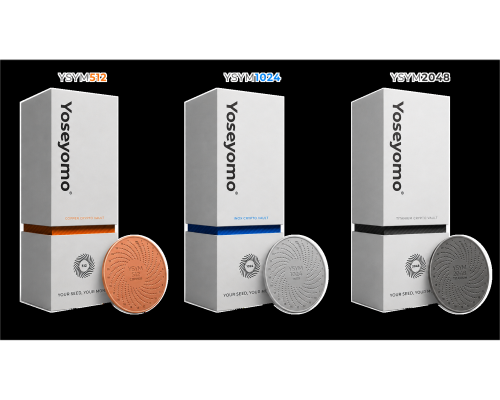
Yoseyomo offers three models: the YSYM512 in copper, the YSYM1024 in marine-grade steel, and the YSYM2048 in titanium. All three models engrave the seed phrase in the same way, using the same NFC chip and the same tamper-proof seal; the only difference between them is the material, which affects their weight, durability, and price.
| Concept | YSYM512 | YSYM1024 | YSYM2048 |
|---|---|---|---|
| Material | Copper | Marine-grade steel | Aerospace-grade titanium |
| Price | 89,00€ | 99,00€ | 149,00€ |
| Digital Encryption | Yes | Yes | Yes |
| Double layer | Yes | Yes | Yes |
| Passphrase | Yes | Yes | Yes |
| Inheritans | Legacy Lite | Legacy Lite | Legacy Lite |
| Bonus included | — | — | Cryptosecurity Course |
The real choice comes down to physical protection, because when it comes to digital security, all three are equal. Copper is the cheapest option, ideal if you're going to secure multiple wallets, although it ages the worst. Marine-grade steel costs about the same and eliminates the need for maintenance and protects against marine corrosion. Titanium has no weak points, and on top of that, it comes with a free course.
Let's take a look at each model separately, because even though they share the same digital security features, the materials make a significant difference in everyday use.
YSYM512 · Polished Copper
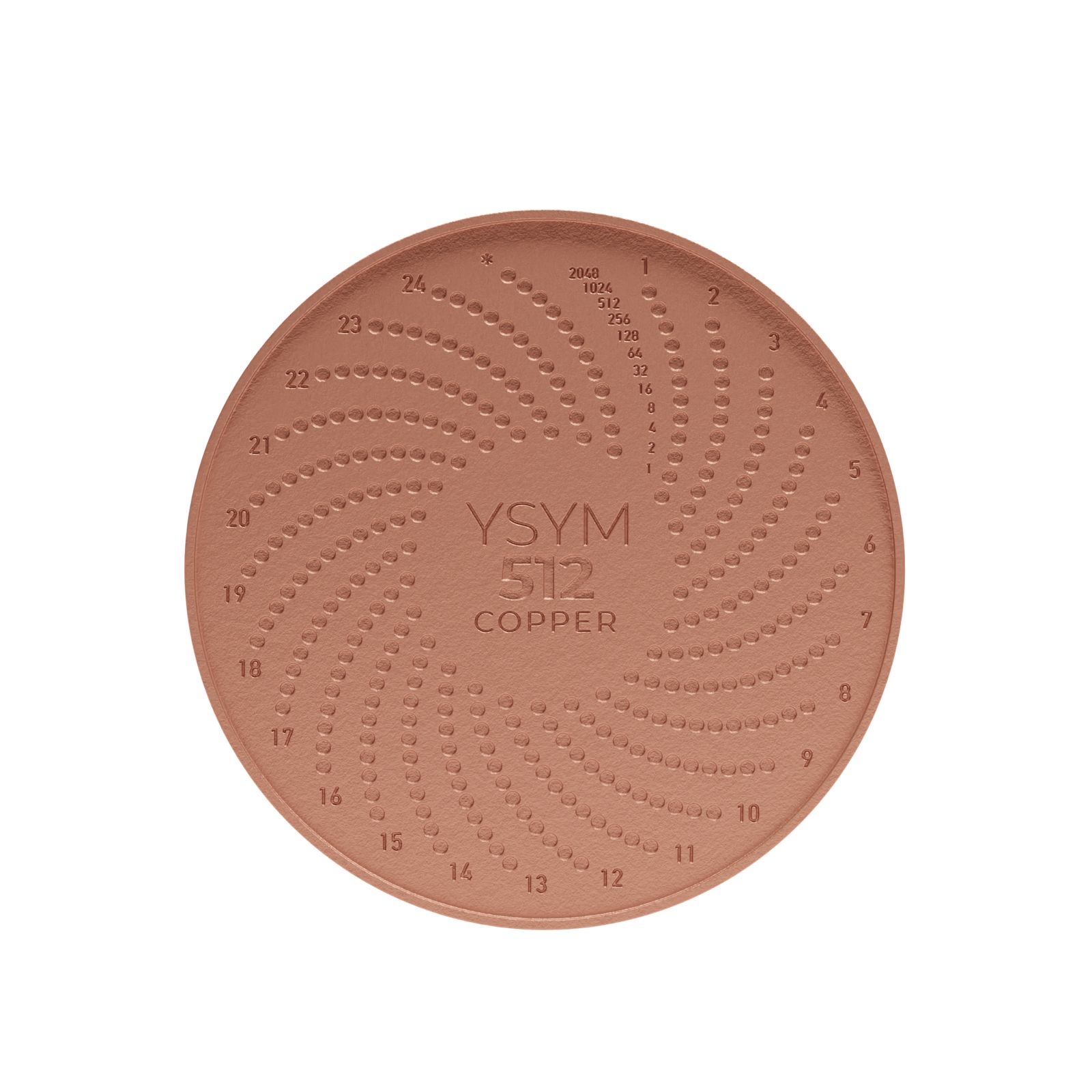
It’s the entry-level model in the lineup—but not in terms of security, just in price. It features the same digital encryption, dual-layer design, and multilingual compatibility as its higher-end counterparts, plus an NFC chip under the tamper-proof sticker to link additional information from your wallet in an encrypted format. Weighing 44 grams and measuring 50 mm in diameter, it withstands temperatures up to 1085°C and resists impacts, crushing, and stains with ease.
The only thing to keep in mind is the material itself: copper, like silver, oxidizes when exposed to air and loses its original finish if not maintained. It’s not a safety issue—the seed phrase remains intact—but if aesthetics matter to you or you live in a marine environment (near the coast or on a boat), it’s not your best option. In all other cases, it’s the most economical way to stop relying on paper.
YSYM512 · Polished Copper
89,00 €YSYM1024 · Marine-grade steel
The mid-range model offers a significant leap in durability without driving up the price. 316L stainless steel, known as «marine-grade,» is specifically designed to withstand seawater without corroding—something copper cannot offer. Weighing 39 grams, its resistance to saltwater increases to 80% and, over time, reaches 100%, maintaining its appearance intact for years without any maintenance.
This is the recommended option if you're looking for high quality at a reasonable price, or if your circumstances (coastal home, boat, humid climate) make corrosion resistance a real priority rather than just a bonus.
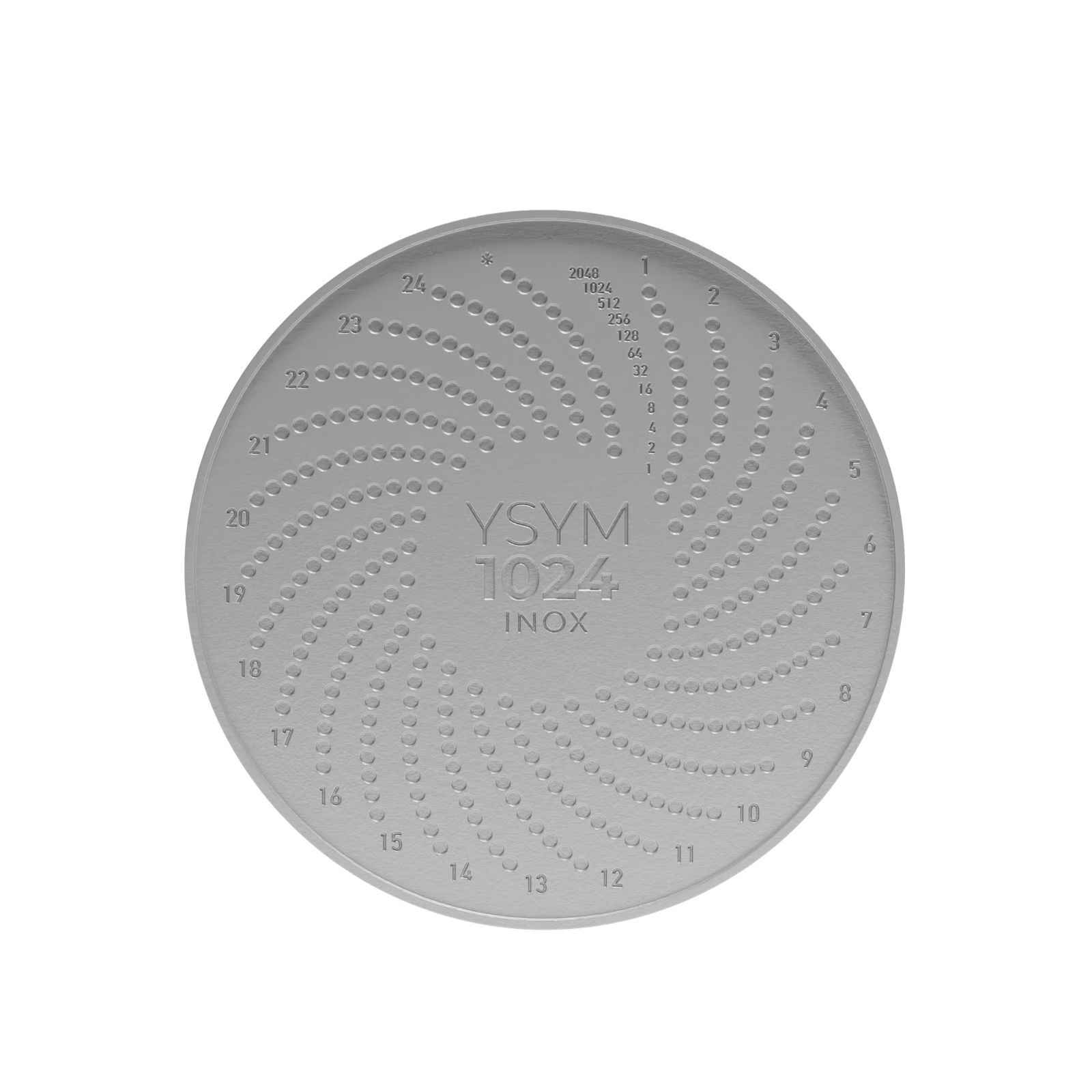
YSYM1024 · Marine-grade steel
99,00 €YSYM2048 · Aerospace-Grade Titanium
The top-of-the-line model uses G5 titanium, the same grade used in aerospace, and is the only one of the three to achieve a 100% rating in all durability categories: fire (up to 1,700°C), fresh water, salt water, compression, breakage, stains, and aging. Furthermore, it weighs less than the other two models (21 grams) despite being the most durable.
It is also the only one that includes, at no additional cost, the full license for the Crypto Security Fundamentals course (valued at €249.99), making it the most comprehensive option if, in addition to protecting your seed phrase, you want to gain a thorough understanding of how to secure your crypto assets.
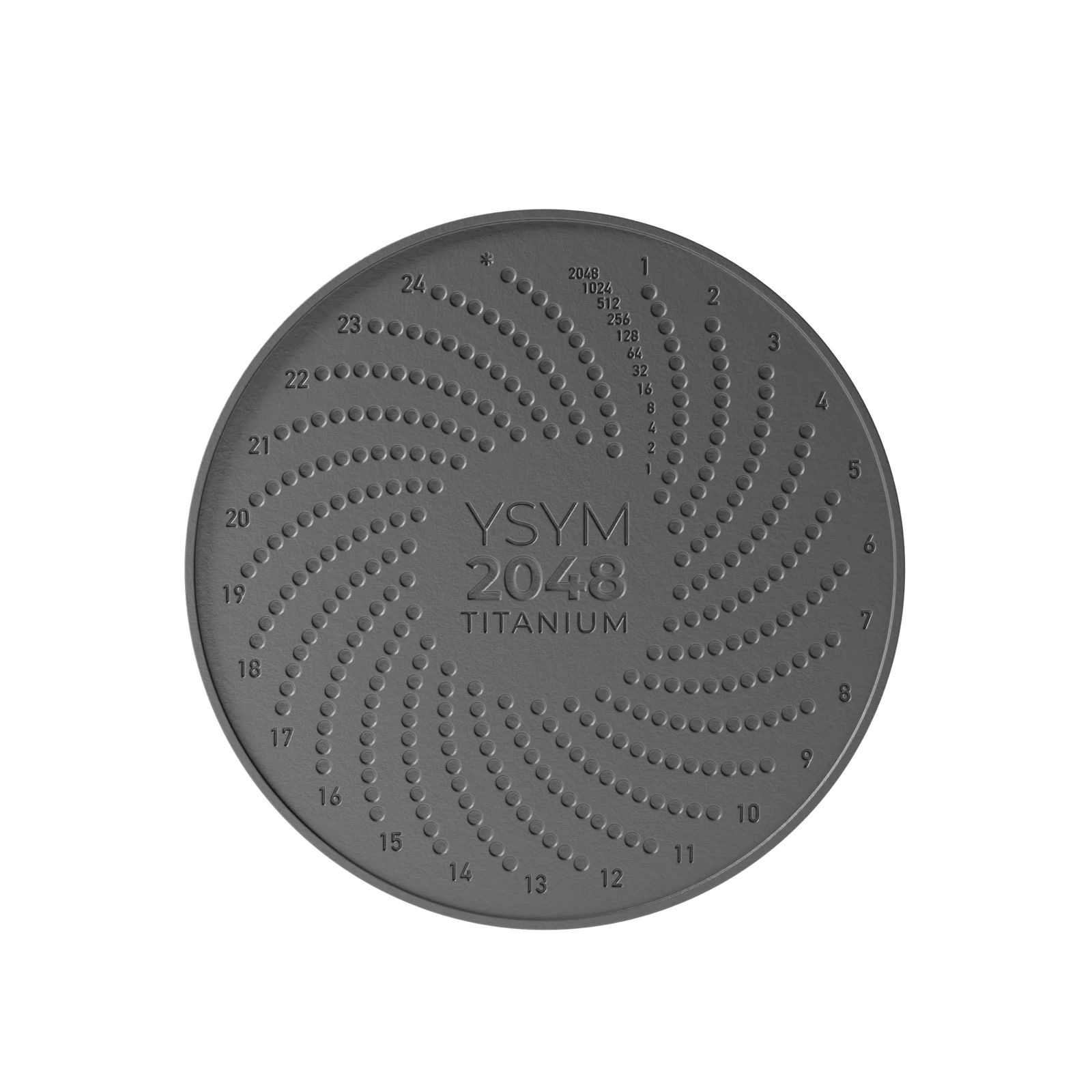
YSYM2048 · Aerospace-Grade Titanium
149,00 €
The following table summarizes how each model performs when exposed to fire, water, impacts, and the passage of time.
| Characteristic | YSYM512 | YSYM1024 | YSYM2048 |
|---|---|---|---|
| Fire | 1085°C | 870°C | 1,700°C |
| Freshwater | 75% | 95% | 100% |
| Saltwater | 40% | 80% | 100% |
| Collapse | 90% | 95% | 100% |
| Breakage | 100% | 100% | 100% |
| Stains | 100% | 100% | 100% |
| The Passage of Time | 80% | 100% | 100% |
| Weight | 44 g | 39 g | 21 g |
Box contents
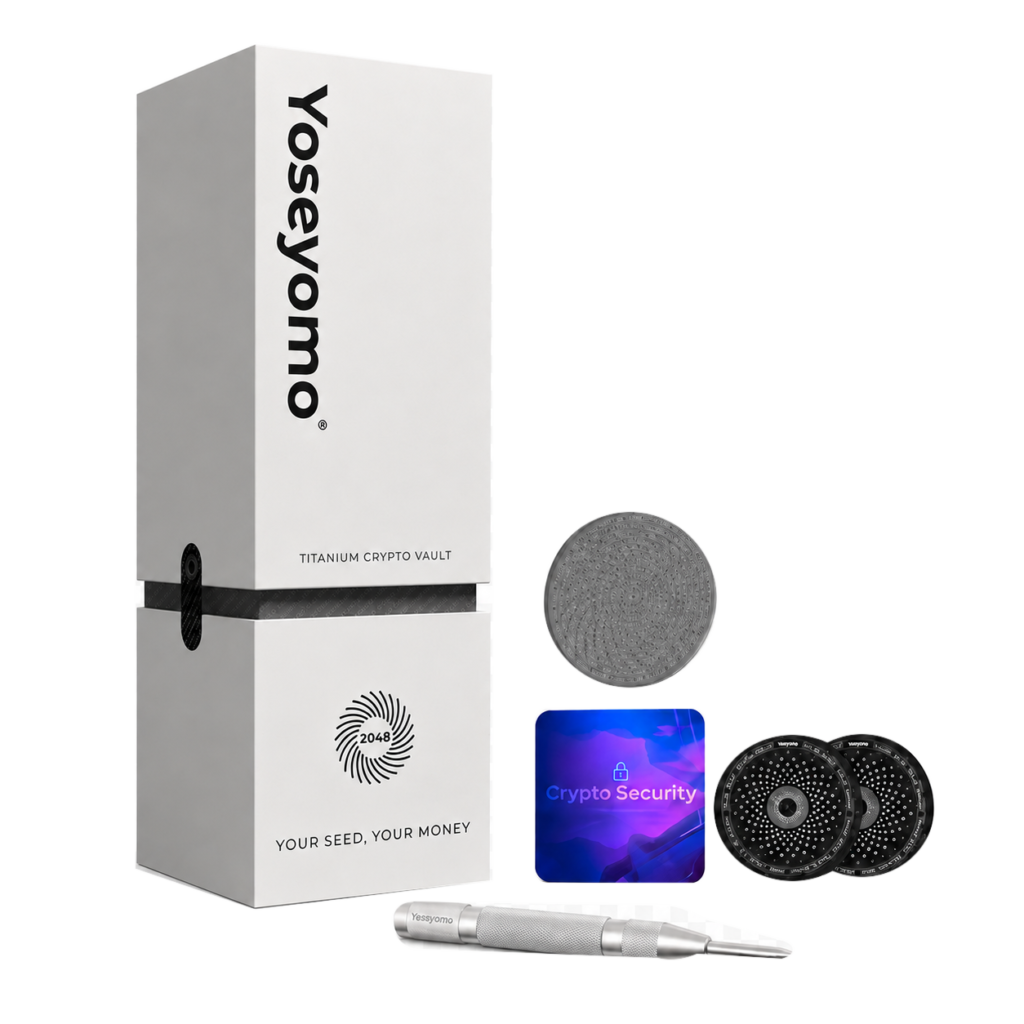
The package for any Yoseyomo model includes:
- Yoseyomo device (YSYM512, YSYM1024, or YSYM2048, depending on the model selected)
- Automatic marking punch, for quickly and accurately engraving the seed phrase
- 2 tamper-evident seals, which ensure that the device has not been opened
- YSYM GUIDE Manual, with detailed instructions for use
The only package that expands on this content is the YSYM2048, which also includes the full license for the Crypto Security Fundamentals course, normally priced at €249.99.
In addition to the product, Yoseyomo backs your purchase with several warranties: one lifetime warranty, reflecting the confidence they have in the quality of their materials and finishes; express shipping 24–48 hours; returns with no time limit, combined with that same lifetime warranty; and a process of secure payment, where your data is deleted once the order has been processed.
How to Record the Seed Phrase
Before we talk about the physical process, it’s important to understand where your seed phrase actually comes from, because that’s the key to how the Yoseyomo encryption system works.
All wallets on the market—whether cold or hot—generate your seed phrase from a universal industry list called BIP39, consisting of 2,048 words arranged in alphabetical order. Each word occupies a fixed position in that list; that is, each word is a number. When you create a wallet, it randomly selects between 12 and 24 words (depending on the security level or entropy you choose) and arranges them in a unique, one-of-a-kind order: that specific combination is your seed phrase.
Yoseyomo takes advantage of precisely this numerical logic to turn each word into a code of marks, rather than writing letters.
The Digital Encryption System
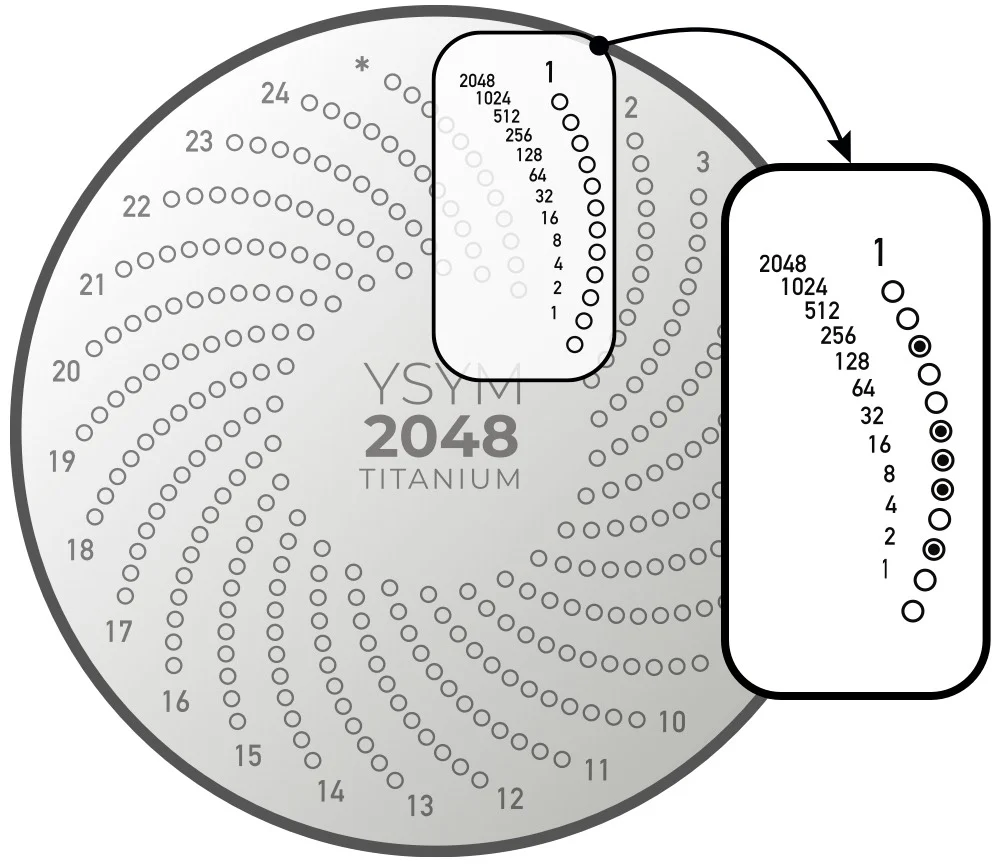
Each Yoseyomo has 24 lines of dots arranged in a spiral, one line for each possible word in your seed phrase. Within each line, the dots represent powers of two: 1, 2, 4, 8, 16, 32, 64, 128, 256, 512, 1024, and 2048. By marking the correct combination of dots, you can represent any number from 1 to 2048—and therefore, any word from the BIP39 list.
An example makes this clearer: if the first word of your seed phrase is «example,» it occupies position 628 in the BIP39 list. To record it, you would need to mark positions 512, 64, 32, 16, and 4, because their sum is exactly 628.
Did you know? In BIP39, the last word isn't entirely random: it includes a checksum that detects errors. That's why, if you make a mistake with one word when restoring the wallet, the wallet will usually alert you.
To calculate these numbers without overcomplicating things, the method is simple:
- Find the largest number in the list (1, 2, 4, 8… 2048) that is less than or equal to the position of your word, and subtract it from that number.
- Repeat the process with the result, each time looking for the largest possible number without going over.
- Continue until you reach zero. The numbers you've been subtracting are the points you need to score.
If you'd rather skip the math, Yoseyomo has a Visual list of BIP39 words where you just have to look up your word and see right away which points to check off.
The Marking Process, Step by Step
With clear coding, the physical process is designed to minimize errors:
- Mark it with a marker first. Before using the punch, we recommend marking the points corresponding to each word with an ultra-fine-tip marker. This step is what really sets this method apart from others: it allows you to take your time to double-check that the coding is correct before doing anything irreversible.
- Check the entire sentence. With all the points marked in marker, go over it word by word to make sure the coding matches your actual seed phrase.
- Pass the automatic punch. Once you've confirmed the marks, place the tip of the punch on each marked spot and press firmly. A «clack» confirms that the mark has been made correctly; it's a good idea to repeat this a couple of times per spot to ensure the engraving is set.
- Repeat with the remaining points until the entire seed phrase is complete.
In practice, separating «marking» from «engraving» avoids the main risk associated with this type of device: making a permanent mistake. With a marker, you can erase and correct as many times as you need; with a punch, there’s no going back.
The NFC tag: the final layer of security
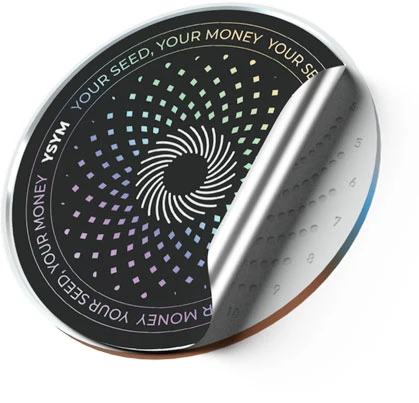
Recording the seed phrase is not the final step. Once the marking is complete, you must seal the Yoseyomo with the tamper-proof seal included in the box, which serves three purposes at once: it visually conceals the engraved code, acts as a warning if anyone attempts to tamper with the device (removing the seal irreversibly activates the security marks), and houses the NFC chip that allows additional information to be linked to it.
It's best to take your time here, because the seal isn't designed to be removed and reapplied: if you peel it off to «reposition it better,» you'll trigger those tamper-evident marks even if nothing unusual has happened. It's better to take the time to apply it properly the first time.
How the NFC Chip Works
The seal isn't just a physical stamp—it also functions as a small digital token. Through the Yoseyomo NFC Reader app (available on App Store y Google Play), you can write an identifying name for your Yoseyomo onto the chip, along with the address of the associated wallet and any additional notes you want to save—all protected by a master password. Simply hold your phone close to the device to write or read that information, and there’s also the option to completely format the chip if you need to reset it.
It's a feature that makes sense especially if you manage multiple wallets or multiple Yoseyomos: it lets you identify each one without having to open it or reveal the stored code—something that paper or a device without NFC simply can't offer.
Did you know? The NFC chip in the seal is passive and battery-free. It draws power from the cell phone's own magnetic field when the phone is brought close to it, so it never runs out of power.
Redundancy and Inheritance: Thinking Long-Term
With the seed phrase recorded and the seal in place, the hard work is already done: the information is now virtually indestructible. All that’s left is to decide where to hide the device, and that responsibility lies not with the product but with each user: Yoseyomo guarantees durability, but finding a good hiding spot—and not forgetting where you put it—is still up to you.
For those who want to take it a step further, there are two ways to enhance long-term security. The first is redundancy: purchasing a second (or third) unit to have additional copies of the same seed phrase, stored in different locations, in case one is lost or becomes inaccessible.
The second one is Inheritans, the self-custody service designed to ensure your crypto legacy isn’t lost with you. All Yoseyomo devices come standard with the Legacy Lite version, which lets you leave a record for your heirs showing where your device is hidden—without having to reveal your seed phrase while you’re alive or rely on someone else to remember it. For those who want to go beyond this basic feature, there’s also a full annual Inheritans® license, which expands the service to ensure that access to your crypto assets is securely passed on to whomever you choose in the event of your death.
Yoseyomo YSYM2048 vs. Cryptotag Zeus
When it comes to physical devices for storing a seed phrase offline, the most common comparison is between Yoseyomo and Cryptotag, two of the best-known options on the market. Both use titanium and the same punch-marking system, but they differ in the grade of the material, their size, and the extras they include.
| Concept | Yoseyomo YSYM2048 | Cryptotag Zeus |
|---|---|---|
| Material | Grade 5 Titanium (aerospace) | Grade 2 Titanium |
| Resistance | 2.75 times harder | Medium resistance |
| Size and Weight | ø50 x 3 mm, 21 g | 68 x 113 x 6 mm, 231 g |
| Capacity | 24 words + passphrase | 24 words |
| Compatibility | BIP39 and SLIP39, multilingual | BIP39 and SLIP39, multilingual |
| Security | Easy to hide | A more impressive size |
| Extras | NFC Chip, Inheritans, and Crypto-Security Course | — |
| Price | 149€ | 129€ |
| Warranty | Lifetime + Unlimited Refunds | Lifetime warranty, 30-day return policy |
The main difference lies in the material: Yoseyomo's Grade 5 titanium is significantly stronger than Cryptotag's Grade 2, and that superior strength is precisely what allows it to be much more compact and easier to hide—something Cryptotag cannot match without resorting to a much larger size.
Both cover the basics of saving a seed phrase well, but Yoseyomo goes a step further with extras designed specifically to protect and manage that seed over the long term—such as the NFC chip and Inheritans—and backs it all up with a return policy with no time limit. Cryptotag competes primarily on price, but in exchange for lower durability, fewer features, and fewer guarantees.
Paper doesn't last, but premium metal does.
After this trial period, the conclusion is simple: Yoseyomo addresses the weakest link in crypto self-custody—that folded piece of paper in a drawer that most people never consider a real risk until it’s too late. Engraving the seed phrase onto metal, using a proprietary dual-layer numerical encryption system with no connections that could compromise it, transforms something as fragile as a sheet of paper into a virtually indestructible device.
What sets Yoseyomo apart from other metal solutions on the market is not just the durability of its materials, but the whole package: a proprietary, well-thought-out encryption system; an NFC chip that adds a layer of identification without compromising the engraved seed phrase; and a service like Inheritans that addresses something almost no competitor considers: what happens to your crypto assets when you’re gone. That combination, coupled with a design recognized with a Red Dot Award, makes it difficult to find a direct rival that offers the same features in a single product.
With three models ranging from those designed for users who simply want to stop relying on paper to those who need maximum durability in any condition, Yoseyomo is a good fit for virtually any serious user, as we've discovered after putting it to the test in our day-to-day use.
If you're still not sure which one to choose, here's a quick summary:
| Need | Recommended Model |
|---|---|
| Do you want to stop using paper at the lowest possible cost? | YSYM512 |
| Do you live near the ocean or in a humid climate? | YSYM1024 |
| You're looking for maximum durability and don't mind the price | YSYM2048 |
| You manage several wallets and want to save per unit | YSYM512 |
| Do you want to learn about crypto security while you're at it? | YSYM2048 |
This review is based on a trial period of real-world use. During that time, we recorded several seed phrases using the numerical encryption system, tested the entire process with the automatic punch, verified the NFC chip with various Android and iOS smartphones, and tested the functionality of Inheritans Legacy Lite.