
Before we dive into the detailed analysis, here's a summary of the most important facts about Exodus at a glance.

Quick Summary of Exodus
About Exodus: Its Origins and Who It's Intended For
Exodus is a self-custody cryptocurrency wallet founded in 2015 by JP Richardson and Daniel Castagnoli. It allows users to store, send, receive, exchange, and stake assets through mobile, desktop, and browser apps.
Pros
The user controls their private keys and recovery phrase
More than 50 networks and support for more than 100,000 tokens
Simple interface, swaps, staking, and 24/7 support
Integration with Trezor and Ledger on compatible devices
Cons
Forgetting your passphrase or authorizing a fraudulent transaction can result in an irreversible loss
It does not offer traditional 2FA to protect the self-custodial wallet
Over-the-counter swaps may be more expensive than trading on an exchange
Part of the code is not fully open and auditable
Unlike Coinbase, Kraken, or BingX, Exodus does not maintain a central account holding customer balances. The private keys are generated and remain under the user’s control, so the company cannot freeze, recover, or move funds from the wallet.
Who is Exodus for? For users who want to move their assets out of an exchange's custody without sacrificing a user-friendly interface.
In 2026, Exodus also operates as an infrastructure company. XO Swap provides liquidity for partner applications, Exodus Pay integrates XO Cash and payments, and fiat currency purchases or sales are processed through the company’s own services or providers such as MoonPay. Exodus Movement is listed on NYSE American under the ticker symbol EXOD.
What level of security does Exodus offer?
Exodus uses a self-custody security model: it encrypts sensitive information locally and does not have access to private keys. Actual protection depends on the device, the password, the 12-word recovery phrase, and the authorizations the user grants.
The public rating is displayed as follows:
Global Regulation and the Situation Under MiCA
Exodus Movement, Inc. is a U.S. company that files financial information with the SEC and is listed on NYSE American. This corporate transparency does not make the wallet a regulated bank, broker, or exchange authorized to hold deposits in custody.
A self-custodial wallet that provides software without controlling assets does not function as a traditional custodial CASP under MiCA. Therefore, Exodus should not be labeled as a “MiCA-licensed exchange”; services such as buying, selling, card transactions, stablecoins, or swaps may rely on third parties with their own regulatory obligations.
Fiat providers require KYC verification based on the country, payment method, and amount. The contract and any claims related to a purchase may involve MoonPay, XO Ramp, or another provider, while a blockchain transfer from the wallet remains the user's responsibility.
Custody and protection of funds
Exodus does not hold the funds or know the 12-word recovery phrase. The assets remain recorded on their respective blockchains, and the wallet stores the keys needed to sign transactions.
The seed phrase allows you to restore your wallet on a compatible device. If someone else obtains it, they can transfer your assets without additional authorization; if you lose it and also lose your device, Exodus cannot restore access.
For significant amounts, Exodus allows you to connect a Trezor on your desktop and a Ledger Nano X or Flex on your mobile device. The keys for the hardware wallet They remain separate from the Exodus seed phrase, and the operations must be confirmed on the physical device.
Reserve Test and transparency
Exodus does not need to publish a Proof of Reserves for the main wallet balances because it does not hold customer deposits. Each user can verify their addresses and funds directly in the blockchains' explorers.
This eliminates the risk of fractional reserves inherent in a centralized exchange, but it does not eliminate failures related to hardware, malware, smart contracts, networks, stablecoins, or swap providers.
As a publicly traded company, Exodus publishes its financial results, metrics, and balance sheets. In 2025, it reported record revenue of $121.6 million and $6,890 million in volume processed by exchange providers; in May 2026, it reported approximately 1.5 million monthly active users.
Account Security
Exodus supports local passwords, biometric locks, backup using a 12-word recovery phrase, and—on compatible mobile devices—encrypted backup to iCloud or Google Drive protected by a passkey. The company cannot access the encrypted file or the passkey.
There is no traditional 2FA via an authenticator app for the self-custodial wallet. An attacker with access to the unlocked device, the password, or the seed phrase can carry out transactions without an Exodus server interrupting the transaction.
Exodus warns that it does not offer support via phone or Telegram and that it never asks for passwords. Most losses associated with wallets result from phishing, malware, fake copies, malicious signatures, or exposure of the seed phrase.
Pros
Private keys under the user's control
12-word backup and encrypted option with a passkey
Integration with Trezor and Ledger
Public Verification of On-Chain Balances
Cons
There is no corporate recovery if the phrase is lost
It does not offer traditional 2FA for the wallet
An infected device can compromise a hot wallet
The user assumes the risk of phishing, networks, and contracts
Global Availability of Exodus
The wallet can be downloaded and used in most parts of the world because creating an account does not require an account or KYC verification. The built-in features for buying, selling, swapping, using a card, and staking do vary by jurisdiction and provider.
Exodus Swap is not available in Cuba, Iran, North Korea, Syria, Crimea, Luhansk, Donetsk, and the U.S. states of New York and Washington. Certain assets or routes may be additionally blocked by providers.
Buying and selling depend on the lists provided by XO Ramp, MoonPay, and other partners. Exodus Card and Exodus Pay maintain their own lists of countries, while some Web3 features are no longer available for new mobile wallets created after April 22, 2026.
The map should indicate the availability of self-custody software separately. It would be incorrect to color a country as "fully available" if it only supports the wallet but not fiat purchases, swaps, or card transactions.
Exodus Commissions
Downloading, creating, and maintaining an Exodus wallet is free. Sending cryptocurrency incurs a network fee that goes entirely to miners or validators; buying, selling, or exchanging involves provider fees and possible spreads.
Trading fee: Does not use maker/taker fees
Exodus does not have an order book, so it does not charge a maker/taker fee. XO Swap and the integrated providers display a quote showing the final amount the user will receive.
| Platform | Maker | Taker / Buy/Sell |
|---|---|---|
 Exodus Swap
|
Not applicable | Variable spreads, provider fees, and network commissions |
 Crypto.com
|
0,10% | 0,10% |
 Bitget
|
0,10% | 0,10% |
 Bybit
Bybit
|
0,10% | 0,10% |
 Finst
Finst
|
0,15% | 0,15% |
 Bitvavo
|
0,15% | 0,25% |
 Kraken
|
0,25% | 0,45% |
 Coinbase Advanced
|
0,40% | 0.60% in the reference section |
The quoted price may reflect a difference between the market price and the amount received. The cost varies depending on the asset, network, liquidity, transaction size, and provider, so it should be compared to sending funds to an exchange and trading there.
Did you know? Exodus does not keep the blockchain fee when sending crypto: 100 % is paid to the network. The additional cost applies when buying, selling, or swapping using the integrated services.
Global fiat deposits, purchases, and withdrawals
Receiving crypto in Exodus does not incur a wallet fee, although the sender pays the network fee. Sending funds requires gas or a fee in the corresponding asset; Bitcoin and Ethereum allow you to adjust the fee for compatible transactions.
XO Ramp supports purchases with debit cards and Apple Pay for select assets. MoonPay and other providers may offer card payments, bank transfers, or bank account sales, depending on the country. All providers display the costs before you confirm.
There is no “withdrawal” from Exodus as there is on an exchange: users send funds directly from their address. To convert to euros or dollars, they must use a built-in off-ramp or send funds to a platform that allows them to sell and withdraw to a bank.
Staking and Advanced Products Committee
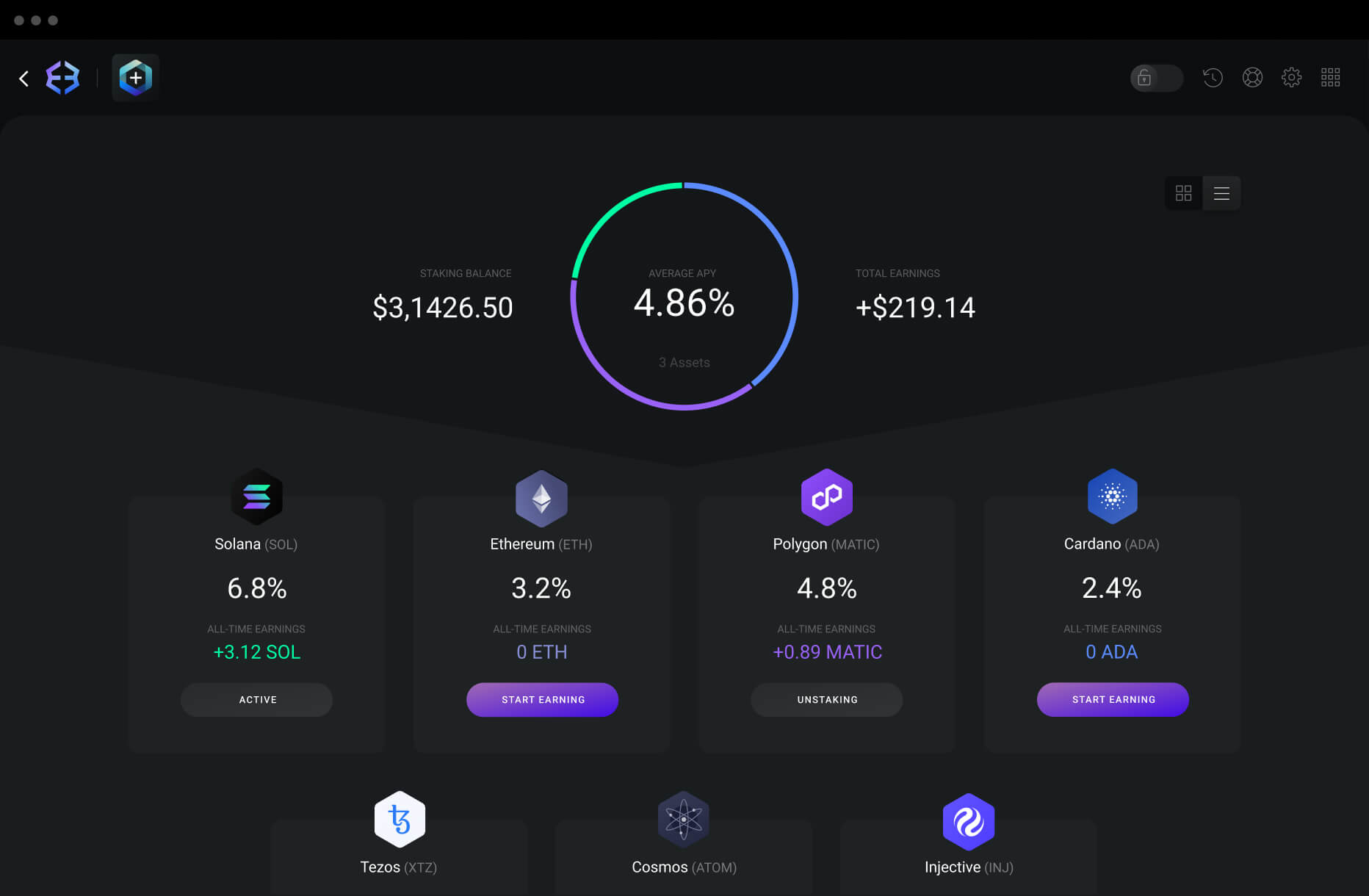
Exodus offers self-custodial staking for assets such as ETH and other compatible networks. The rate is determined by the protocol and may be subject to fees charged by validators or providers; the APY shown is an estimate, not a guarantee.
Swaps may include spreads and network fees. Web3 applications add gas fees, slippage, and contract risk. Exodus Pay uses XO Cash on Solana and can cover the fees for some mobile transfers.
| Concept | Cost on Exodus |
|---|---|
| Download and create a wallet | Free |
| Receive Cryptocurrencies | 0 € via Exodus; the sender pays the network fee |
| Send Cryptocurrency | Variable blockchain fee |
| Exodus Swap | Spread, supplier cost, and network fee |
| Buy or sell fiat currency | Processing, network, and potential conversion fees |
| Staking | Protocol fee, validator fee, or provider fee, depending on the asset |
| Connecting to Trezor/Ledger | No commission from Exodus; requires purchasing the device |
| Exodus Pay / Card | Rates and limits vary by country and service |
How to Create a Wallet in Exodus, Step by Step
Creating a wallet does not require signing up for a traditional account. You should only download it from exodus.com or official app stores and back it up before receiving a significant amount.
Step 1: Download the app
Exodus is available for iOS, Android, Windows, macOS, Linux, and as a Web3 extension. Users install the appropriate version and either create a new wallet or restore an existing one.
Do not use ads, third-party APKs, or links received via text message. Fake apps often ask for your wallet import phrase and then immediately empty it.
Step 2: Secure and back up your wallet
Exodus generates a 12-word secret phrase. It should be written down on paper or metal, kept offline, and never entered into forms, chats, or so-called support services.
The app allows you to set a password and biometric authentication. On mobile devices, it offers encrypted backups using a passkey and iCloud or Google Drive, although a physical offline backup is still recommended.
Step 3: Receive or buy cryptocurrency
The user selects an asset, verifies the network, and copies the address or QR code. A small test allows the user to confirm that the network, token, and destination are correct.
To make a purchase with fiat currency, you can use XO Ramp or another integrated provider. The provider may request identification, a selfie, your address, and payment method details.
Did you know? Exodus cannot cancel a transfer or restore a wallet if you lose your recovery phrase. Before depositing a large amount, it's a good idea to perform a secure restoration test or connect a hardware wallet.
Step 4: First shipment or swap
To send, enter the address, amount, and network fee. To swap, Exodus displays the asset being sent, the asset being received, the minimum amount, and the final exchange rate.
You should check every character in the address and avoid copying from unknown sources, because there is malware that replaces addresses in the clipboard.
Summary of Requirements for Using Exodus
- Compatible and up-to-date device.
- Download from an official source.
- A 12-word passphrase stored securely.
- Sufficient native assets to pay for gas.
- KYC only when required by a fiat provider.
- A hardware wallet is recommended for large amounts.
- Understand that transactions are irreversible.
Important note: Never share your secret phrase. Exodus Support does not need it to investigate an issue.
Available cryptocurrencies: more than 50 networks and 100,000 assets
Exodus supports more than 50 networks and over 100,000 cryptocurrencies and tokens across its products. These include Bitcoin, Ethereum, Solana, Cardano, XRP, BNB Smart Chain, Avalanche, Base, Polygon, Arbitrum, Optimism, TRON, Sui, and other networks.
It also allows you to add an unlimited number of custom tokens across 21 supported networks. These tokens may not display a price, full transaction history, or swap availability.
The catalog is changing: Exodus ended support for EOS and Fantom on August 1, 2026, in addition to having previously removed Monero, Zilliqa, and other networks. Funds can still be recovered using the private keys and a compatible wallet, but they are no longer managed through Exodus.
Exodus Learn, Web3, and Integrated Services: Education and Tools
Exodus combines portfolio management, education, swap infrastructure, and payment products. Its support center includes detailed guides on networks, fees, staking, security, and recovery.
| Product | Focus |
|---|---|
| Exodus Mobile | Wallet, staking, swaps, purchase, Pay, and Ledger |
| Exodus Desktop | Multi-asset management, swaps, and Trezor integration |
| Exodus Web3 Wallet | Extension for compatible networks and applications |
| XO Swap | Integration of exchanges within Exodus and B2B partners |
| Exodus Pay / XO Cash | Stablecoin Payments on Solana |
| XO Ramp | Buying Cryptocurrency with a Credit Card and Apple Pay |
Beyond storing assets, Exodus offers:
- Self-custodial staking on compatible networks.
- NFT and Web3 gallery with restrictions on new wallets.
- Buying and selling through fiat providers.
- Management of Trezor and Ledger hardware wallets.
- Portfolio and price tracking.
- 24/7 human support and automated assistance.
Staking on Exodus: Earnings on Your Cryptocurrencies
Exodus allows you to stake without handing over your private keys to the company. Each network sets its own minimums, lock-up periods, activation times, unstaking, and fees.
The most important thing about staking on Exodus:
- Self-custody and signing directly from your own wallet.
- Variable APY depending on the protocol and validator.
- Assets that are frozen or cannot be transferred during certain periods.
- Possible fees when filing a claim, delegating, or withdrawing.
- Network risk, validator, slashing, and contract risk by asset.
Regular Purchases (DCA): Automate Your Purchases
The availability of recurring purchases depends on the fiat provider and the country. Exodus does not function as an order book with a universal DCA bot.
When making recurring purchases, you should review the card fee, spread, and final amount. For a frequent trading strategy, an exchange that supports scheduled orders may be more cost-effective.
Available Types of Transactions
Exodus does not offer market, limit, or stop orders on its own order book. Its main trading features are:
- Send and receive assets on-chain.
- Swap with an aggregated real-time quote.
- Buy and sell through fiat providers.
- Delegate, stake, and claim rewards.
- Sign transactions for compatible Web3 applications.
The absence of limit orders reduces control over the price of a swap. Before confirming, you should compare the quote with a liquid exchange.
Exodus vs. Trust Wallet
The most natural comparison is between Exodus and Trust Wallet. Both are multi-chain self-custody wallets that offer swaps, staking, and Web3 access.
| Characteristic | Exodus | Trust Wallet |
|---|---|---|
| Foundation | 2015 | 2017 |
| Company | Exodus Movement, listed on the NYSE American | A property historically linked to Binance |
| Exchange type | Self-custody | Self-custody |
| Networks and Assets | More than 50 networks and 100,000 assets | More than 100 blockchains and millions of assets |
| Maker/taker | Not applicable | Not applicable |
| Hardware wallets | Trezor on desktop and Ledger on mobile | Integrations Vary by Device |
| Code | Partially closed | Greater use of open-source components |
| Unique Product | Design, 24/7 Support, XO Swap, and Pay | Expanded Web3 and social media coverage |
| Ideal for | Beginners and Simple Multi-Asset Portfolios | Web3 users looking for maximum compatibility |
Exodus stands out for its design, support, desktop apps, and corporate transparency. Its integration with hardware wallets makes it easy to combine convenience with offline keys.
Trust Wallet supports more networks and generally offers a more comprehensive Web3 experience. The choice depends on your assets, device, hardware wallet, and need to interact with DApps.
Apps and Platform: How Do You Use Exodus on a Daily Basis?
Exodus offers mobile and desktop apps, as well as a Web3 extension. The interface displays your wallet, transaction history, assets, and options to send, receive, swap, and stake—all without using an order book.
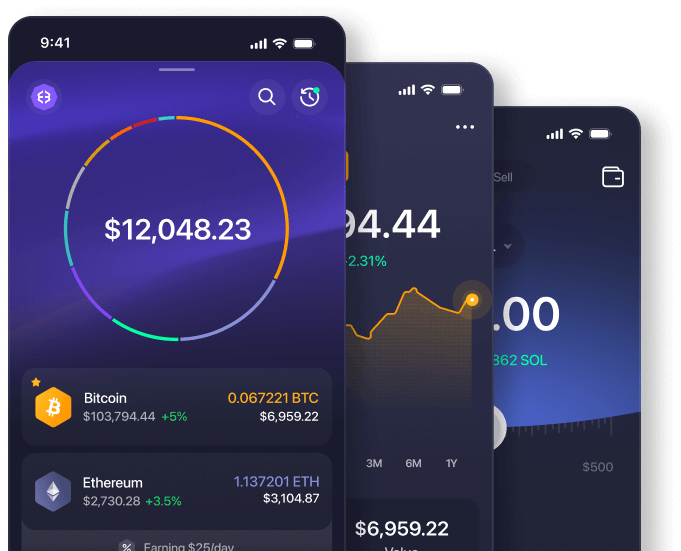
The navigation is organized into several sections:
- Portfolio: Balance and Breakdown by Asset Class.
- Wallet: addresses, history, sending, and receiving.
- Swap: exchange through aggregated providers.
- Staking: Assets, APY, and Rewards.
- Profile: security, backup, assets, and support.
Synchronization between mobile and desktop devices uses the phrase or linking mechanisms. It must be performed only within the official apps and without revealing codes to third parties.
Final Verdict: Is Exodus Worth It in 2026?
Exodus is one of the most user-friendly self-custody wallets for managing multiple networks. Its design, 24/7 support, staking, XO Swap, and integration with Trezor and Ledger make for a comprehensive offering.
Its main drawbacks are the potential cost of swaps, the lack of traditional 2FA, and the user’s full responsibility for the recovery phrase. Furthermore, its stock market price should not be confused with a guarantee of the user’s funds.
All things considered, Exodus is a good option for storing and managing crypto outside of an exchange. If you trade frequently, it’s a good idea to compare prices on a trading platform; for large amounts, use a hardware wallet and an offline copy of your recovery phrase.
This review is based on our actual experience using Exodus. We tested the platform by making deposits, purchases, sales, and withdrawals of cryptocurrencies, and we also evaluated its fees, security, and ease of use. The rating you see here reflects our hands-on experience, not just a first impression.
Is Exodus not for you? Explore other options

Veteran exchange focused on security and compliance. Allows buying, selling, and staking, with pro tools and solid support.

Derivatives and copy trading-focused exchange with a fast app. Includes futures, multiple pairs, and advanced features for agile trading.

Leading global platform by trading volume. It offers spot and futures trading, staking, and a broad ecosystem with reduced fees through BNB.

European exchange with a clean interface and competitive fees. Ideal for trading crypto with SEPA transfers and stable liquidity in the European market.

Social trading and derivatives-focused platform with a simple interface. It includes copy trading, futures, and fast purchase options using a card.

Popular exchange for derivatives and spot trading, with high liquidity, a fast interface, and advanced tools geared toward active and professional traders.

Spanish exchange focused on ease of use, local support in Spanish, and integrated options for buying, saving, and custodial asset management.

Comprehensive platform offering spot, futures, and earn products. Strong global liquidity, pro tools, and a built-in Web3 wallet for active traders.
The support team was quick and friendly. My inquiry was handled professionally, and my experience with Exodus has been very positive so far.