
Before we dive into the detailed analysis, here’s a ranked list of the 10 best cryptocurrency exchanges for Brazil, with the key information you need to know about each one.


Investing in cryptocurrencies carries the risk of partial or total loss of capital. The content of this review is informative and does not constitute financial advice.
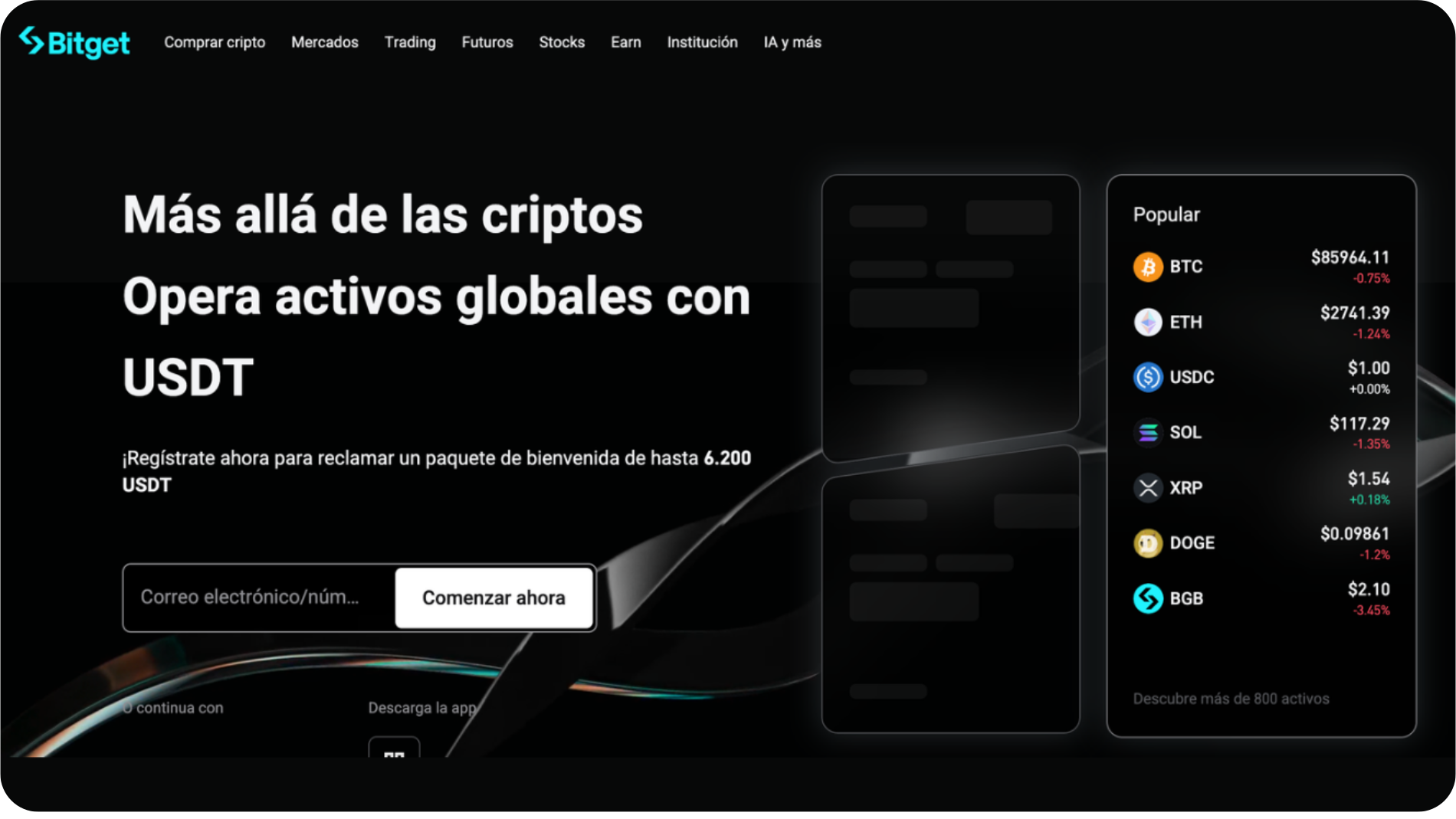
1. Bitget: The most comprehensive exchange, with deposits in Brazilian reais and P2P
Bitget is one of the most comprehensive platforms on the market: it brings together spot trading with over 900 cryptocurrencies, futures, copy trading, P2P, its own wallet, a crypto card, and savings products—all in one place. With a strong presence in derivatives and one of the industry’s most widely used copy trading platforms, it’s a well-rounded offering for both those who trade on their own and those who prefer to replicate the trades of experienced traders. It has been operating in Brazil since 2022, a market where the Central Bank has been regulating virtual asset providers under a stricter framework since 2026.
Its spot trading fees are 0.10% for both makers and takers, and drop to 0.08% when paid with BGB; they are also reduced based on trading volume and VIP level. For Brazilian users, it allows deposits in Brazilian reais (BRL) via Pix with no deposit fee, as well as the ability to buy crypto with BRL through P2P. It also offers Bitget Earn, featuring flexible savings, staking, and Launchpool. See the full Bitget review
Who is Bitget for? It's for users in Brazil who want everything on a single platform: to trade spot and futures, follow professional traders, and easily buy crypto with reais via Pix.
Advantages:
- Very competitive fees, with a discount when paying via BGB
- Over 900 cryptocurrencies, copy trading, and futures
- BRL Deposits via Pix with No Fees and P2P
Disadvantages:
- The fee discount requires a balance in BGB
- Copy trading and futures involve risk and do not guarantee results
- Learning curve to take full advantage of all its features
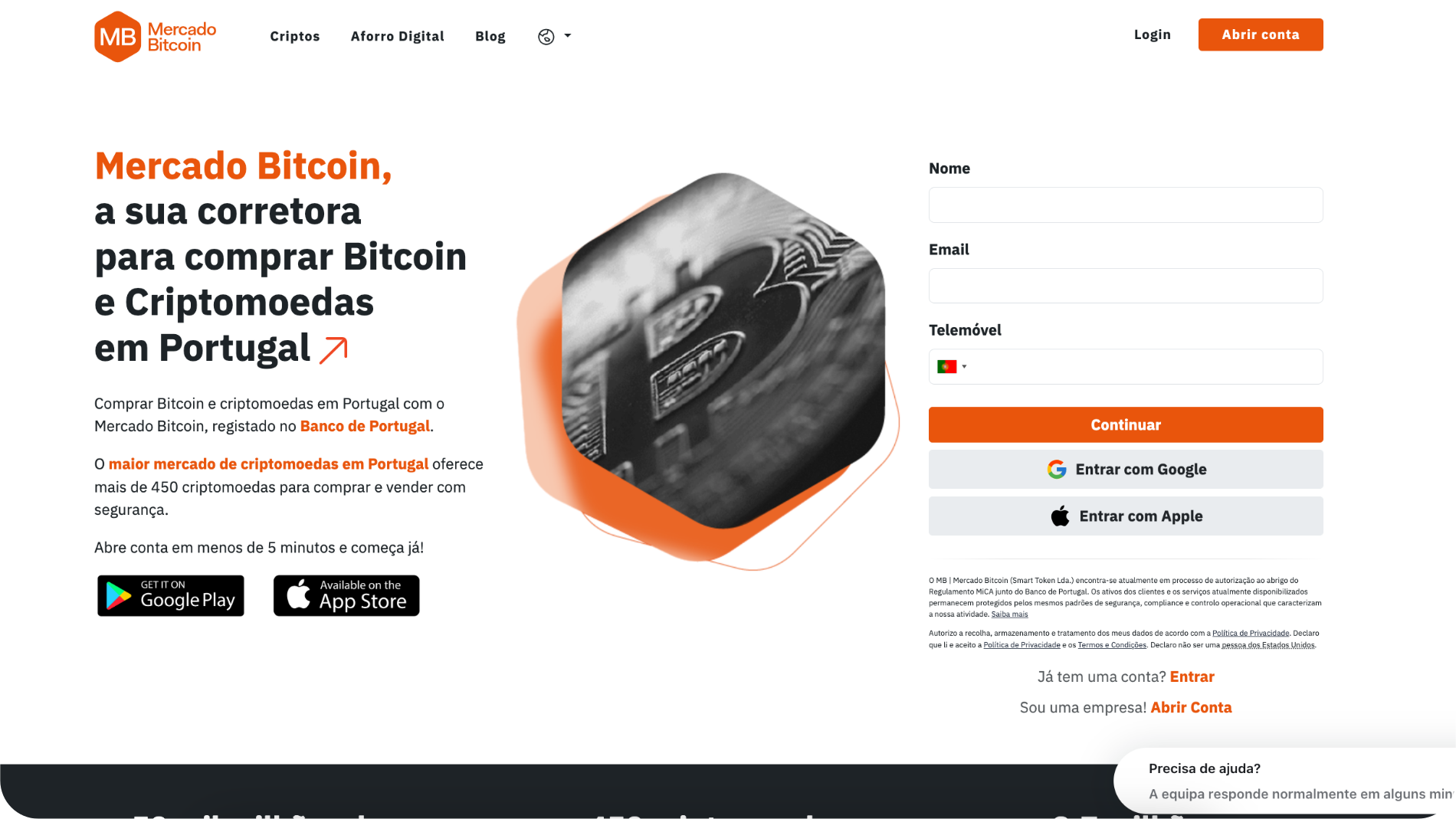
2. Mercado Bitcoin: Brazil's oldest and highest-volume exchange
Mercado Bitcoin is Brazil’s largest cryptocurrency exchange, founded in 2013 and a pioneer in the country’s cryptocurrency sector, with a well-established presence throughout the country. It ranks second as the platform with the highest liquidity in Brazilian reais among the top 10, and for having anticipated the new regulatory framework: as a PSAV in operation prior to the entry into force of the resolutions of the Central Bank, may qualify for the grandfathering provision set forth in BCB Resolution 519.
Its spot trading fees range from 0.3% to 0.7% depending on the user level and trading volume, with lower fees on its Pro platform for frequent traders. For users in Brazil, deposits and withdrawals in reais are processed via PIX or TED almost immediately, and the platform issues the transaction report required by the Federal Revenue Service’s new DeCripto regulation.
Who is Mercado Bitcoin for? For users in Brazil who prefer to make transactions in reais via PIX and want to use the country's longest-established and highest-volume local exchange.
Advantages:
- Almost-instant deposits and withdrawals in reais via PIX
- Longer history and larger volume of the Brazilian cryptocurrency market
- Transaction reports tailored to the Federal Revenue Service's DeCripto regulations
Disadvantages:
- Higher fees than global exchanges specializing in spot trading
- A more limited selection of cryptocurrencies than on international exchanges
- Fewer advanced trading tools than global platforms
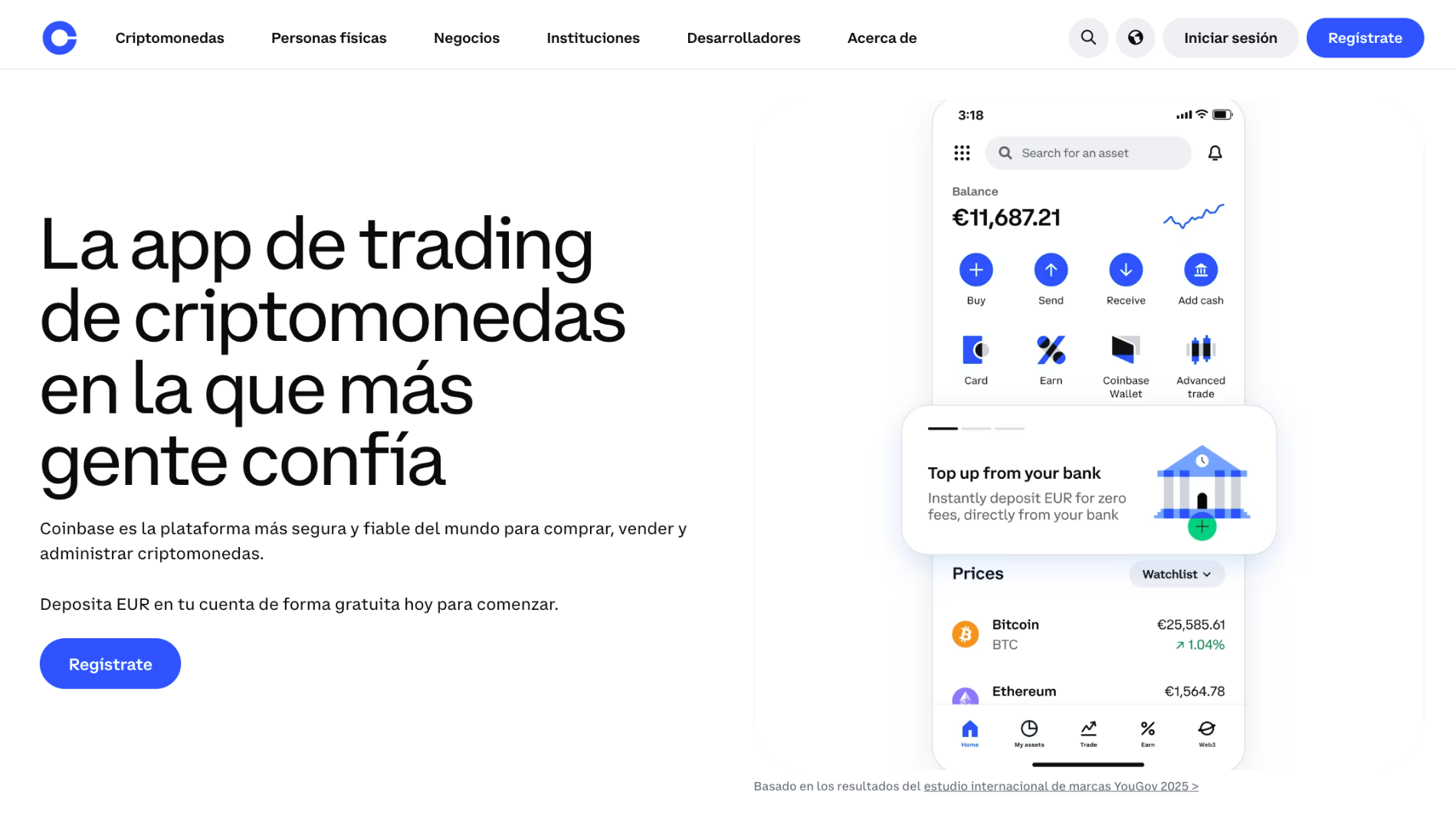
3. Coinbase: The Most Well-Known Option for Getting Started
Coinbase is a publicly traded exchange (Nasdaq: COIN since 2021) and one of the most audited in the world, with more than 120 million users in over 100 countries. It ranks third because it combines the highest brand trust among the top 10 with an interface designed for those who have never bought cryptocurrency—a key factor for Brazilian users who prioritize the stability of a publicly traded company over newer platforms.
The standard app charges fees of up to 3.99% for card transactions, but Coinbase Advanced reduces them to between 0.35% and 0.75%, depending on volume. For users in Brazil, the app does not support deposits in reais, so it’s best to fund it with dollars or stablecoins purchased in advance on a local exchange. View full Coinbase review
Who is Coinbase for? For users in Brazil who are just getting started with crypto and prefer the trust that comes with a well-known brand over lower fees.
Advantages:
- A well-known brand listed on the stock exchange
- Intuitive interface designed for beginners
- Large global user base
Disadvantages:
- High fees in the standard app
- No direct conversion from Brazilian reais
- You must upgrade to Advanced to get competitive rates
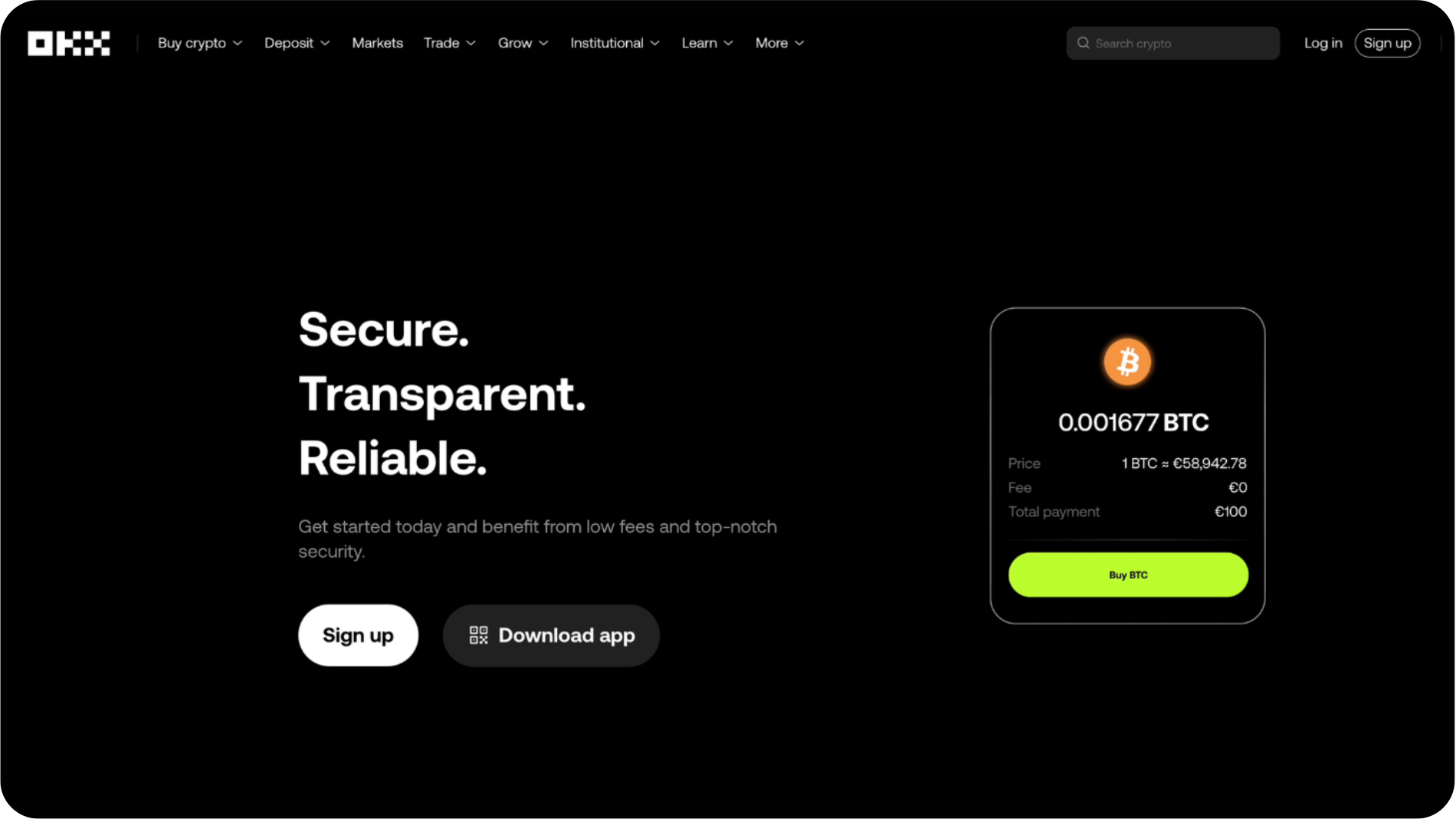
4. OKX: Low fees and access to Web3 for the most active users
OKX is a global exchange that ranks among the most cost-effective options in the top 10 for frequent traders, while also offering access to Web3 features (such as its own wallet and DeFi) that are uncommon among centralized exchanges. It ranks fourth due to its combination of low fees and a broad selection of assets—a profile that appeals to Brazilian traders with a certain trading volume.
Its spot trading fees are among the lowest in the industry: 0.08% for makers and 0.1% for takers, with discounts up to zero based on trading volume. For users in Brazil, the platform does not support direct deposits in reais, but it does allow users to buy crypto with a credit card in dollars and trade on its P2P marketplace. See the full OKX review
Who is OKX for? For users in Brazil with a certain trading volume who are looking for low fees and want to start exploring Web3 without leaving the exchange.
Advantages:
- Spot commissions among the lowest in the industry
- Access to Web3 features such as a native wallet
- P2P market available as an alternative for investing in Brazilian reais
Disadvantages:
- No direct conversion from Brazilian reais
- Designed primarily for users with some experience
- Lower brand recognition in Brazil
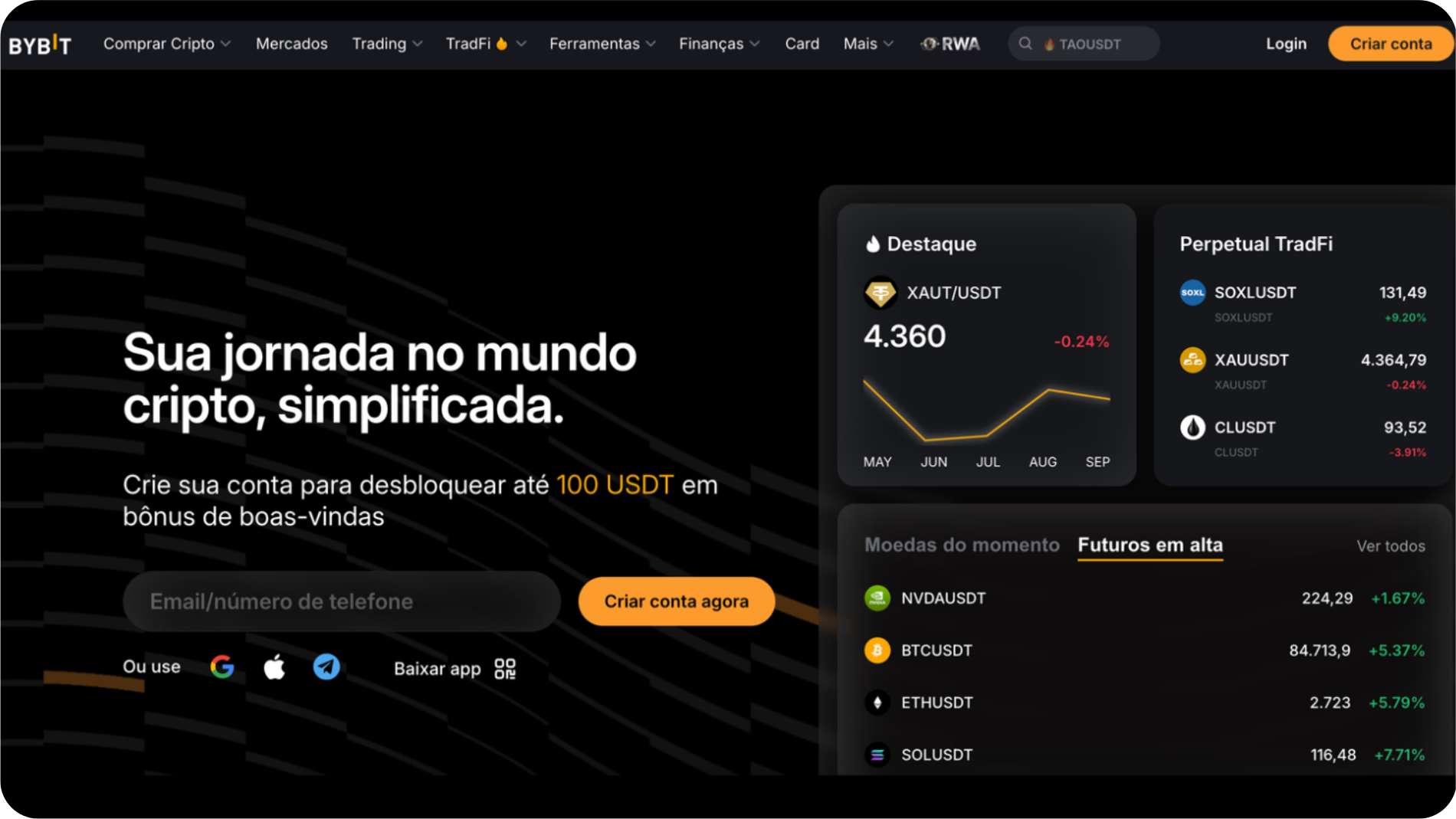
5. Bybit: Derivatives and advanced trading with extensive global liquidity
Bybit is the world's second-largest exchange by derivatives volume, offering a robust selection of futures and margin trading options for advanced traders. It ranks fifth as the most derivatives-focused option among the top 10 exchanges for Brazilian users, offering up to 100x leverage on futures and an interface designed for those who already trade with some confidence.
Its fees are competitive for advanced trading and decrease with trading volume, and it includes features such as copy trading and automated bots. For users in Brazil, it allows them to buy crypto with a credit card in dollars and offers an active P2P marketplace for trading in reais. See the full Bybit review
Who is Bybit for? For experienced users in Brazil who are looking for derivatives and advanced trading, and who already use U.S. dollars or stablecoins as the basis for their transactions.
Advantages:
- Wide range of futures and margin trading
- Competitive commissions for advanced trading
- P2P market available for trading in reais
Disadvantages:
- Less suitable for beginners
- High leverage involves greater risk
- No direct conversion from Brazilian reais
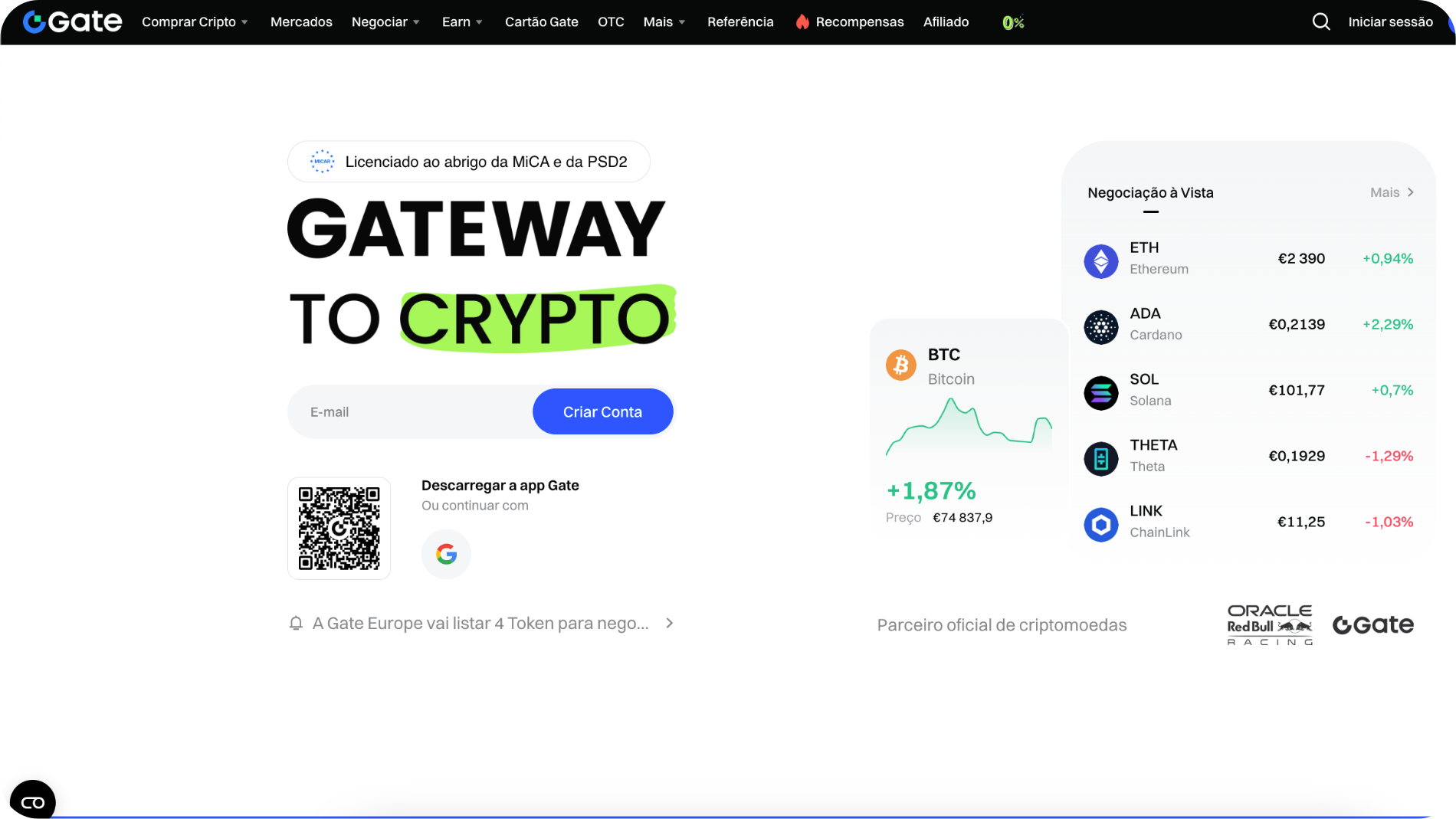
6. Gate: one of the most extensive altcoin listings on the market
Gate is a global exchange known for quickly listing altcoins and emerging projects, with a catalog that typically exceeds 2,000 cryptocurrencies. It ranks sixth for being the option in the top 10 most focused on asset diversity—a profile designed for Brazilian users who already trade fairly frequently and are looking for early exposure to new projects.
Its spot trading fees start at competitive rates, generally around 0.1% for makers and takers, with discounts based on trading volume. For users in Brazil, it does not offer direct real trading, but it does allow users to buy crypto with a credit card in dollars and trade on its P2P marketplace. See the full review of Gate
Who is Gate for? For users in Brazil who are looking for early access to altcoins and emerging projects, and who already have prior trading experience.
Advantages:
- One of the most extensive selections of altcoins on the market
- Competitive spot commissions
- P2P market available as an alternative for investing in Brazilian reais
Disadvantages:
- No direct conversion from Brazilian reais
- Early involvement in projects carries greater risk
- Less brand recognition than more established exchanges
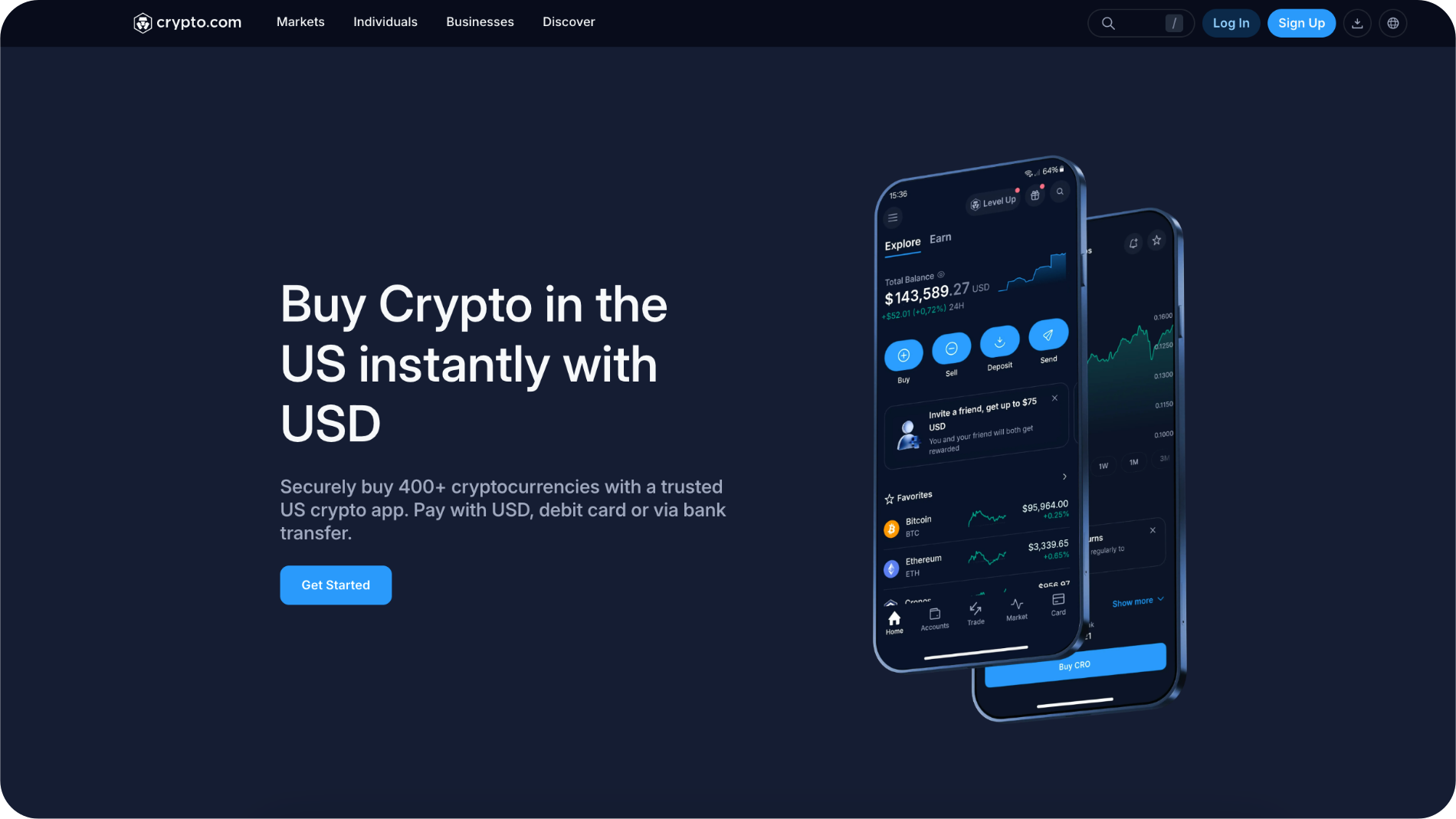
7. Crypto.com: Spend Your Cryptocurrency with the Everyday Visa Card
Crypto.com is one of the world's largest crypto platforms, with more than 150 million users and a business model focused on everyday spending thanks to its Visa card linked to users' crypto balances. It ranks seventh due to this combination of an exchange and a payment method—something no other platform in the top 10 offers as robustly for Brazilian users who want to use their cryptocurrencies for more than just investing.
Fees start at 0.075% for makers and takers at the basic level, decreasing based on trading volume or CRO token staking; the Visa card offers cashback based on the staking level. For users in Brazil, the app allows them to buy crypto with a credit card and offers a wide selection of cryptocurrencies, although it does not provide a direct onramp for Brazilian reais via local banks. See the full review of Crypto.com
Who is Crypto.com for? For users in Brazil who want to use their cryptocurrency for everyday purchases with a Visa card, in addition to trading on the exchange.
Advantages:
- Visa Card with Cashback Based on Staking Level
- Low fees at the basic level
- Comprehensive insurance coverage for funds in custody
Disadvantages:
- Better terms require holding the CRO token
- No direct conversion from Brazilian reais
- A somewhat complex ecosystem for new users
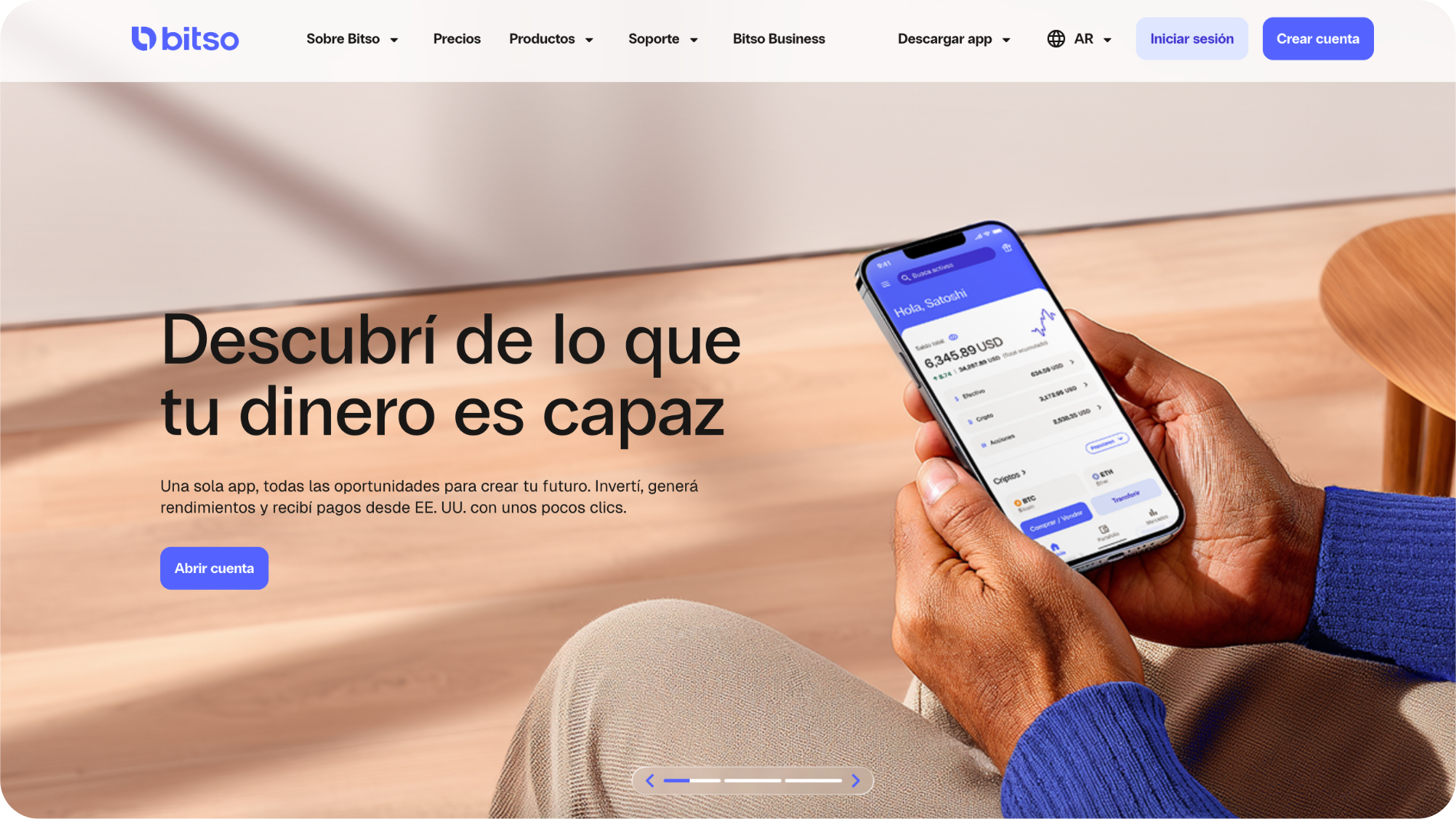
8. Bitso: the Latin American exchange with a strong presence in Brazil
Bitso is a Latin American cryptocurrency exchange founded in Mexico in 2014, with significant expansion in Brazil and a focus on the Brazilian real-stablecoin pair. It ranks eighth for offering competitive spreads when buying USDT with Brazilian reais and solid liquidity backed by its regional track record—a practical option for those in Brazil looking to dollarize their savings.
Its fees vary depending on trading volume and the chosen currency pair, with spreads that are generally tighter than those of other newer local apps. For users in Brazil, it supports deposits in reais via PIX and offers an exportable trading history, which is useful in light of the Brazilian Federal Revenue Service’s new DeCripto regulations. See the full review of Bitso
Who is Bitso for? For users in Brazil who prioritize good liquidity and tight spreads when buying digital dollars with reais on a recurring basis.
Advantages:
- Competitive spreads for buying USDT with Brazilian reals
- PIX Deposits with Fast Crediting
- A proven track record in the Latin American market
Disadvantages:
- A more limited selection of cryptocurrencies than on global exchanges
- Fewer advanced trading features than Kraken or OKX
- Customer service with varying response times
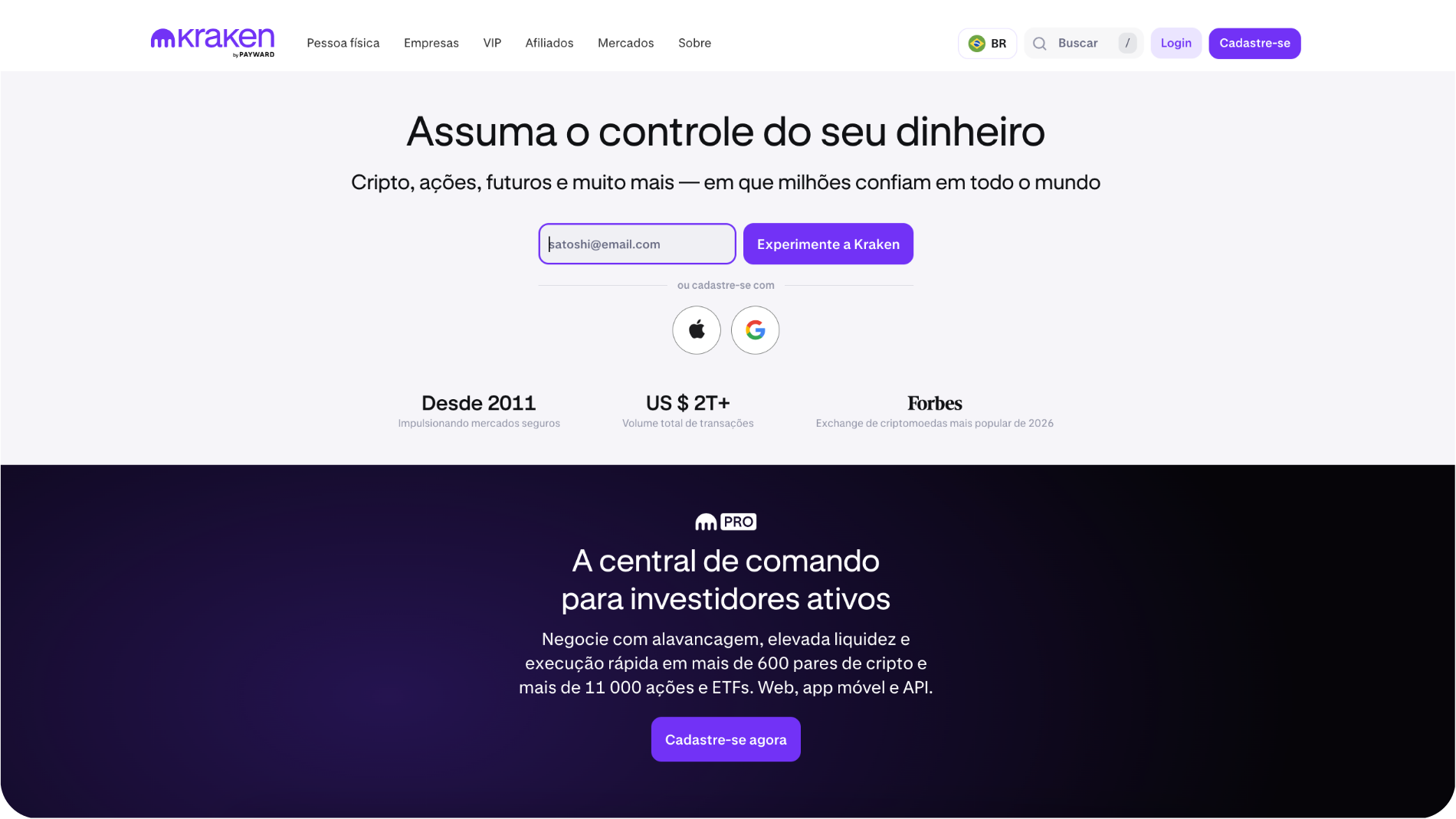
9. Kraken: The Most Well-Rounded Platform for Making the Leap to Advanced Trading
Kraken is one of the industry's longest-standing exchanges, founded in 2011 and operational since 2013, with more than 600 cryptocurrencies and a presence in over 190 countries. It ranks first because it combines a strong track record of security, quarterly Proof of Reserves audits with 1:1 backing, and the most extensive selection among the top 10—a profile that instills confidence in Brazilian traders seeking market depth beyond local apps. It operates in Brazil in anticipation of the Central Bank’s new regulatory framework, which will require PSAV authorization starting in February 2026.
Its standard fee is 1% plus the spread, but Kraken Pro reduces the cost to 0.40% for makers and 0.80% for takers in the first tier, with the rate decreasing as volume increases. The minimum deposit is $10. For users in Brazil, the platform does not directly support Brazilian reais, so it’s best to fund your account with USDT purchased beforehand on an exchange that supports BRL. See the full Kraken review
Who is Kraken for? For users in Brazil with intermediate or advanced experience who already trade in U.S. dollars or stablecoins and are looking for world-class security and liquidity.
Advantages:
- Wide variety of cryptocurrencies and markets available
- A strong track record of safety since its founding in 2011
- Access to margin trading and staking for dozens of cryptocurrencies
Disadvantages:
- No direct conversion from Brazilian reais
- High standard fee if you don't use Kraken Pro
- Learning curve to take full advantage of all its features
10. BloFin: Derivatives and copy trading for the most experienced users
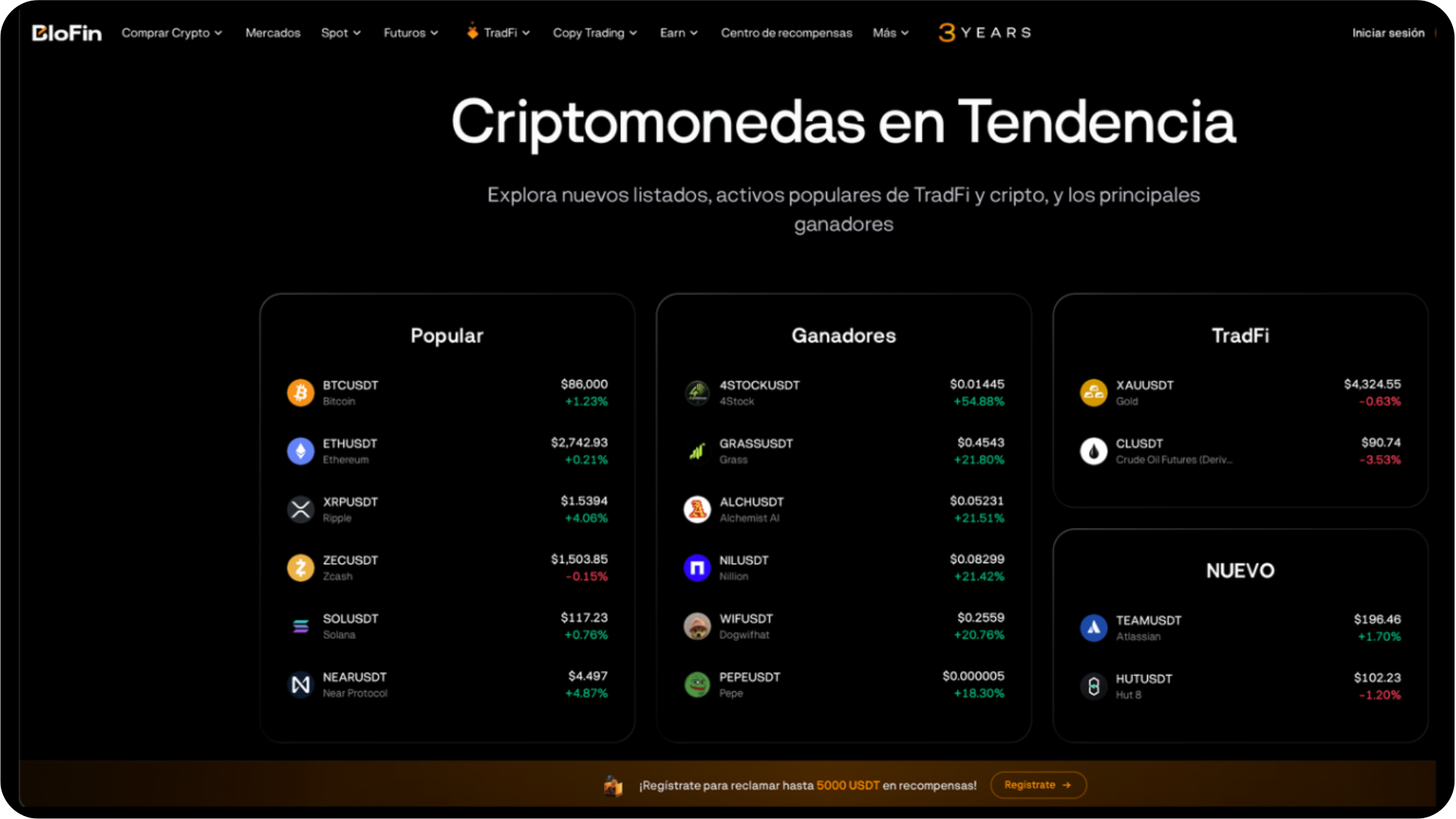
BloFin is an exchange focused almost exclusively on derivatives and perpetual futures, with copy trading tools and bots designed for traders who already use defined strategies. It rounds out the top 10 as the most specialized option in the ranking, targeting Brazilian users with prior experience in leveraged trading rather than the general public.
Its futures commissions start at 0.02% for makers and 0.05% for takers, among the most competitive in the derivatives segment. For users in Brazil, it does not have a broad spot market or its own real trading platform, so it is mainly used as a complement to another exchange for trading futures. See the full review of BloFin
Who is BloFin for? For users in Brazil with experience in derivatives who are looking for low commissions on futures and copy trading tools; not for those starting from scratch.
Advantages:
- Very competitive commissions on perpetual futures
- Integrated copy trading tools and bots
- An interface designed specifically for derivatives
Disadvantages:
- Limited spot catalog vs. general-purpose exchanges
- Not suitable for users without prior experience with derivatives
- No direct conversion from Brazilian reais
How will cryptocurrencies be taxed in Brazil in 2026?
Brazil does not have a specific tax on cryptocurrencies: the Receita Federal (RFB) treats them as assets subject to the capital gains tax (Imposto de Renda). The key point is the reform that takes effect this year: until 2025, there was an exemption for monthly sales of up to R$ 35,000, but Provisional Measure 1,303/25 eliminates that exemption starting in 2026, meaning that any gains from cryptoassets will be subject to tax, regardless of the monthly trading volume.
Depending on the source of your cryptocurrency, different taxes apply:
- End of the R$ exemption for 35,000 per month: Starting in 2026, any gain realized from the sale of cryptoassets by an individual will be subject to tax, regardless of the total amount traded during the month.
- Fixed tax rate on capital gains: The previous progressive tax schedule (from 15% to 22.5%) is replaced by a flat tax rate of approximately 17.5%–18% on quarterly net earnings, according to the final text approved by Congress.
- Obligation to Report Ownership: Anyone with cryptoassets with an acquisition value of R$ 5,000 or more must report them on the «Assets and Rights» section (Group 08 – Cryptoassets) of the annual tax return (DIRPF).
- DeCripto and monthly payments via DARF: The new Cryptoasset Declaration (DeCripto), governed by IN RFB 2,291/2026, replaces the former IN 1,888 and introduces the mandatory monthly payment of the tax via DARF (code 4600) when applicable.
Cryptoassets held on foreign exchanges with a value exceeding R$ 6,000 are also taxed under Law 14.754/2023, at rates of up to 22.5%. The most sensible approach is to keep your own record of purchases, sales, and acquisition dates, calculate gains using the FIFO method, and file your tax return with the Internal Revenue Service by May 30.
How did we selected the exchanges in this ranking
This ranking was compiled based on a comparative analysis of the cryptocurrency exchanges available to customers in Brazil, combining real-world testing with technical, regulatory, and user experience evaluations to identify those best suited for users residing in Brazil in 2026.
To compile the ranking, we evaluated each platform based on the following criteria:
| Criteria | What We Evaluate | |
|---|---|---|
| 1 | Regulation and Transparency | We verify whether each platform is authorized as a Sociedade Prestadora de Serviços de Ativos Virtuais (PSAV) or falls under the Central Bank’s transitional regime, as well as its track record of security at the international level. |
| 2 | Rise in the Brazilian real | Ease of depositing and withdrawing funds, whether via PIX, TED, or the P2P market, and the time it takes for funds to be credited. |
| 3 | Tax Adjustment | Clarity in transaction reports in light of the new DeCripto regulations and compatibility with the calculation of income tax on capital gains. |
| 4 | Access to Digital Dollars | Ease of converting fiat currencies into stablecoins (USDT, USDC), and liquidity for those pairs. |
| 5 | Actual Trading Costs | Actual trades on each platform, taking into account the combined cost of commissions, spreads, and withdrawal fees—not just the advertised rate. |
| 6 | Track Record and Transparency | Each exchange's security track record and transparency in disclosing reserves (Proof of Reserves), where applicable. |
The testing was completed in September 2026, with a final verification of each platform’s authorization status with the Central Bank as of the publication date. You can review the full research and data verification process on our methodology.
Important note: We review this ranking periodically to reflect new authorizations such as PSAV, changes in commissions, or tax developments resulting from tax reform. Rankings are subject to change.
Regulation of exchanges and cryptocurrencies in Brazil
Brazil has one of the most comprehensive legal frameworks for cryptocurrencies in Latin America. Law No. 14,478/2022 (Legal Framework for Virtual Assets) laid the groundwork for the sector, and Decree No. 11,563/2023 designated the Central Bank of Brazil (BCB) as the competent authority responsible for authorizing and supervising providers of virtual asset services. On November 10, 2025, the BCB published Resolutions Nos. 519, 520, and 521, which provide detailed regulations for this framework and take effect on February 2, 2026.
As of that date, any entity providing cryptoasset exchange, custody, or brokerage services in Brazil must be incorporated as a Sociedade Prestadora de Serviços de Ativos Virtuais (SPSAV) and obtain authorization from the Central Bank, classified as an intermediary, custodian, or broker depending on the service provided. Platforms that were already operating before the regulation took effect may benefit from a grandfathering provision while they complete their authorization process. The Federal Revenue Service (Receita Federal) and the Brazilian Securities and Exchange Commission (CVM) work in coordination to oversee the sector.
Important note: The fact that an exchange is still in the process of obtaining authorization as a PSAV does not mean that it is operating illegally in Brazil during the transition period; it means that its final authorization from the Central Bank is still pending in accordance with the timeline set forth in the new resolutions.
The information presented in this ranking is for informational and educational purposes only. It does not constitute financial or tax advice, nor is it a personalized investment recommendation. Using cryptocurrency exchanges involves risks, and each user is responsible for assessing which platform best suits their profile, as well as for complying with applicable regulations and their legal and tax obligations under current Spanish law. Some links in this ranking are affiliate links: if you open an account through them, Exchange Selector may receive a commission at no additional cost to you. This does not influence the criteria or the order of this ranking.
(FAQ) How to Choose a Cryptocurrency Exchange in Brazil in 2026