
Before we dive into the detailed analysis, here is a ranked list of the 10 best cryptocurrency exchanges for Argentina, with the most important information about each one at a glance.


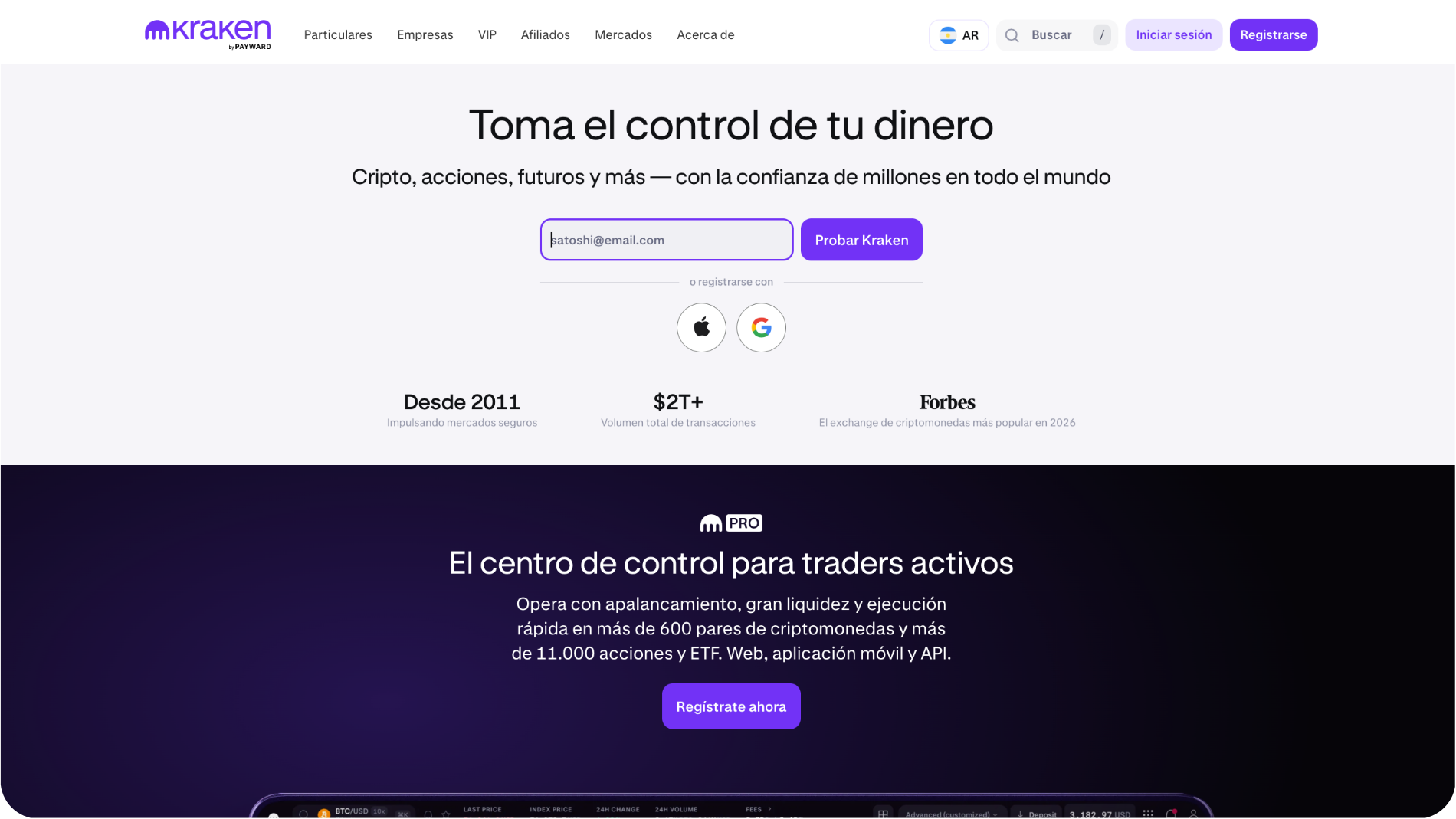
1. Kraken: The Most Comprehensive Platform for Making the Leap to Advanced Trading
Kraken is one of the industry’s longest-standing exchanges, founded in 2011 and operational since 2013, with more than 600 cryptocurrencies and a presence in over 190 countries. It ranks first because it combines a long track record of security, quarterly Proof of Reserves audits with 1:1 backing, and the most extensive selection among the top 10—a feature particularly valued by Argentine users seeking to hedge against the peso using stablecoins with international credibility. It allows users to make transactions using credit cards and bank transfers in dollars, without relying on peso-based on-ramps.
Its standard fee is 1% plus the spread, but Kraken Pro reduces the cost to 0.16% for makers and 0.26% for takers in the first tier, with fees decreasing as volume increases. The minimum deposit is 10 USD. For users in Argentina, direct deposits in pesos are not supported, so it’s best to fund your account with USDT purchased in advance on a local exchange. View full Kraken review
Who is Kraken for? For users in Argentina who already have dollars or stablecoins and are looking for a highly secure international exchange to trade seriously.
Advantages:
- Wide variety of cryptocurrencies and markets available
- A strong track record of safety since its founding in 2011
- Access to margin trading and staking for dozens of cryptocurrencies
Disadvantages:
- No direct exchange rate for Argentine pesos
- High standard fee if you don't use Kraken Pro
- Learning curve to take full advantage of all its features
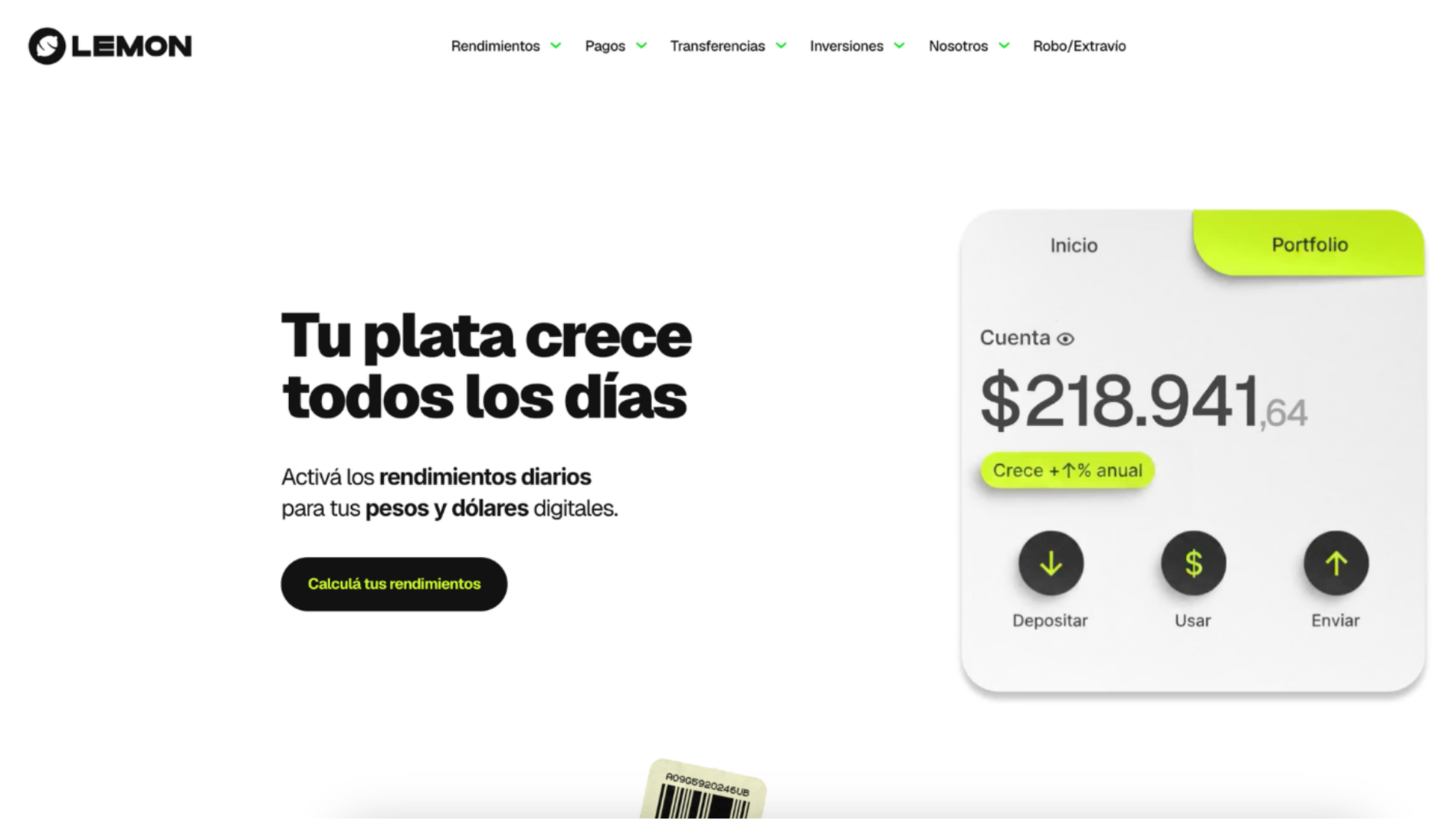
2. Lemon Cash: The Most Popular Crypto App for Earning Dollars on Your Phone
Lemon Cash is an Argentine crypto app founded in 2019, with more than 4 million users in Latin America and strong local market penetration thanks to its Visa card that offers cashback in Bitcoin. It ranks second as the easiest way to convert pesos to stablecoins from a cell phone, combining daily returns on your balance with an experience designed entirely for Argentine users.
Its purchase fees are around 1% of the spread, with withdrawals subject to network fees. For users in Argentina, it allows them to deposit pesos via bank transfer or Mercado Pago, convert them to USDT or USDC instantly, and issue a physical and virtual card to spend the balance at any merchant.
Who is Lemon Cash for? For users in Argentina who want to easily convert their savings in pesos into dollars and use that balance for everyday purchases with a Visa card.
Advantages:
- Instant conversion of pesos to stablecoins
- Visa Card with Bitcoin Cashback
- Daily return on the digital dollar balance
Disadvantages:
- A smaller selection of cryptocurrencies than global exchanges
- Commissions that are less competitive than those of platforms specializing in trading
- Fewer tools available for advanced users
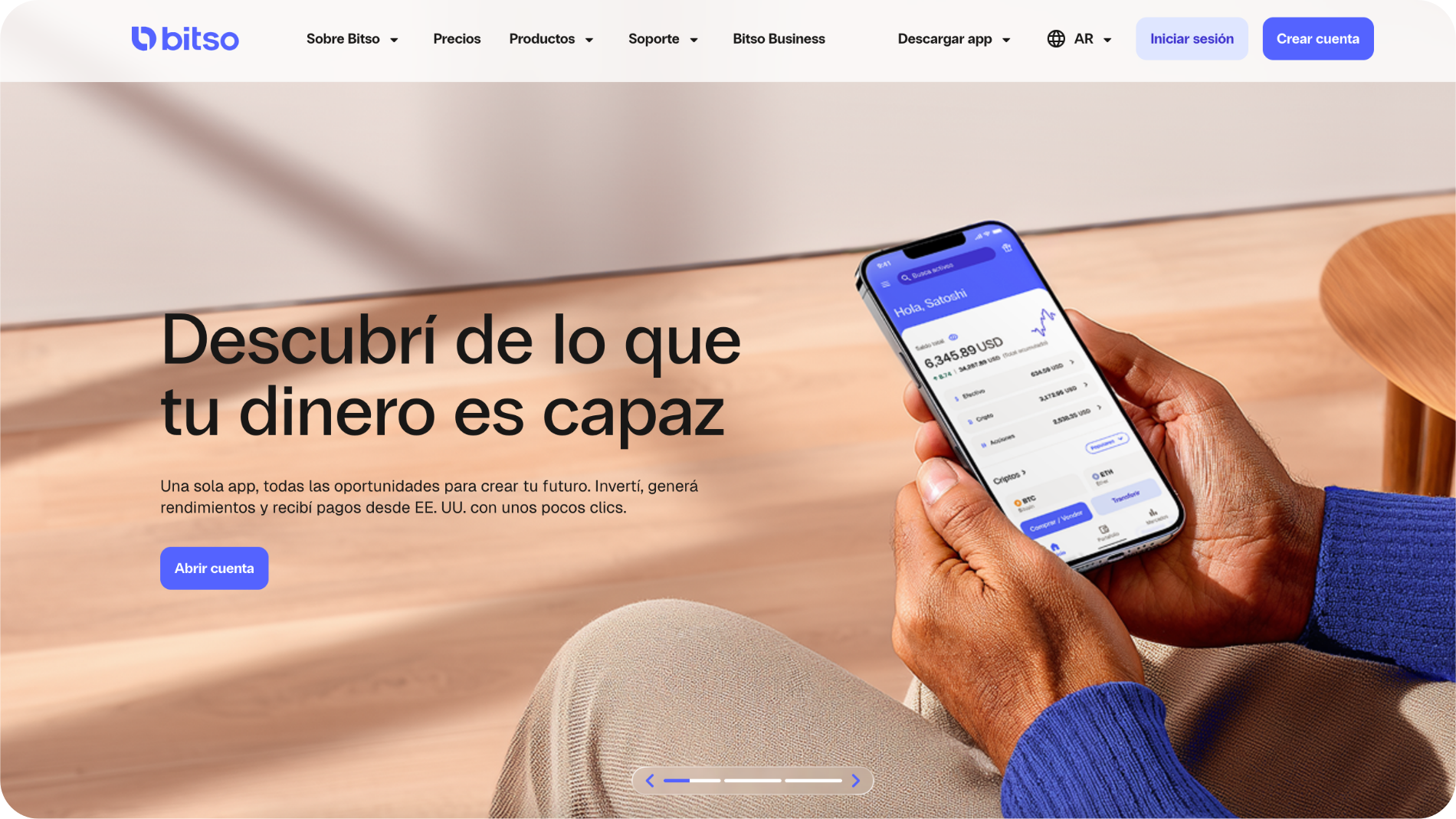
3. Bitso: The leading Mexican exchange for buying USDT with pesos
Bitso is a Latin American cryptocurrency exchange founded in Mexico in 2014, with a presence in several countries across the region and a strong focus on the peso-stablecoin pair. It ranks third for offering competitive spreads when buying USDT with Argentine pesos and solid liquidity backed by its regional track record—something that many newer local apps have yet to match.
Its commissions vary depending on trading volume and the chosen currency pair, with spreads that are generally tighter than those of local 100% apps. For users in Argentina, it accepts deposits in pesos via bank transfer and offers an exportable trading history, which is useful for filing reports with ARCA. See the full review of Bitso
Who is Bitso for? For users in Argentina who prioritize good liquidity and tight spreads when buying digital dollars with pesos on a recurring basis.
Advantages:
- Competitive spreads for buying USDT with pesos
- A proven track record in the Latin American market
- Exportable transaction history for tax purposes
Disadvantages:
- A more limited selection of cryptocurrencies than on global exchanges
- Fewer advanced trading features than Kraken or OKX
- Customer service with varying response times
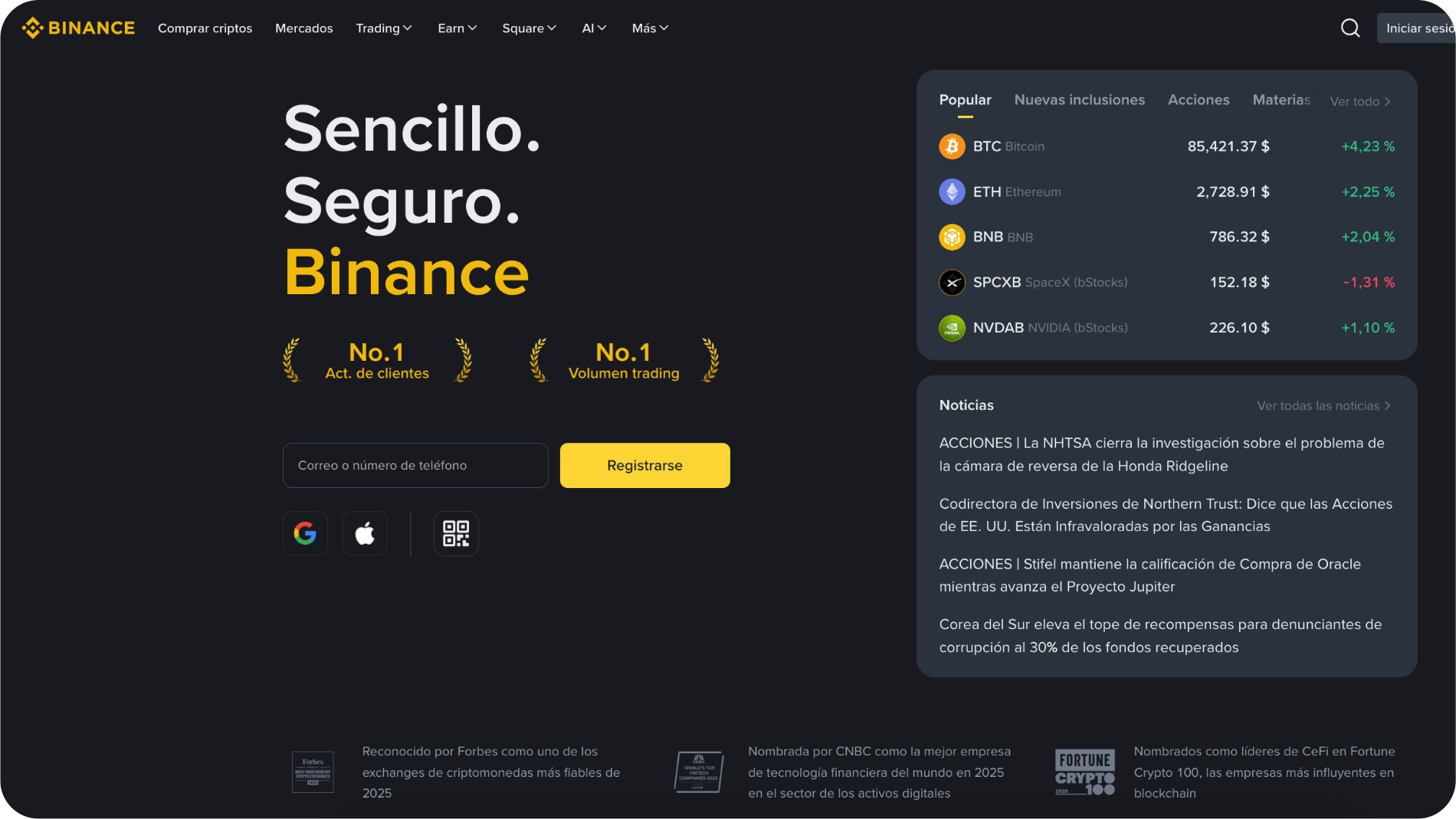
4. Binance: the market's highest liquidity, with P2P trading in pesos
Binance is the world's largest cryptocurrency exchange by volume, with a presence in more than 180 countries and a portfolio of over 350 cryptocurrencies. It ranks fourth because, although it does not operate under a MiCA license in Europe, in Argentina it is registered as a Virtual Asset Service Provider (PSAV) with the CNV, and its P2P marketplace is one of the most widely used in the country for buying and selling cryptocurrency directly with pesos.
Its spot trading fees start at 0.10% for makers and takers, and decrease with the use of the BNB token. For users in Argentina, the P2P marketplace allows trading in pesos via Mercado Pago and bank transfers, without relying on the platform’s own fiat on-ramp. View full Binance review
Who is Binance for? For users in Argentina who are looking for the highest liquidity and widest variety of markets, and who are willing to trade via P2P to buy and sell pesos.
Advantages:
- The market's highest liquidity and widest selection of cryptocurrencies
- A very active P2P market for trading Argentine pesos
- Registered as a PSAV with the CNV
Disadvantages:
- Without a MiCA license, which limits its operations in the European Union
- P2P requires more attention than a direct purchase
- Lower fees only if you use the BNB token
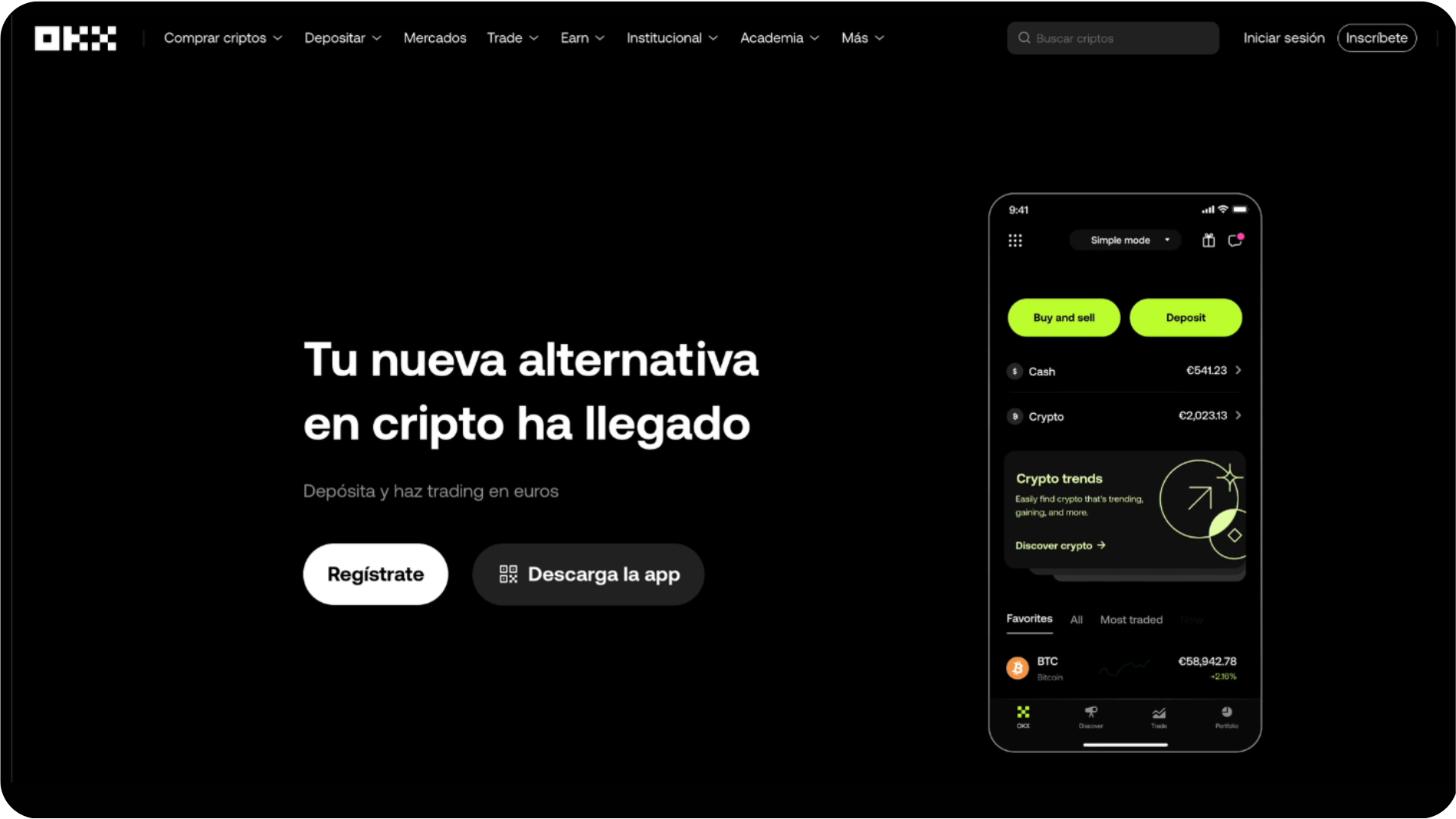
5. OKX: Low fees and Web3 access for the most active users
OKX is a global exchange that ranks as one of the most cost-effective options among the top 10 for frequent traders, in addition to offering access to Web3 features (its own wallet, DeFi) that are uncommon among centralized exchanges. It ranks fifth due to its combination of low fees and a wide selection of assets—an attractive profile for Argentine traders who already trade in stablecoins.
Its spot trading fees are among the lowest in the industry: 0.08% for makers and 0.1% for takers, with discounts based on trading volume with no minimum threshold. For users in Argentina, it does not support direct deposits in pesos, but it does allow users to buy crypto with a credit card in dollars and trade on its P2P marketplace. See the full OKX review
Who is OKX for? For users in Argentina with a certain trading volume who are looking for low fees and want to start exploring Web3 without leaving the exchange.
Advantages:
- Spot commissions among the lowest in the industry
- Access to Web3 features such as a native wallet
- P2P market available as an alternative for investing in pesos
Disadvantages:
- No direct exchange rate for Argentine pesos
- Designed primarily for users with some experience
- Lower brand awareness in Argentina
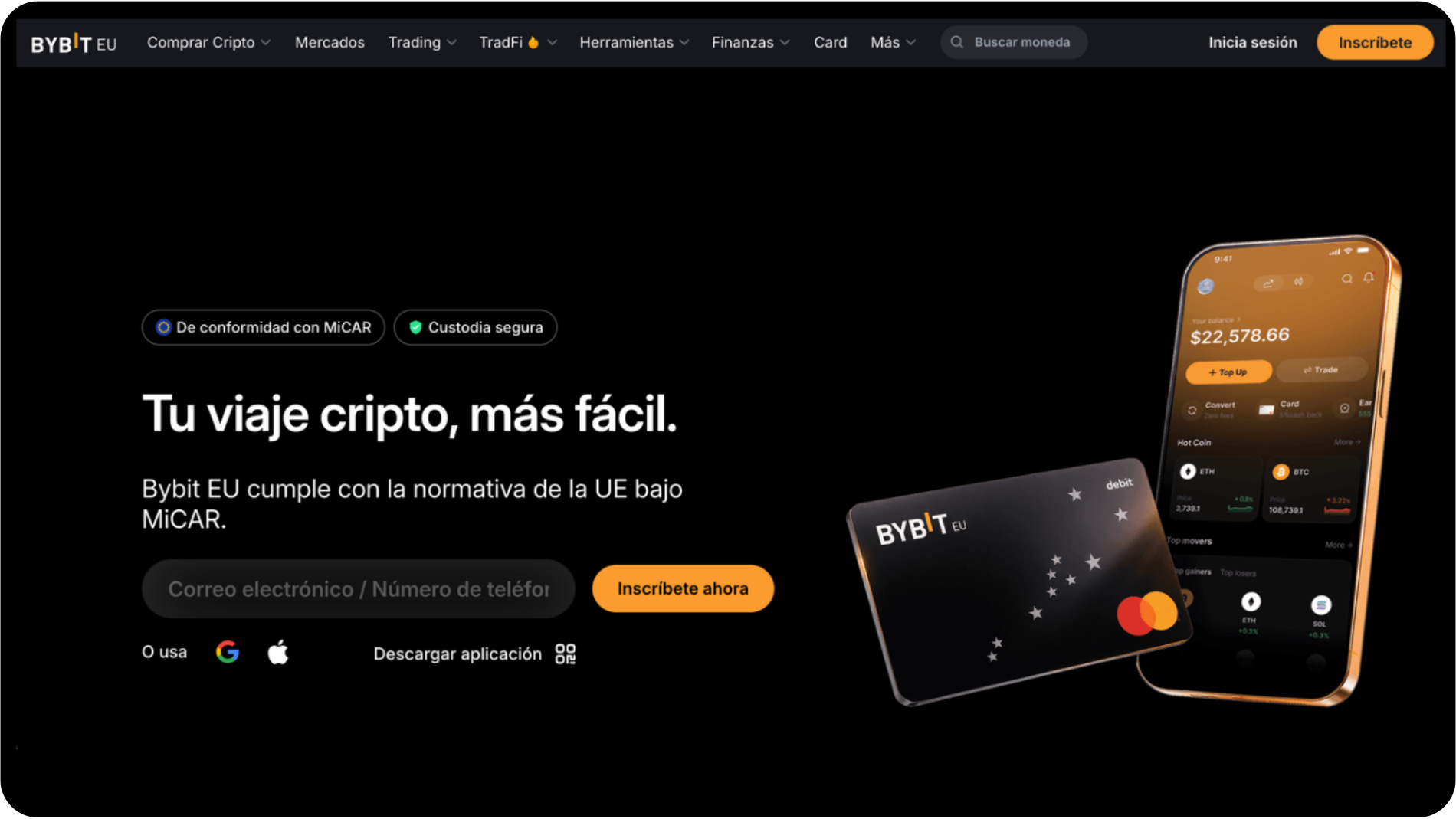
6. Bybit: derivatives and advanced trading with extensive global liquidity
Bybit is the world's second-largest exchange by derivatives volume, offering a robust selection of futures and margin trading options for advanced traders. It ranks sixth as the most derivatives-focused option among the top 10 for Argentine users, offering up to 100x leverage on futures and an interface designed for those who are already comfortable trading.
Its fees are competitive for advanced trading and decrease as trading volume increases, and it includes features such as copy trading and automated bots. For users in Argentina, it allows them to buy crypto with a credit card in dollars and offers an active P2P marketplace for trading with pesos. See the full Bybit review
Who is Bybit for? For experienced users in Argentina who are looking for derivatives and advanced trading, and who already use stablecoins as the basis for their transactions.
Advantages:
- Wide range of futures and margin trading
- Competitive commissions for advanced trading
- P2P market available for trading in pesos
Disadvantages:
- Less suitable for beginners
- High leverage involves greater risk
- No direct exchange rate for Argentine pesos
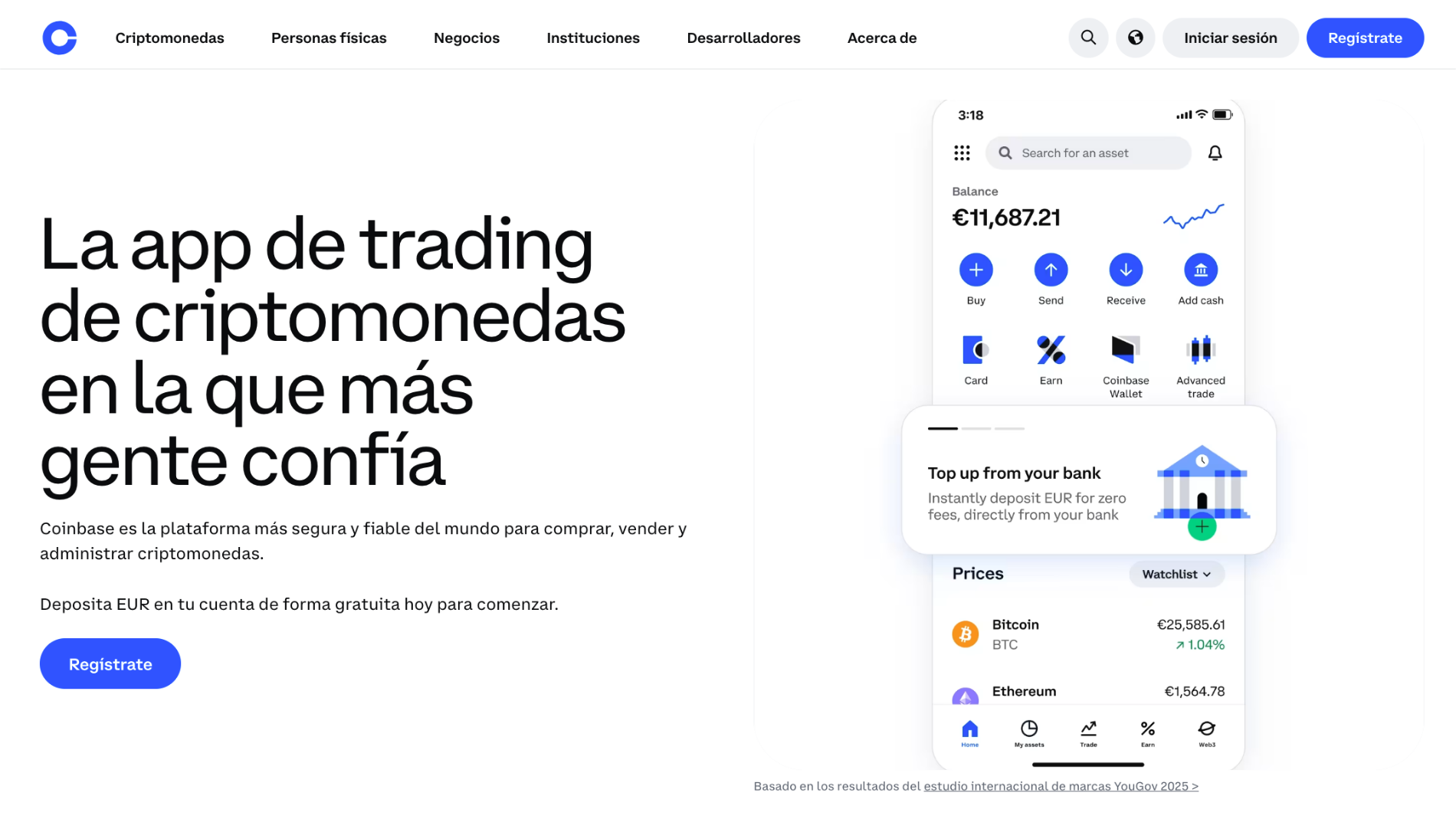
7. Coinbase: The Most Well-Known Option for Getting Started
Coinbase is a publicly traded exchange (Nasdaq: COIN since 2021) and one of the most thoroughly audited in the world, with more than 120 million users in over 100 countries. It ranks seventh because it combines the highest brand trust among the top 10 with an interface designed for those who have never bought cryptocurrency before—a feature that is particularly important for Argentine users seeking a well-established international platform.
The standard app charges fees of up to 3.99% for card transactions, but Coinbase Advanced reduces them to between 0.35% and 0.75%, depending on volume. For users in Argentina, the app does not support deposits in pesos, so it’s best to fund it with dollars or stablecoins purchased in advance on a local exchange. View full Coinbase review
Who is Coinbase for? For users in Argentina who are just getting started with crypto and prefer the reliability of a well-known brand over lower fees.
Advantages:
- A well-known brand listed on the stock exchange
- Intuitive interface designed for beginners
- Large global user base
Disadvantages:
- High fees in the standard app
- No direct exchange rate for Argentine pesos
- You must upgrade to Advanced to get competitive rates
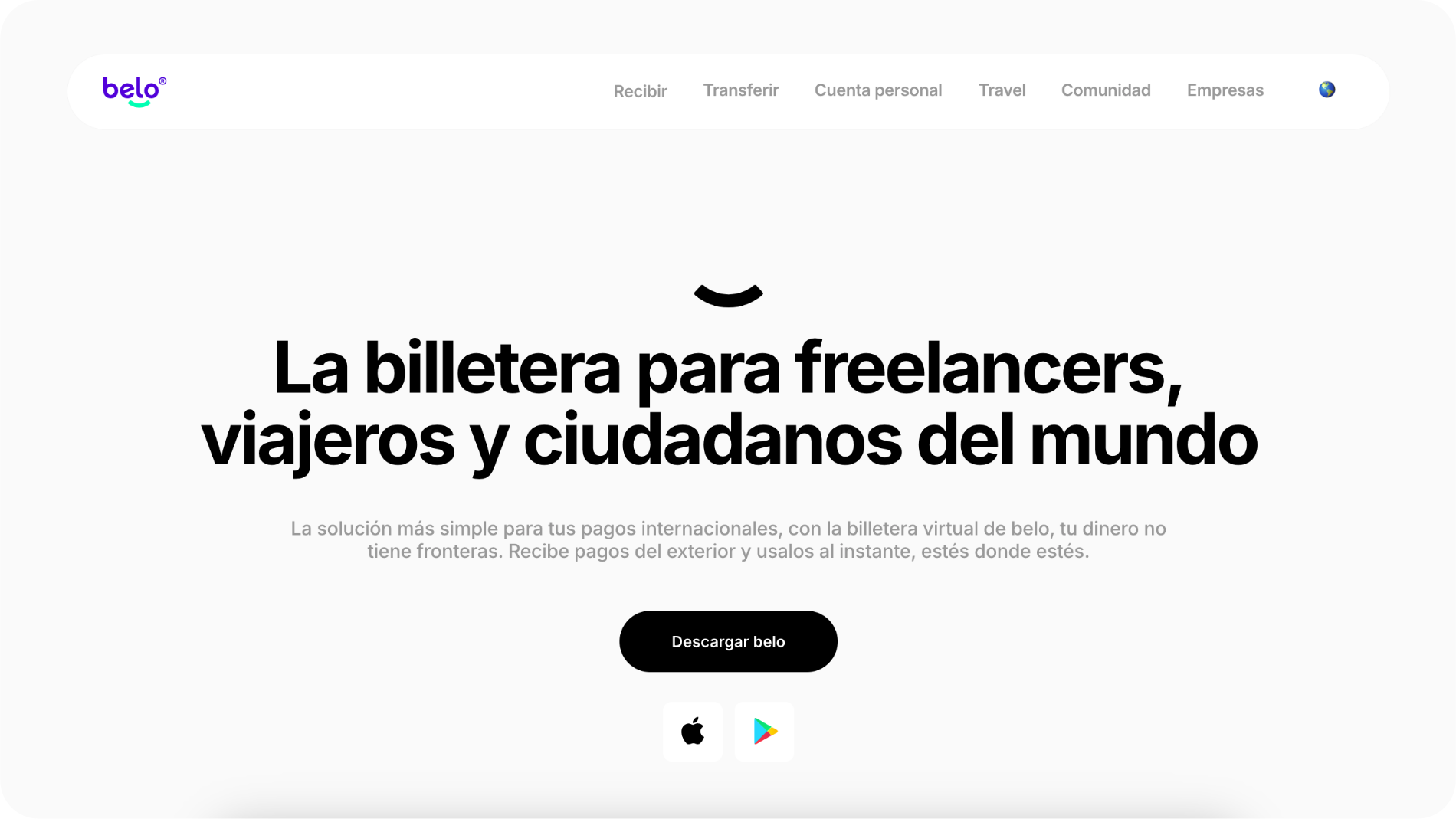
8. Belo: the app designed for remittances and multi-currency savings
Belo is an Argentine crypto app founded in 2021 that focuses on making it easy to receive money from abroad and hold savings in different currencies. It ranks eighth as the most practical option in the top 10 for those who receive international payments, with support for pesos, dollars, and stablecoins all within a single account.
Its purchase fees range from 1% to 1.3% of the spread, with network fees applicable to withdrawals. For users in Argentina, it allows them to receive international transfers in U.S. dollars (ACH and wire) as well as pesos via local transfers, making it ideal for freelancers who bill clients abroad.
Who is Belo for? For users in Argentina who receive payments from abroad or want to keep their savings divided among pesos, dollars, and stablecoins all in one app.
Advantages:
- Ideal for receiving international transfers in U.S. dollars
- Multi-currency account within a single app
- A simple interface designed for everyday use
Disadvantages:
- Very limited selection of cryptocurrencies
- Fees that are slightly higher than those charged by specialized exchanges
- Fewer trading features than global platforms
9. Bitget: Copy trading and futures for users looking to follow strategies
Bitget is a global exchange with a strong presence in derivatives and one of the most widely used copy trading platforms in the industry, where users can automatically replicate the trades of experienced traders. It ranks ninth because it is the platform in the top 10 most focused on this feature—a profile that appeals to Argentine users seeking exposure to futures without having to trade manually.
Its spot trading fees start at competitive rates and decrease with volume, and it offers a wide range of futures trading pairs. For users in Argentina, it allows them to buy cryptocurrency with a credit card in dollars and features a peer-to-peer marketplace for trading in pesos. See the full review of Bitget
Who is Bitget for? For users in Argentina interested in copy trading and futures who prefer to follow other traders' strategies rather than trade on their own.
Advantages:
- Accessible copy trading to replicate strategies
- Wide range of futures and derivatives pairs
- P2P market available for trading in pesos
Disadvantages:
- Copy trading does not guarantee positive results
- Less suitable for users who just want to buy and store items
- No direct exchange rate for Argentine pesos
10. Ripio: Argentina's longest-running exchange, with a built-in wallet
Ripio is an Argentine cryptocurrency exchange founded in 2013 and one of the pioneers of the local crypto ecosystem, with a presence in Brazil and Mexico as well. It rounds out the top 10 by combining an exchange and a wallet on a single platform designed from the outset for Argentine users, with a focus on simplicity and a conservative approach rather than active trading.
It charges a purchase fee of approximately 0.8%, with no fees for transfers between Ripio users. For users in Argentina, it allows them to deposit pesos via bank transfer, buy crypto directly, and access a diverse selection without leaving the integrated wallet. See the full review of Ripio
Who is Ripio for? For users in Argentina looking for a long-established local exchange with a built-in wallet and a usage profile that is more conservative than speculative.
Advantages:
- An Argentine exchange with over a decade of experience
- No fees for transfers between users on the platform
- Wallet and exchange integrated into a single account
Disadvantages:
- A cryptocurrency catalog that is less extensive than that of global exchanges
- Fewer advanced trading features
- Commissions that are slightly higher than those charged by platforms specializing in spot advertising
Comparison Chart of Exchanges for Argentina
After reviewing the 10 exchanges, here is a comparison table that summarizes the cryptocurrency offerings, maker/taker fees, and MiCA regulations for each one, tailored for users in Argentina.
| Platform | Cryptos | Approximate commission | Ramp in pesos |
|---|---|---|---|

Kraken
(Kraken Pro)
|
600+ | 0,16% / 0,26% | No (USD/USDT) |

Lemon Cash
|
15+ | ~1% spread | Yes (bank transfer, Mercado Pago) |

Bitso
|
40+ | Varies by pair | Yes (transfer) |

Binance
|
350+ | 0,10% / 0,10% | Yes (P2P) |

OKX
|
375+ | 0,08% / 0,10% | Yes (P2P) |

Bybit
|
500+ | Varies depending on volume | Yes (P2P) |

Coinbase
|
400+ | 0,40% / 0,60% | No (USD/USDT) |

Belo
|
4 | ~1% – 1.3% spread | Yes (transfer) |

Bitget
|
400+ | Varies depending on volume | Yes (P2P) |

Ripio
|
30+ | ~0,8% | Yes (transfer) |
It is always a good idea to verify each provider’s registration status in the CNV’s official PSAV registry, since as of 2026, the number of global exchanges that are actually registered remains low. The best option will depend on whether you prioritize a direct deposit in pesos, low fees, or advanced trading tools.
How Will Cryptocurrencies Be Taxed in Argentina in 2026?
Argentina does not have a specific tax on cryptocurrencies: the Customs Collection and Control Agency (ARCA, formerly AFIP) treats them as digital financial assets, which are primarily subject to income tax and personal property tax. The key is to distinguish between selling at a profit during the year and holding cryptocurrency at the end of the fiscal year, because each situation triggers a different tax obligation.
Depending on the type of transaction, different rules apply:
- Income Tax (Second-Category Income): Profits from the sale of cryptocurrencies are taxed at a rate of 5% or 15%, depending on whether the asset is denominated in pesos and whether the transaction is settled in local or foreign currency.
- Personal Property Tax: Cryptocurrency holdings as of December 31 are valued at acquisition cost and added to the rest of the net worth; if the total exceeds the current non-taxable threshold, they are taxed at rates ranging from 0.5% to 1.75%.
- Reporting Requirements: Under RG 5804/2025, exchanges and wallets operating in the country report their users' balances and transactions to ARCA, meaning that filing in good standing is no longer optional.
- Mining as an economic activity: When mining is carried out on a regular basis, the proceeds are taxed according to the source of the income—whether Argentine or foreign—and are treated differently from those derived from mere ownership.
In light of the CNV’s regulatory reform regarding the Virtual Asset Service Providers (PSAV) registry, it is becoming increasingly important to operate on platforms that are traceable and have an exportable transaction history. The most sensible approach is to keep your own record of purchases, sales, and acquisition values, and to file the affidavit with ARCA within the payment schedule for each fiscal year.
How did we selected the exchanges in this ranking
This ranking was compiled based on a comparative analysis of the crypto exchanges and apps available to customers in Argentina, combining real-world usage tests with technical, regulatory, and user experience evaluations to identify those best suited for users residing in Argentina in 2026.
To compile the ranking, we evaluated each platform based on the following criteria:
| Criterion | What We Evaluate | |
|---|---|---|
| 1 | Regulation and Transparency | We verify whether each platform is listed in the CNV’s Registry of Virtual Asset Service Providers (PSAV), as well as its track record of security and transparency at the international level. |
| 2 | Argentine Peso Ramp | Convenient ways to deposit and withdraw pesos—whether via bank transfer, Mercado Pago, or a peer-to-peer marketplace—as well as the time it takes for funds to be credited. |
| 3 | Tax Adjustment | Clarity of operational reports for Income Tax and Personal Property Tax purposes, and compatibility with the ARCA reporting system. |
| 4 | Access to Digital Dollars | Ease of converting pesos into stablecoins (USDT, USDC) as a hedge against inflation, and liquidity in those pairs. |
| 5 | Actual Trading Costs | Actual trades on each platform, taking into account the combined cost of commissions, spreads, and withdrawal fees—not just the advertised rate. |
| 6 | Track Record and Transparency | Each exchange's security track record and transparency in disclosing reserves (Proof of Reserves), where applicable. |
The testing was completed in September 2026, with a final verification of the PSAV registry on the CNV's official website as of the date of publication. You can review the entire data research and verification process on our methodology.
Important note: We review this ranking periodically based on new entries in the PSAV registry, changes to the commissions, or tax updates. Rankings are subject to change.
Regulation of exchanges and cryptocurrencies in Argentina
Unlike the European Union, Argentina does not yet have a comprehensive law on cryptoassets or a regulatory framework equivalent to MiCA. The current framework is based on Law No. 27,739, which amends the Anti-Money Laundering Law, and on the resolutions of the National Securities Commission (CNV), which established the Registry of Virtual Asset Service Providers (PSAV) through General Resolution 994/2024, subsequently regulated by General Resolution 1058/2025.
Any individual or legal entity, whether domestic or foreign, that offers cryptoasset exchange, custody, or transfer services to residents of Argentina must register in this registry. However, as of 2026, the number of providers actually registered remains low, and many global exchanges operate from abroad without formal local registration. Binance is a notable exception: it obtained PSAV registration No. 76 through its entity Binance Services Latinoamerica S.A. de C.V.
The information presented in this ranking is for informational and educational purposes only. It does not constitute financial or tax advice, nor is it a personalized investment recommendation. Using cryptocurrency exchanges involves risks, and each user is responsible for assessing which platform best suits their profile, as well as for complying with applicable regulations and their legal and tax obligations under current Spanish law. Some links in this ranking are affiliate links: if you open an account through them, Exchange Selector may receive a commission at no additional cost to you. This does not influence the criteria or the order of this ranking.
(FAQ) How to Choose a Cryptocurrency Exchange in Argentina in 2026

Excellent comparison—it really helped me understand which exchange to choose based on my profile and needs as an Argentine user.